Disclaimer: New EUDR developments - December 2025
In November 2025, the European Parliament and Council backed key changes to the EU Deforestation Regulation (EUDR), including a 12‑month enforcement delay and simplified obligations based on company size and supply chain role.
Key changes proposed:
These updates are not yet legally binding. A final text will be confirmed through trilogue negotiations and formal publication in the EU’s Official Journal. Until then, the current EUDR regulation and deadlines remain in force.
We continue to monitor developments and will update all guidance as the final law is adopted.
The Omnibus I Directive was published in the Official Journal of the EU on 26 February 2026 and entered into force on 19 March 2026, bringing significant changes to CSRD reporting - including updated CSRD scope and timelines. The CSRD scope has been narrowed to companies with more than 1,000 employees and more than EUR 450 million in net turnover. The stop-the-clock directive (April 2025) also pushed Wave 2 reporting to FY2027 and Wave 3 to FY2028. For a full overview, see the EU Omnibus Q&A.
In parallel, EFRAG delivered its technical advice on the Draft Simplified ESRS to the European Commission on 3 December 2025. For ESRS E5 specifically, the simplification resulted in a 60% reduction in datapoints and a 72% decrease in word count. Key changes include the deletion of E5-6 (Anticipated Financial Effects), which has been centralized into ESRS 2, as well as simplification of E5-4 (Resource Inflows) with a new datapoint on critical and strategic raw materials. A new datapoint on the percentage of waste whose final destination is unknown was also added. For a detailed overview of changes across all amended ESRS, see our dedicated article. The European Commission is expected to adopt these simplified standards as a delegated act by mid-2026, with application starting 1 January 2027. For ongoing updates on ESRS and CSRD compliance, visit EFRAG's official website.
The roll-out of the Corporate Sustainability Reporting Directive (CSRD) marks a giant step forward for corporate sustainability reporting in Europe. But its extensive reporting requirements also introduce new challenges for the thousands of companies under its scope.
If your business is one of them, gaining a solid understanding of the European Sustainability Reporting Requirements (ESRS)—including ESRS E5: Resource use and circular economy—is essential. Not only is this knowledge key to achieving CSRD compliance, but it also provides valuable insights into crafting strong circular economy policies, targets, metrics, and action plans.
But what exactly is ESRS E5, why does it matter, and what are its key requirements? More importantly, how can your business implement it effectively? Keep reading for a straightforward breakdown to help you approach this standard with confidence.
Before jumping into ESRS E5, let’s take a step back and recap the basics. The ESRS were developed by the EFRAG to give businesses clear guidelines for complying with the CSRD.
Think of the ESRS as a comprehensive framework that covers all the important aspects of sustainability reporting. They include two cross-cutting standards and ten topical standards that dive into specific areas of environmental, social, and governance (ESG) matters.

As you can see in the table above, ESRS E5 is one of five specific environmental standards under the ESRS. Like all topical standards, reporting on ESRS E5 applies only if your company deems circularity and resource use relevant to its business activities after conducting a double materiality assessment (more on this shortly). This may apply even if your company is indirectly in scope via value chain obligations
This standard provides a framework for reporting on resource use and the circular economy, focusing specifically on the inflows and outflows of resources—like materials, products, and waste—ensuring transparency and accountability in how companies manage these processes.
When reporting on ESRS E5, businesses should focus on these core areas:
Evaluate the environmental impacts, risks, and opportunities of resource use and circular economy practices across your operations and the value chain.
Track and disclose the inflows (materials sourced) and outflows (waste, products) of resources, focusing on circularity and waste minimization.
Develop and implement policies and actions to optimize resource use, prevent waste, and support circular economy principles.
Define measurable targets for resource efficiency and circular practices, aligned with sustainability goals.
Disclose potential financial risks and opportunities linked to resource use and circular economy strategies.
Now that we’ve got some background about ESRS E5, let’s take a look at its disclosure requirements in more detail:
Organizations are required to describe their processes for identifying and assessing material impacts, risks, and opportunities related to resource use and the circular economy.
This includes explaining the methodologies and tools used, detailing the interconnection between risks and opportunities, and describing engagement processes with stakeholders, including affected communities.
The aim is to provide a comprehensive understanding of how resource-related risks and opportunities are integrated into the organization’s operations and strategy.
Under E5-1, organizations must disclose policies that address material impacts, risks, and opportunities associated with resource use and circular economy principles. These policies should aim to reduce reliance on non-renewable resources, promote regeneration of ecosystems, and ensure waste minimization.
They must also cover the entire value chain, including upstream suppliers and downstream users. Transparent communication of these policies, along with alignment to sustainability standards, is critical for effective implementation.
E5-2 requires organizations to disclose the actions taken and resources allocated to achieve their resource use and circular economy objectives. This involves detailing specific measures aligned with waste reduction and circular design strategies, such as reusing or recycling materials.
Organizations should also outline initiatives across their value chain and describe the financial, technological, or infrastructural resources invested in these actions, demonstrating their commitment to achieving tangible outcomes.
To meet E5-3, organizations must disclose their targets for managing resource use and circular economy impacts. These targets should include measurable objectives, such as increasing circular material use rates, reducing reliance on virgin materials, and minimizing waste.
Organizations must explain how these targets align with ecological thresholds and whether they are legally required or voluntarily adopted. Clear and time-bound targets indicate an organization’s dedication to sustainability and enable stakeholders to track progress.
This requirement focuses on disclosing information about resource inflows, including the materials and products used in operations.
Organizations must report the total weight of resources, distinguishing between renewable and non-renewable inputs, and indicate the proportion of recycled or reused materials. The methodologies and assumptions used to calculate these figures should also be explained, providing transparency about the organization’s material sourcing and usage practices.
E5-5 addresses the disclosure of resource outflows, including waste management and the design of outputs for circularity.
Organizations must provide information on the durability, recyclability, or reusability of their products and materials, as well as the methods used for waste processing.
Details about hazardous and non-hazardous waste, along with strategies for waste reduction, help stakeholders understand how organizations contribute to circular economy principles through their output management.
Under E5-6, organizations are required to disclose the potential financial effects of material risks and opportunities associated with resource use and circular economy practices. This includes estimating the financial impact on cash flows, costs, and access to capital over short-, medium-, and long-term horizons.
Organizations must describe the assumptions and uncertainties involved in these assessments, providing a clear link between sustainability efforts and financial strategy. Additionally, they should highlight opportunities for value creation, such as cost savings or new revenue streams from circular economy initiatives.
Note: Under the simplified ESRS delivered by EFRAG in December 2025, E5-6 has been deleted as a standalone disclosure requirement. The anticipated financial effects are now centralized into ESRS 2 general disclosure requirements. The European Commission is expected to adopt these changes by mid-2026, with application from 1 January 2027.

With so many requirements, implementing ESRS E5 can seem overwhelming. Simplifying the process into clear, actionable steps can help. Here’s how to approach it:
As mentioned earlier, not every ESRS topical standard is mandatory—you only need to report on those deemed material to your business. A double materiality assessment (see our guide on how to conduct a DMA for CSRD in 2026) is the first step in determining whether impacts, risks, and opportunities related to resource inflows, outflows, and waste are significant for your company and stakeholders.
This involves evaluating impact materiality: how your organization’s resource use and waste generation affect the environment, directly or indirectly, and financial materiality: how environmental risks and opportunities linked to resources and waste influence your company’s financial performance.
Your assessment should evaluate the following sub-topics:
{{custom-cta}}
Once you’ve determined your priorities, you should develop policies that outline your approach to managing resource use and adopting circular economy practices, focusing on waste reduction, regenerative resources, and ecosystem regeneration.
In the UK, for instance, 49% of manufacturers included becoming a circular business as part of their strategy in 2024, up from 44% in 2023—highlighting the competitive advantage of circularity.
Next, it’s time to set clear, actionable goals to improve material efficiency, minimize waste, and support circularity.
Spanish fashion group Inditex, for example, reported that 73% of the textile fibres used across its products were lower-impact in 2024, including 39% recycled fibres. The company has set a target for 100% of its textile products to use only lower-impact materials by 2030, with around 40% recycled, 25% next-generation fibres, and 25% organic or regenerative inputs.
With your targets in place, you can now track and report data on resource inputs, such as the total materials used and the share of renewable or recycled inputs, as well as outputs, including waste and circularity-focused products.
For instance, Philips reported that 24% of its total revenue in 2024 was classified as circular revenue - roughly EUR 4.4 billion from refurbished, reconditioned, and remanufactured products and services. The company also achieved 100% EcoDesigned new product introductions for the first time, demonstrating how tracking resource inflows and outflows can be tied directly to business value.
You should also take practical steps to integrate circular economy principles, such as designing for durability, increasing recyclability, and reducing reliance on virgin materials. Implementing these principles has been proven to reduce costs, improve resource efficiency, and enhance brand reputation.
French automaker Renault Group, for example, has set a target of 33% circular-economy materials in new vehicles by 2030 - a threshold the new Clio already exceeds. At its Flins Refactory, Europe’s first circular economy factory dedicated to mobility, Renault remanufactured 350,000 parts in 2024 and reconditioned 3,000 EV and hybrid batteries. Its circular economy subsidiary, The Future Is NEUTRAL, is targeting turnover above EUR 2.3 billion by 2030 with over 10% operating margin.
Analyze and report the financial effects of resource use and circular economy practices, highlighting risks, opportunities, and cost-saving potential.
For example, Schneider Electric’s circular economy initiatives like its leasing models and take-back schemes accounted for 12% of its revenue from 2018 to 2020.
Ensure transparency by detailing the methodologies, data sources, and assumptions used in your disclosures. This helps to build credibility and enables auditors to understand the basis of your data and goals.
Vandemoortele, a Belgian food company, is a great example of this. They conducted a six-month double materiality assessment, involving surveys and interviews with 1,800 internal and 117 external stakeholders. They refined a list of 200 impacts, risks, and opportunities through 10 focus groups and 22 interviews to determine what really mattered.
By sharing this process in detail, Vandemoortele made their reporting transparent and credible. Following this kind of approach makes your ESRS E5 reporting both reliable and easy to understand.
Integrate your ESRS E5 reporting with related standards, such as climate change (ESRS E1), pollution (ESRS E2), water and marine resources (ESRS E3), and biodiversity (ESRS E4), to present a comprehensive environmental strategy.
For example, Inditex integrates its circular economy targets - 100% lower-impact textiles by 2030 - with its climate goals, connecting waste reduction from textile recycling with emissions reduction across its supply chain. The European Commission is also preparing a new Circular Economy Act (public consultation closed November 2025, legislative proposal expected Q3 2026), which aims to double the EU’s circularity rate from roughly 12% to 24% by 2030.
With the CSRD deadlines fast approaching, having the right tools in place is key to meeting ESRS E5 requirements. Businesses need simple, effective ways to track resource inflows, manage waste, and report on circular economy practices. Clear, accurate data not only ensures compliance but also helps highlight your sustainability efforts.
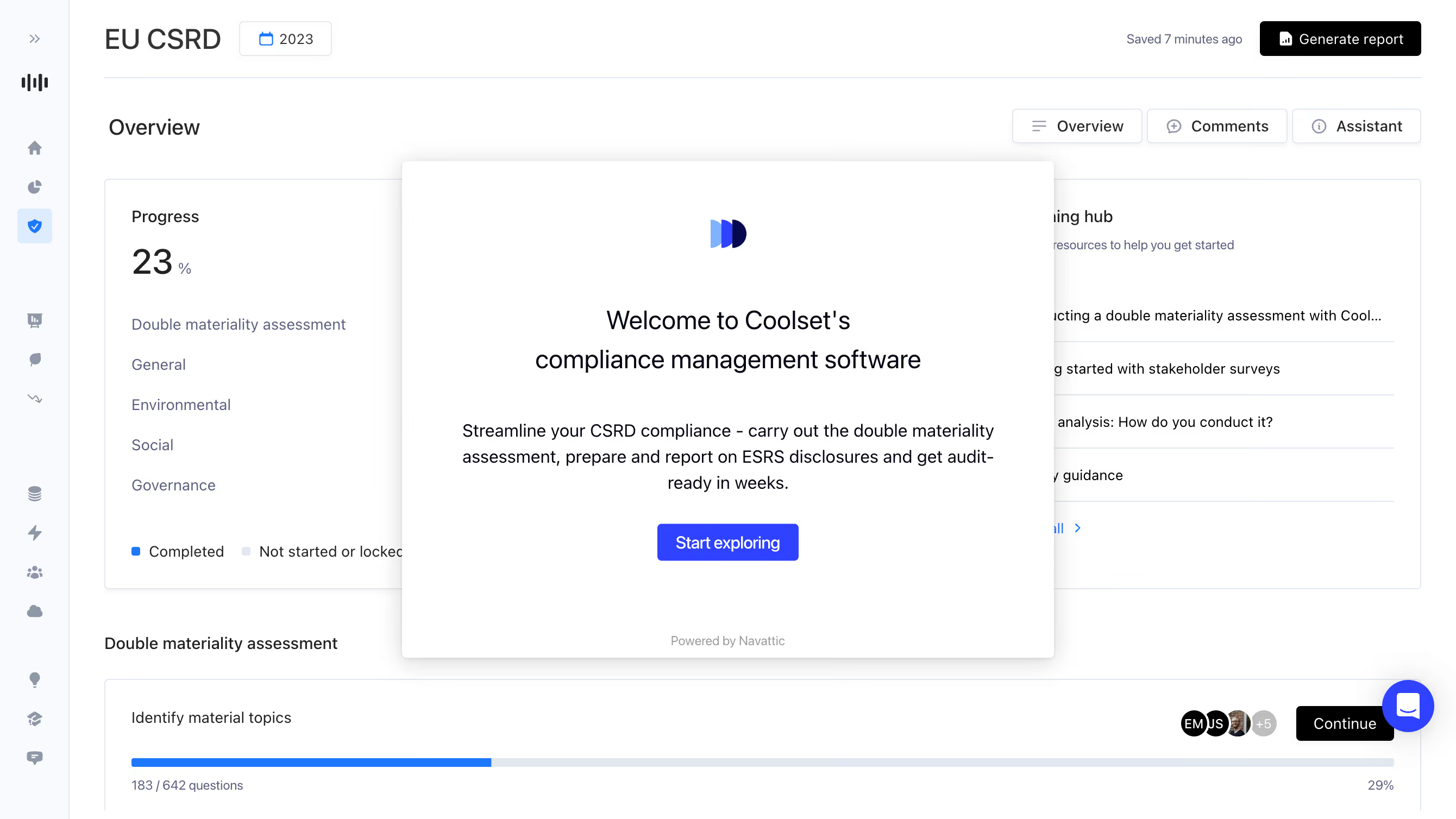
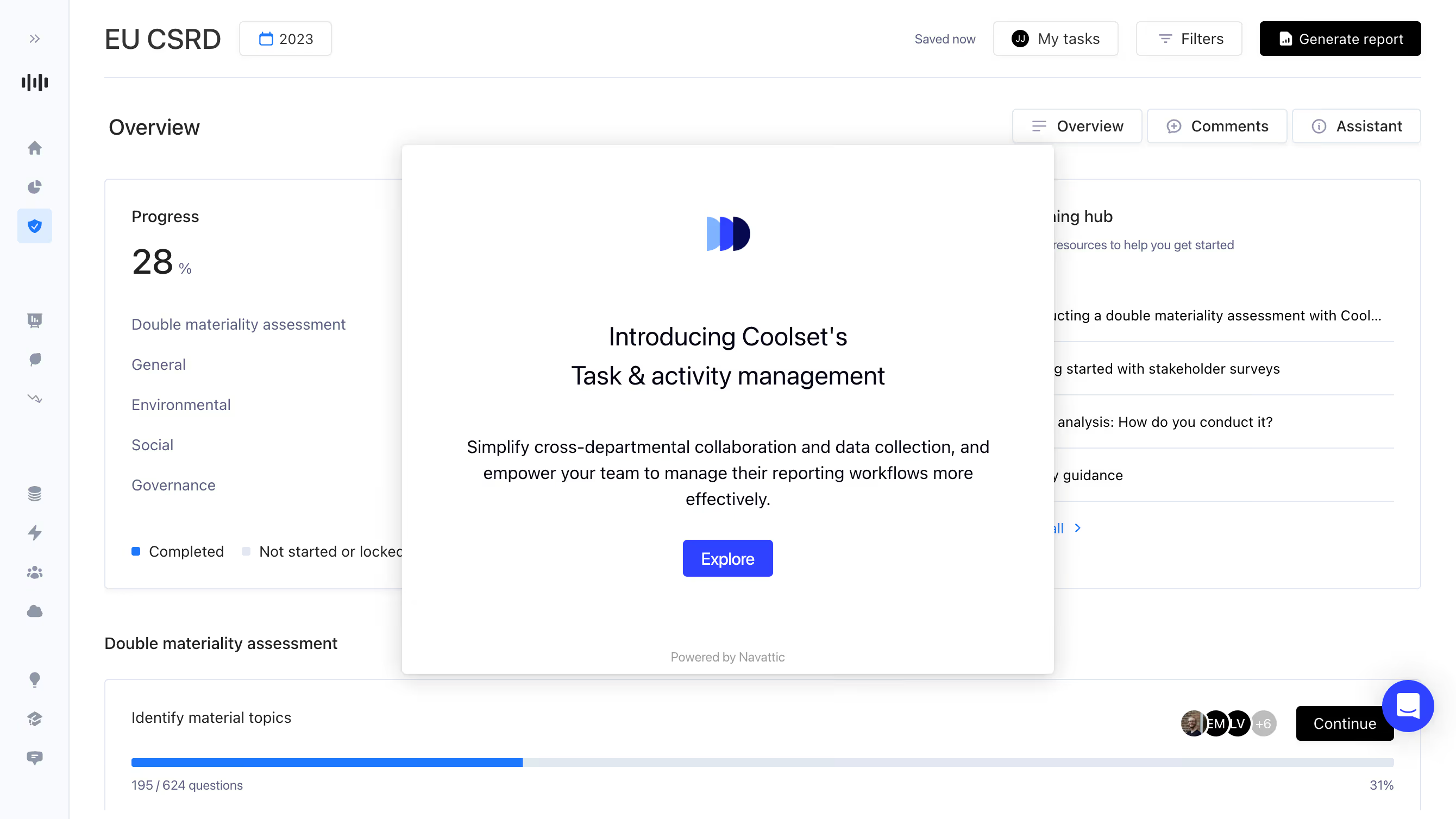
Using software like Coolset makes the process much easier. It can help you:
Ready to simplify your ESRS E5 reporting? Try Coolset’s interactive product tour or book a free advisory call today to see how it can work for you.
Written by our sustainability researchers, this guide contains all the steps for compiling your own DMA.
.avif)
This free compliance checker scans your packaging documentation and maps it against mandatory PPWR data requirements, giving you a clear view of your compliance status. Get actionable insights on documentation gaps before they become compliance issues.
Streamline data collection and reporting across the Double Materiality Assessment and ESRS topic disclosures.

Based on customer case studies our team has developed a realistic timeline and planning for EUDR compliance. Access it here.