ESRS E2 after Omnibus: pollution reporting under the amended ESRS (2026)
.webp)


Disclaimer: New EUDR developments - December 2025
In November 2025, the European Parliament and Council backed key changes to the EU Deforestation Regulation (EUDR), including a 12‑month enforcement delay and simplified obligations based on company size and supply chain role.
Key changes proposed:
- New enforcement timeline: 30 December 2026 for large/medium operators, 30 June 2027 for small/micro operators
- Simplified DDS: One-time declarations for small and micro primary producers
- Narrowed scope: Most downstream actors and non‑SME traders would no longer need to submit DDSs
- New DDS requirement: Estimated annual quantity of regulated products must be included
These updates are not yet legally binding. A final text will be confirmed through trilogue negotiations and formal publication in the EU’s Official Journal. Until then, the current EUDR regulation and deadlines remain in force.
We continue to monitor developments and will update all guidance as the final law is adopted.
Key Takeaways
- ESRS E2 is the CSRD pollution reporting standard, covering air, water, soil, microplastics, and substances of concern.
- Post-Omnibus, ESRS E2 applies only when pollution is material and limits full SoC reporting to chemical-sector companies.
- Companies must disclose pollutant emissions to air, water, and soil, microplastics, and SVHCs above 0.1% by weight in articles.
- Coolset's platform helps companies manage ESRS E2 pollution data and produce CSRD-aligned reports.
What is ESRS E2 and when does it apply?
EFRAG published a draft set of Amended European Sustainability Reporting Standards (ESRS) in December 2025 after the Omnibus proposal, with the goal of cutting the reporting burden. The revised standards are not legally binding yet and still require adoption by the European Commission, expected in summer 2026.
ESRS E2 sets the disclosure requirements for how companies report on pollution under the Corporate Sustainability Reporting Directive (CSRD). E2 covers pollution-related impacts, risks and opportunities across a company’s own operations and value chain.
ESRS E2 applies to companies in scope for the CSRD and that identify pollution as a material topic through their double materiality assessment. Pollution disclosures can include emissions to air, water and soil, the use of substances of concern and how companies prevent and control pollution over time.
To learn more about the CSRD, who is in scope, and how the Omnibus affects scope, timing and requirements, read more here.
What changed in ESRS E2 under the Amended EFRAG draft?
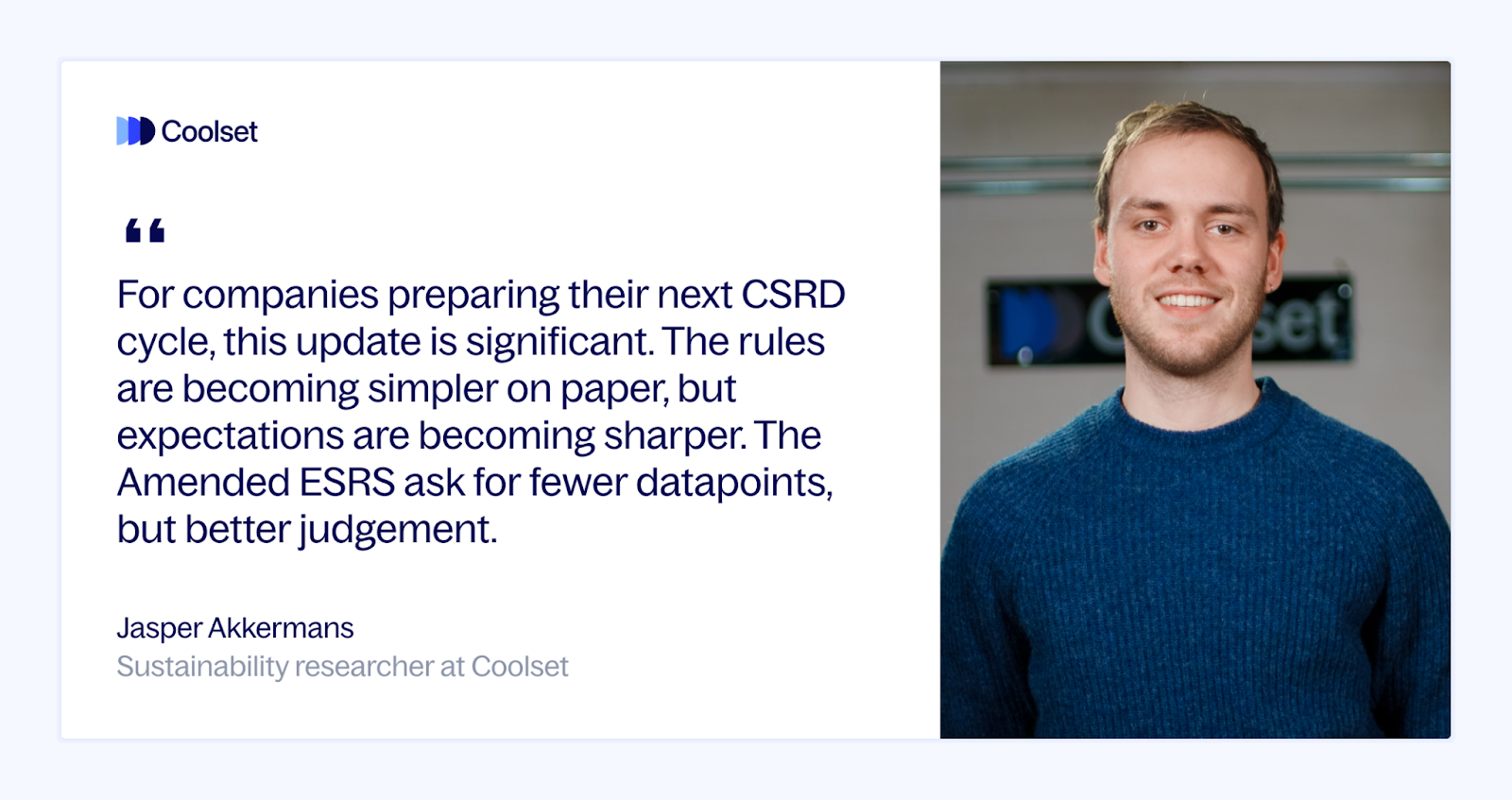
The Amended ESRS draft places greater focus on limiting ESRS E2 disclosures to cases where pollution impacts are material, reducing broader mandatory reporting expectations.
Companies should expect fewer “checklist-style” disclosures and more focus on whether pollution represents a real impact or risk in the business model. Companies need to show clearly why pollution is (or is not) a material topic, since reporting will focus on relevant impacts and defensible data rather than exhaustive disclosure.
What changed in ESRS E2 after Omnibus: scope, materiality, disclosures?
After the Omnibus updates, E2 Pollution remains a materiality-based standard, but with clearer expectations on when pollution disclosures apply, stronger links to EU pollution law, and more practical guidance on reporting emissions, microplastics, and substances of concern (SoC).
Scope
ESRS E2 continues to apply when pollution is a material sustainability topic for the undertaking. It covers the main pollution sub-topics, including:
- pollution of air, water, and soil
- microplastics (primary and secondary)
- substances of concern (SoC) and substances of very high concern (SVHC)
The updated draft also highlights that pollution reporting is often highly location-specific. If impacts or risks are concentrated in certain geographies or sites, undertakings may need to disaggregate disclosures accordingly (for example, by plant or stressed water region).
Materiality
The Omnibus-aligned approach keeps ESRS E2 firmly materiality-driven:
- Undertakings report on pollution only if it creates material impacts, risks or opportunities
- Not all sub-topics must be disclosed if they are not material, following ESRS 1 rules
A practical update is the clearer recognition of pollution across the value chain, such as transfers of water pollutants to external treatment facilities. When material, these may require entity-specific disclosures beyond core metrics.
Disclosures
ESRS E2 disclosure requirements remain structured in a way that is consistent with ESRS 2 and practical for implementation:
Pollution metrics (E2-4)
Companies must disclose the amounts of material pollutant emissions to air, water, and soil, including those arising from environmental accidents.
They must also report:
- primary microplastics manufactured or used
- microplastics directly released into the environment
- qualitative information on secondary microplastics
Most companies will rely on existing monitoring systems (e.g. E-PRTR pollutant lists) as a baseline for material pollutant identification.
Substances of concern (E2-5)
Disclosure on SoC has been clarified and made more proportionate:
- Full quantitative reporting applies mainly to undertakings operating in the chemical sector
- Requirements differ depending on whether the undertaking manufactures, uses, imports, or sells substances
Non-chemical companies should focus on SVHC presence in products and material regulatory risks rather than broad chemical mass reporting.
What is pollution materiality under the Amended ESRS E2?
Pollution materiality under the Amended ESRS E2 means companies only report on pollution disclosures when pollution-related impacts, risks or opportunities are material under the double materiality assessment.
Pollution can become material in many sectors, especially where operations involve industrial emissions, chemicals, manufacturing processes, hazardous waste or product-related pollution.
A company’s assessment should consider both direct pollution sources and upstream or downstream risks, such as supplier substance use or pollution exposure in the value chain.
ESRS E2 disclosure requirements: what companies must report
ESRS E2 requires companies to report how they manage material pollution impacts through policies, actions, resources, metrics and targets. The standard focuses on pollution of air, water and soil as well as the use and handling of substances of concern (SoC) and substances of very high concern (SVHC).
Key disclosure areas under ESRS E2 include:
- Material pollution impacts, risks and opportunities identified through the double materiality assessment
- Policies related to pollution and how these policies are implemented in practice
- Actions and resources used to prevent, control or reduce pollution
- Pollution-related targets and how progress gets tracked over time
- Metrics on pollution of air, water and soil and on SoC, depending on what is relevant to the business
{{custom-cta}}
Impacts, risks and opportunities management
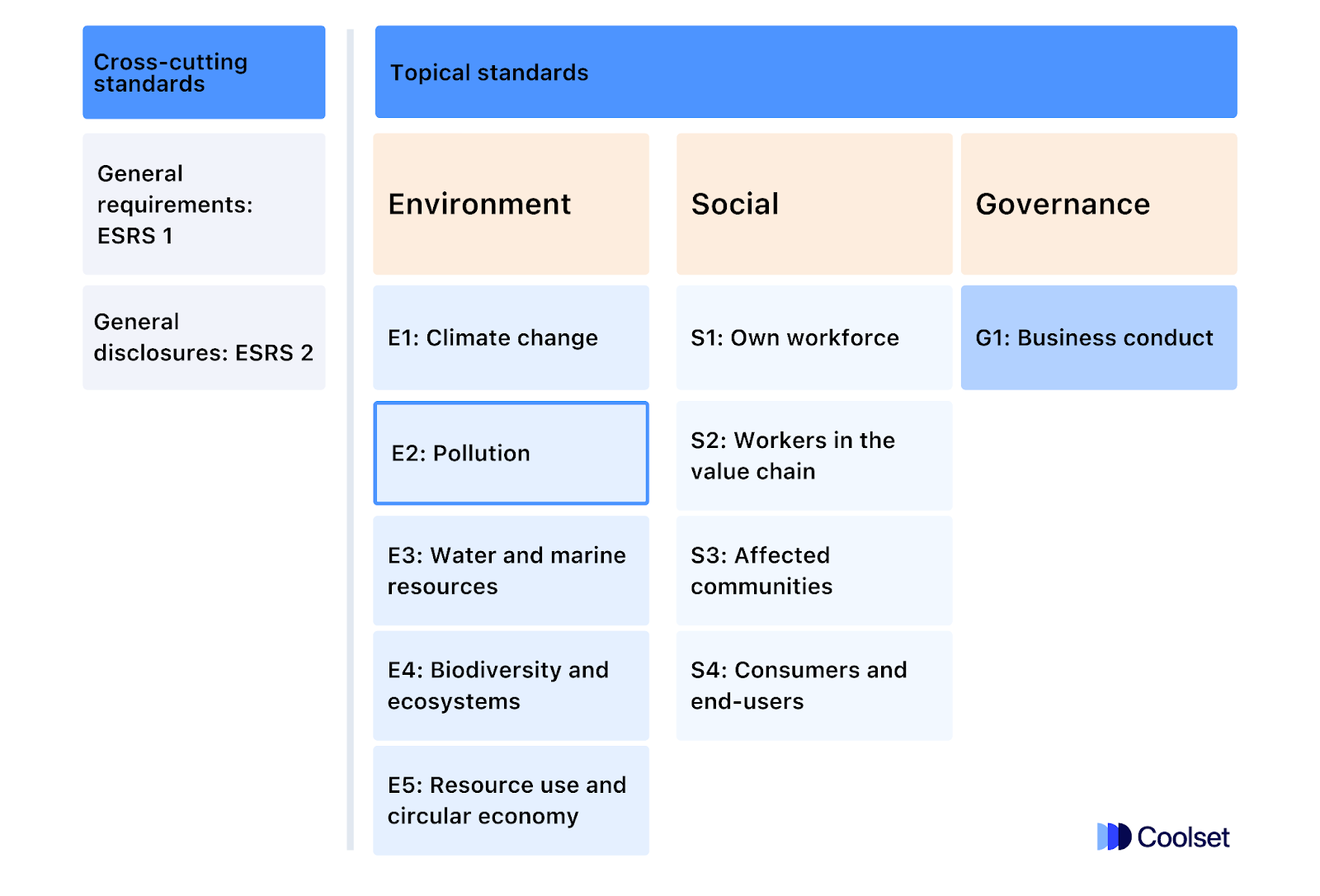
Impacts, risks and opportunities related to pollution are identified through the company’s double materiality assessment and the general disclosure framework in ESRS 2. ESRS E2 links material impacts, risks and opportunities to pollution topics such as emissions to air, water and soil, as well as SoC and SVHC. Where pollution impacts people in the value chain or local communities, disclosures can also interact with the relevant social standards, including ESRS S1 on own workforce and ESRS S3 on affected communities.
What needs to be disclosed under ESRS E2-1 on policies relating to pollution?
In practice, disclosed policies should explain:
- How the company prevents, controls, and reduces pollution across operations and the value chain
- Which pollution sub-topics are covered – air, water, soil, microplastics, and SoC
- How policies align with EU frameworks such as REACH, the Industrial Emissions Directive, and the EU Zero Pollution Action Plan
Policies should clearly connect to material impacts identified through the double materiality assessment. If pollution is material only in specific geographies or activities, disclosures should reflect that level of granularity.
For many companies, this means reviewing existing environmental or chemicals policies and mapping them explicitly to ESRS E2 requirements rather than drafting entirely new documents.
What needs to be disclosed under ESRS E2-2 on actions and resources related to pollution?
Disclosures should cover:
- Concrete actions taken to prevent or reduce pollution, for example process changes, technology upgrades, or substitution of hazardous substances
- Whether actions address own operations, upstream suppliers, or downstream product use
- Financial and human resources allocated to these actions
EFRAG places emphasis on linking actions directly to material pollution risks and impacts, rather than listing generic initiatives. If no actions are taken for a material pollution topic, companies must explain why.
A manufacturing company, for example, may disclose investments in air filtration systems, wastewater treatment upgrades, or product redesigns to reduce microplastic release during use.
Metrics and targets
Metrics used under ESRS E2 focus on what drives material pollution impacts and where those impacts occur. Where pollution is material, companies disclose relevant metrics for releases to air, water and soil and for the use or presence of SoC, including SVHC, depending on the company’s activities and exposure. Targets should reflect the pollution prevention and control approach and allow progress tracking over time, using additional metrics where needed to monitor specific risks such as microplastics or high-impact substances.
What needs to be disclosed under ESRS E2-3 targets related to pollution?
Reported targets should include:
- The specific pollution issue addressed, for example NOx emissions, water contaminants, or SVHC use
- Baselines, target values, and timelines
- Whether targets are legally required or voluntary
Targets must be measurable and linked to disclosed actions. Where targets are not yet defined, companies should clearly explain the reasons and planned next steps.
This structure is intended to reduce duplication and make pollution targets easier to compare with targets reported under climate, water, or circular economy standards.
What needs to be disclosed under ESRS E2-4 targets related to pollution of air, water and soil?
Companies must disclose:
- Material emissions of pollutants to air, water, and soil from own operations, including environmental accidents
- Amounts of primary microplastics manufactured, used, or directly released
- Qualitative information on secondary microplastics generated during product use or degradation
EFRAG explicitly references pollutant lists under the European Pollutant Release and Transfer Register (E-PRTR) and the Industrial Emissions Portal as key inputs for determining materiality.
Where relevant, transfers of pollutants to external wastewater treatment facilities are considered downstream value-chain pollution and may require entity-specific disclosures.
Data must be reported in appropriate mass units, such as kilograms or tonnes, and disaggregated where pollution impacts are geographically concentrated.
What needs to be disclosed under ESRS E2-5 targets related to substances of concern (SoC) and substances of very high concern (SVHC)?
Depending on the role in the value chain, companies must disclose:
- Total weight of SoC and SVHC procured, manufactured, placed on the market, or released into the environment
- SVHC use and releases during production or service delivery
- Names of SVHCs present above 0.1% weight-by-weight in articles, in line with the EU REACH Regulation (the EU’s main chemicals law), which requires companies to inform users when products contain hazardous substances above this threshold under Article 33.
EFRAG narrows quantitative reporting obligations for SoC primarily to companies operating in the chemical sector. Other companies focus on SVHC use and disclosure in products and operations.
SVHC data must be grouped by hazard class under the Classification, Labelling and Packing of chemicals (CLP) Regulation (the EU’s system for classifying and labeling chemical hazards), avoiding double counting across categories.
This disclosure is designed to help users assess regulatory risk, substitution challenges, and potential future restrictions linked to hazardous substances.
What should companies do next to prepare for ESRS E2 reporting?
Companies should prepare for reporting under the Amended ESRS
- Start by confirming what remains in scope under the amended ESRS. Do not reuse old reporting templates without checking them first, since they may include datapoints that are no longer required.
- Classify each disclosure correctly. The amended ESRS draw a clearer line between mandatory disclosures, conditional disclosures and disclosures that depend on materiality, so teams should label each requirement before drafting.
- Run the double materiality assessment using the simplified approach. Double materiality still determines what gets reported, even if the updated framework allows a more practical top-down process. Materiality conclusions still need clear reasoning and documentation.
- Prioritize relevance over completeness. Avoid defensive reporting and do not keep datapoints just because they appeared in earlier ESRS versions. Align disclosures to what the amended standards actually ask for.
- Clean up existing disclosures early. Remove outdated datapoints and narratives before writing the sustainability statement to reduce volume and improve readability.
Get access to the ESRS 2026 cheat sheet here.
How to use software to help reporting on pollution
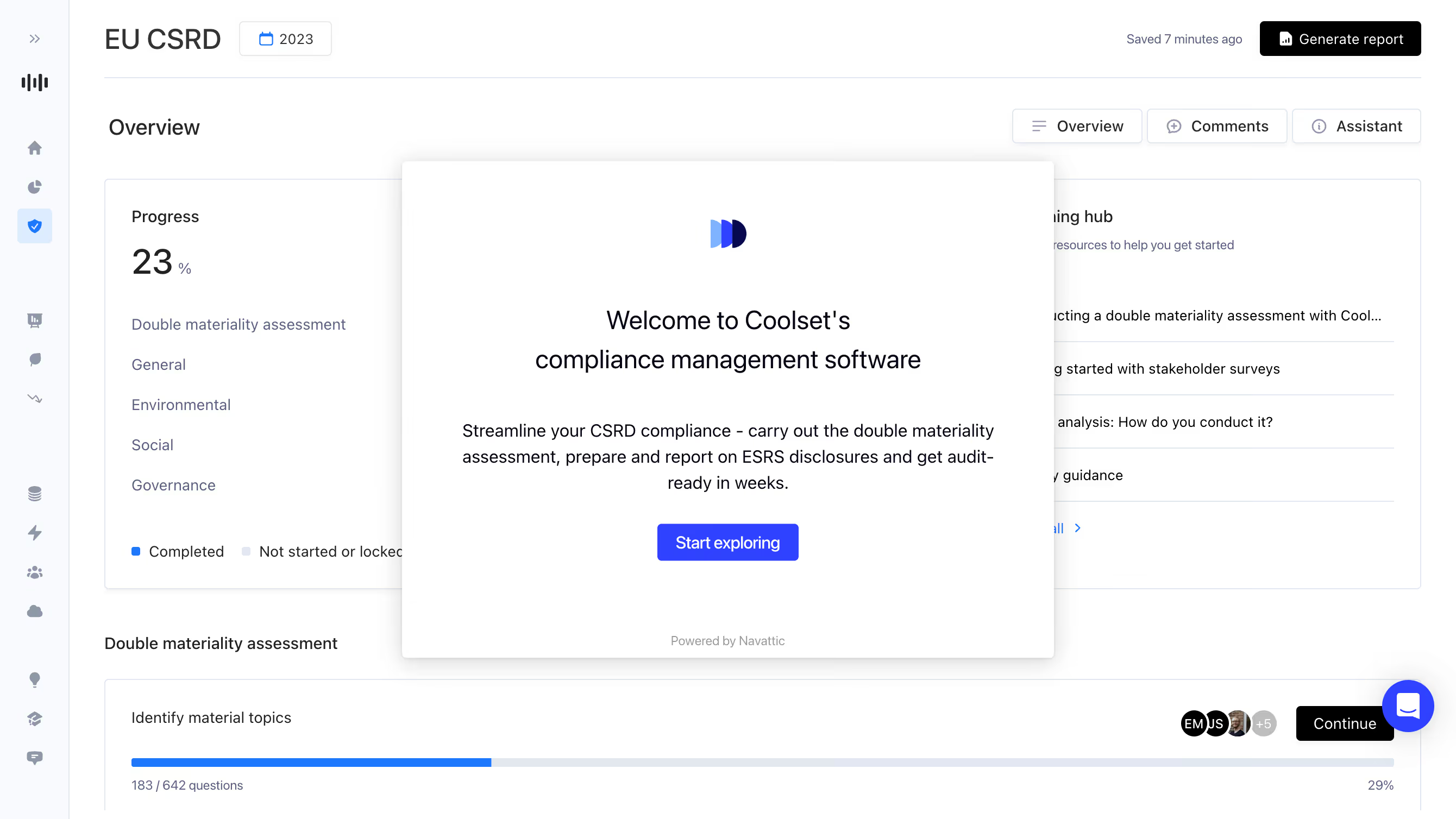
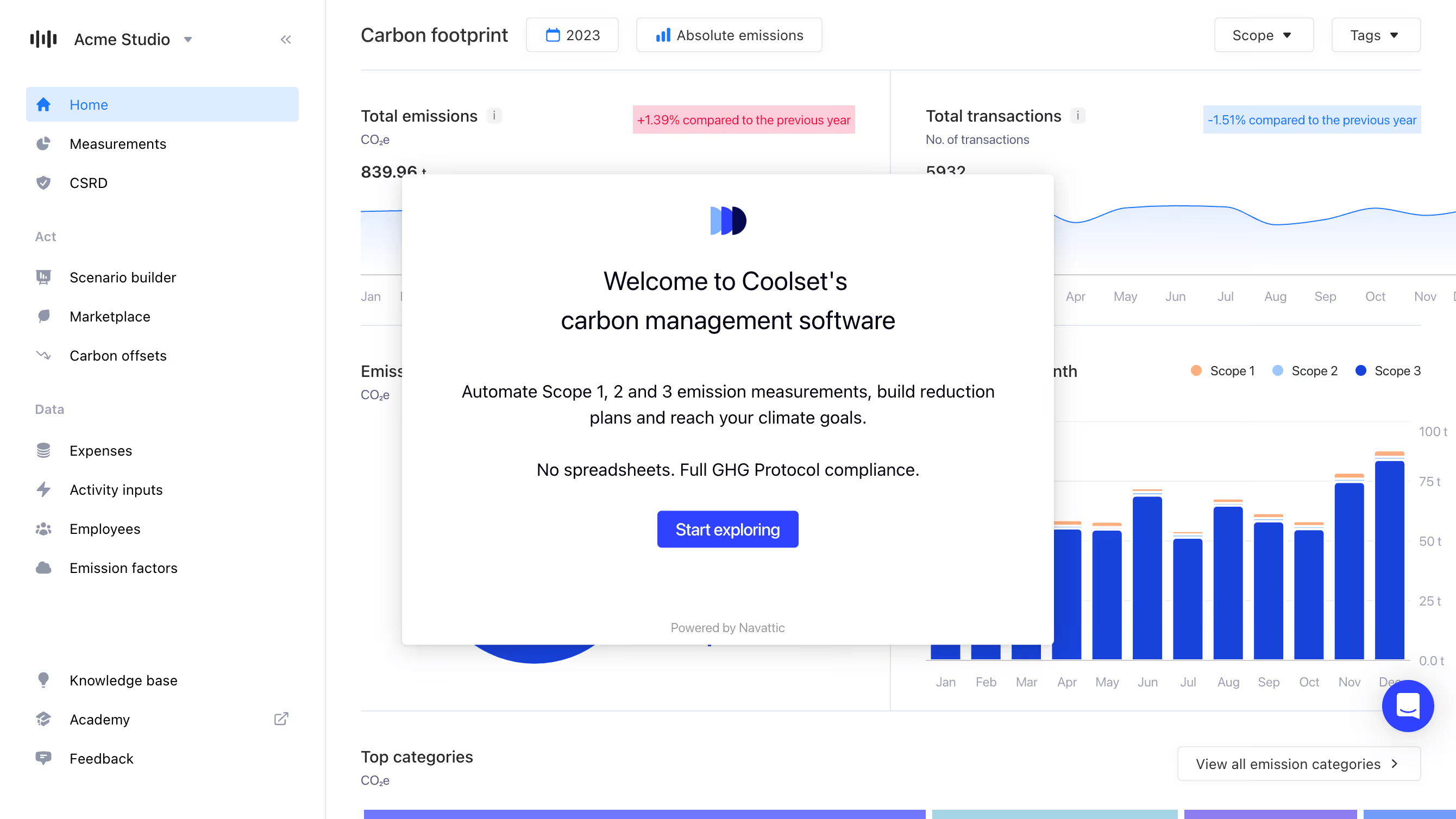
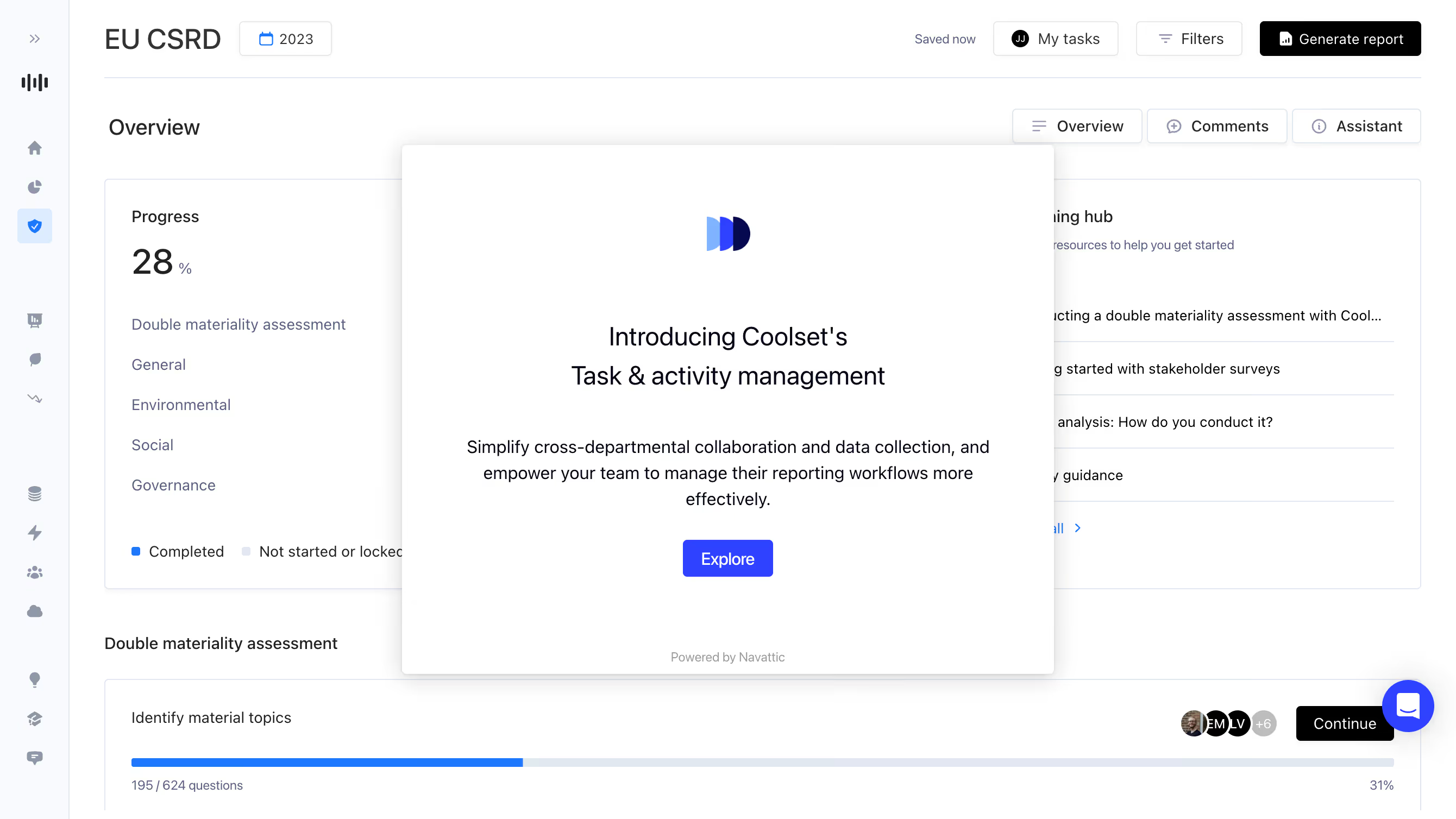
Software makes ESRS E2 reporting more manageable by turning scattered environmental data into structured disclosures. The right tool also helps teams run double materiality assessments, track metrics over time and stay audit-ready as CSRD expectations tighten.
A practical pollution reporting system should support:
- Collecting data across operations and the value chain
- Linking pollution impacts, risks and opportunities to ESRS E2 disclosures
- Tracking targets and progress on pollution prevention
- Producing consistent, regulator-aligned reports without manual rework
At Coolset, pollution reporting becomes part of a broader sustainability data foundation, not a one-off compliance scramble.
{{product-tour-injectable}}
FAQs
Is ESRS E2 mandatory for every company reporting under CSRD?
No. Companies report under ESRS E2 only if pollution is a material topic based on the double materiality assessment. If only some pollution sub-topics are material, companies disclose only those and explain any omissions.
Does ESRS E2 cover greenhouse gas emissions?
No. ESRS E2 covers pollutants, microplastics, substances of concern, and substances of very high concern. Greenhouse gas emissions sit under ESRS E1 on climate change.
What pollution metrics does ESRS E2-4 require?
Companies disclose the amounts of material pollutant emissions to air, water, and soil from own operations, including accidents. Companies also disclose primary microplastics manufactured or used and directly released plus qualitative information on secondary microplastics.
Do companies need to report pollution in the value chain?
ESRS E2 mainly focuses on own operations, but transfers of water pollutants to external treatment plants count as downstream value-chain pollution. If transfers are material, companies are expected to report them as entity-specific disclosures.
Which companies have the most detailed requirements for substances of concern?
EFRAG limits full “substances of concern” mass reporting mainly to chemical-sector companies (manufacturing, formulating, or wholesaling chemical substances). Other companies report SVHC use and direct releases when relevant.
Do companies need to name SVHCs in products?
Yes, when SVHCs are present above 0.1% weight-by-weight in articles. Manufacturers, importers, or users of articles must disclose the names of those SVHCs in procured components and components placed on the market.
How to run a ‘simplification-ready’ double materiality assessment in 2026 that reduces rework and holds up to audit expectations


on mobile screens
to experience this demo.


Audit-proof your ESRS reporting today
Speak to one of our sustainability experts


.webp)