How to perform a double materiality assessment for CSRD (Updated Mar 2026)



Disclaimer: New EUDR developments - December 2025
In November 2025, the European Parliament and Council backed key changes to the EU Deforestation Regulation (EUDR), including a 12‑month enforcement delay and simplified obligations based on company size and supply chain role.
Key changes proposed:
- New enforcement timeline: 30 December 2026 for large/medium operators, 30 June 2027 for small/micro operators
- Simplified DDS: One-time declarations for small and micro primary producers
- Narrowed scope: Most downstream actors and non‑SME traders would no longer need to submit DDSs
- New DDS requirement: Estimated annual quantity of regulated products must be included
These updates are not yet legally binding. A final text will be confirmed through trilogue negotiations and formal publication in the EU’s Official Journal. Until then, the current EUDR regulation and deadlines remain in force.
We continue to monitor developments and will update all guidance as the final law is adopted.
Key takeaways
- The double materiality assessment is the mandatory first step in CSRD compliance, determining which of the 10 ESRS topical standards your company must report on based on both impact and financial materiality.
- Post-Omnibus, the DMA process has been simplified with a top-down approach and sector-based opt-outs, but companies still in scope must document their methodology rigorously for third-party audit.
- Coolset's CSRD platform guides teams through stakeholder engagement, IRO scoring and materiality documentation to produce audit-ready DMA outputs.
Double materiality is a core concept in today's corporate sustainability world — especially for companies preparing to comply with the EU's Corporate Sustainability Reporting Directive (CSRD). It requires companies to assess and report on sustainability issues from two angles: how sustainability issues affect the company (financial materiality) and how the company affects society and the environment (impact materiality).
This guide explains what double materiality is, why it matters, and how to conduct a double materiality assessment (DMA) for your company.
{{custom-cta}}
What is double materiality?
Double materiality is a framework for assessing the significance of sustainability topics from two perspectives:
- Financial materiality (outside-in): How sustainability issues (e.g. climate risks, regulatory changes) affect your company's financial performance, position, or cash flows.
- Impact materiality (inside-out): How your company's operations, products, and value chain affect people and the environment.
Under the CSRD and ESRS framework, a topic is considered material if it is material on either dimension — not just both. This is the defining feature of the EU's approach and differs from the single-materiality approach traditionally used in financial reporting.
Why double materiality matters for CSRD compliance
The double materiality assessment is the foundation of CSRD reporting. The topics your DMA identifies as material determine:
- Which ESRS topical standards apply to your company
- What data points you must collect and disclose
- The scope of your sustainability statement and what goes to limited assurance
Without a complete and well-documented DMA, you cannot determine the scope of your reporting obligations — or defend them to an auditor.
How to conduct a double materiality assessment
A DMA typically follows these steps:
1. Define the universe of sustainability topics
Start with the list of topics covered by the ESRS: E1 (climate change), E2 (pollution), E3 (water), E4 (biodiversity), E5 (circular economy), S1 (own workforce), S2 (workers in the value chain), S3 (affected communities), S4 (consumers), and G1 (business conduct).
2. Conduct stakeholder engagement
Gather input from internal and external stakeholders about which sustainability topics they consider most significant for your business. ESRS 1 requires companies to demonstrate that their DMA reflects a genuine engagement process.
3. Assess impact materiality
For each topic, assess whether your company has actual or potential impacts on people or the environment — either through your own operations or through your value chain. Evaluate the severity and scale of these impacts.
4. Assess financial materiality
For each topic, assess whether the related risks or opportunities could have a significant effect on your company's financial performance, position, or cash flows over the short, medium, or long term.
5. Apply thresholds and determine material topics
A topic is material under CSRD if it crosses the threshold on either dimension. Document your rationale for each materiality decision — auditors will review not just the conclusions but the process.
6. Map material topics to ESRS standards
Translate your list of material topics into the corresponding ESRS standards and disclosure requirements. This determines your full reporting scope.
Common mistakes in double materiality assessments
- Using a tick-box approach without genuine stakeholder engagement
- Failing to consider the full value chain (upstream and downstream)
- Not documenting the rationale for materiality decisions
- Treating the DMA as a one-time exercise rather than a living process
- Confusing double materiality with single (financial) materiality
How Coolset supports your DMA
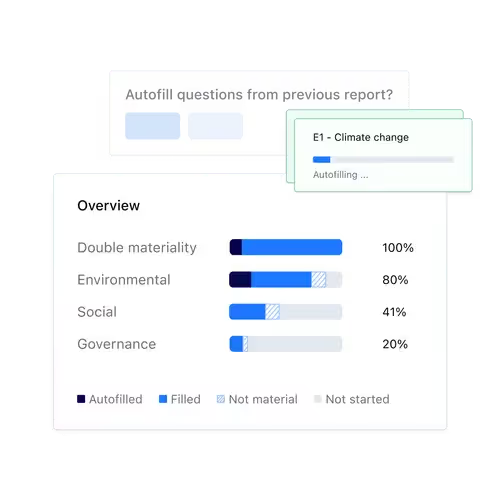
Coolset provides a structured DMA workflow that guides you through each step of the assessment, from topic identification and stakeholder engagement through to materiality scoring and documentation. The output maps directly to your ESRS reporting scope, connecting your DMA to the data collection and disclosure process. Book a demo to see how it works.
Download your free guide and share it with your team to kickstart preparations.

on mobile screens
to experience this demo.
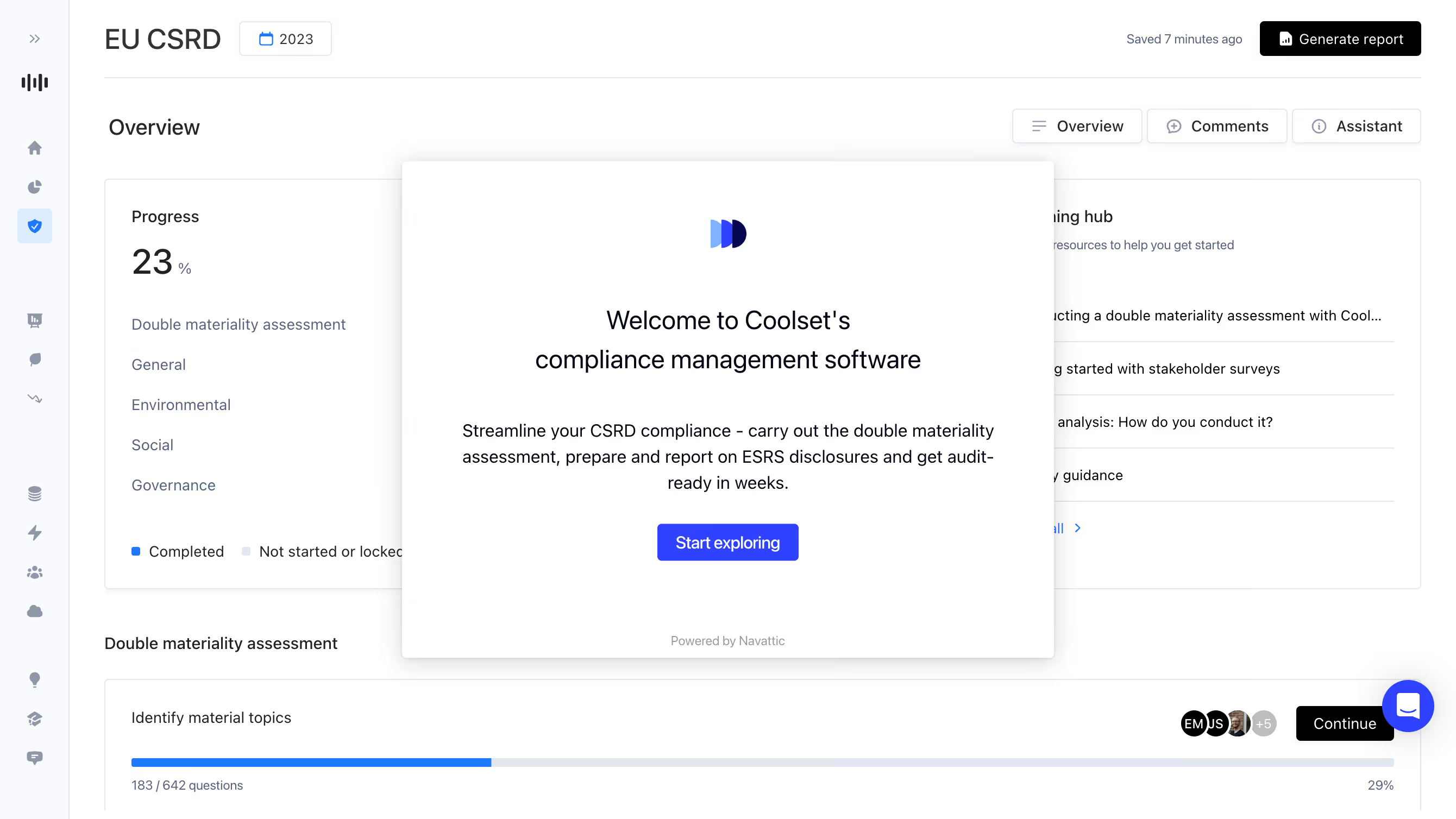
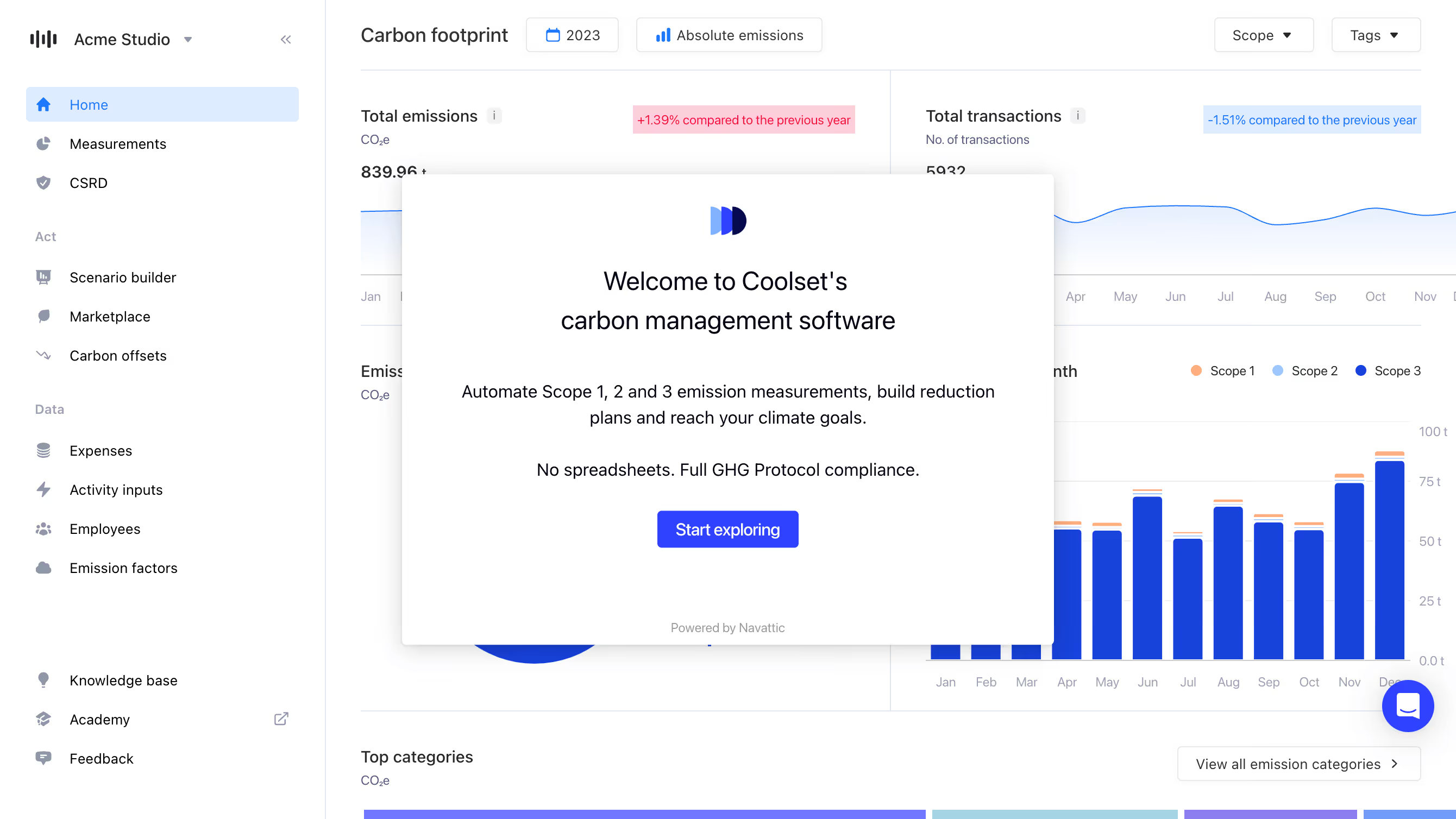
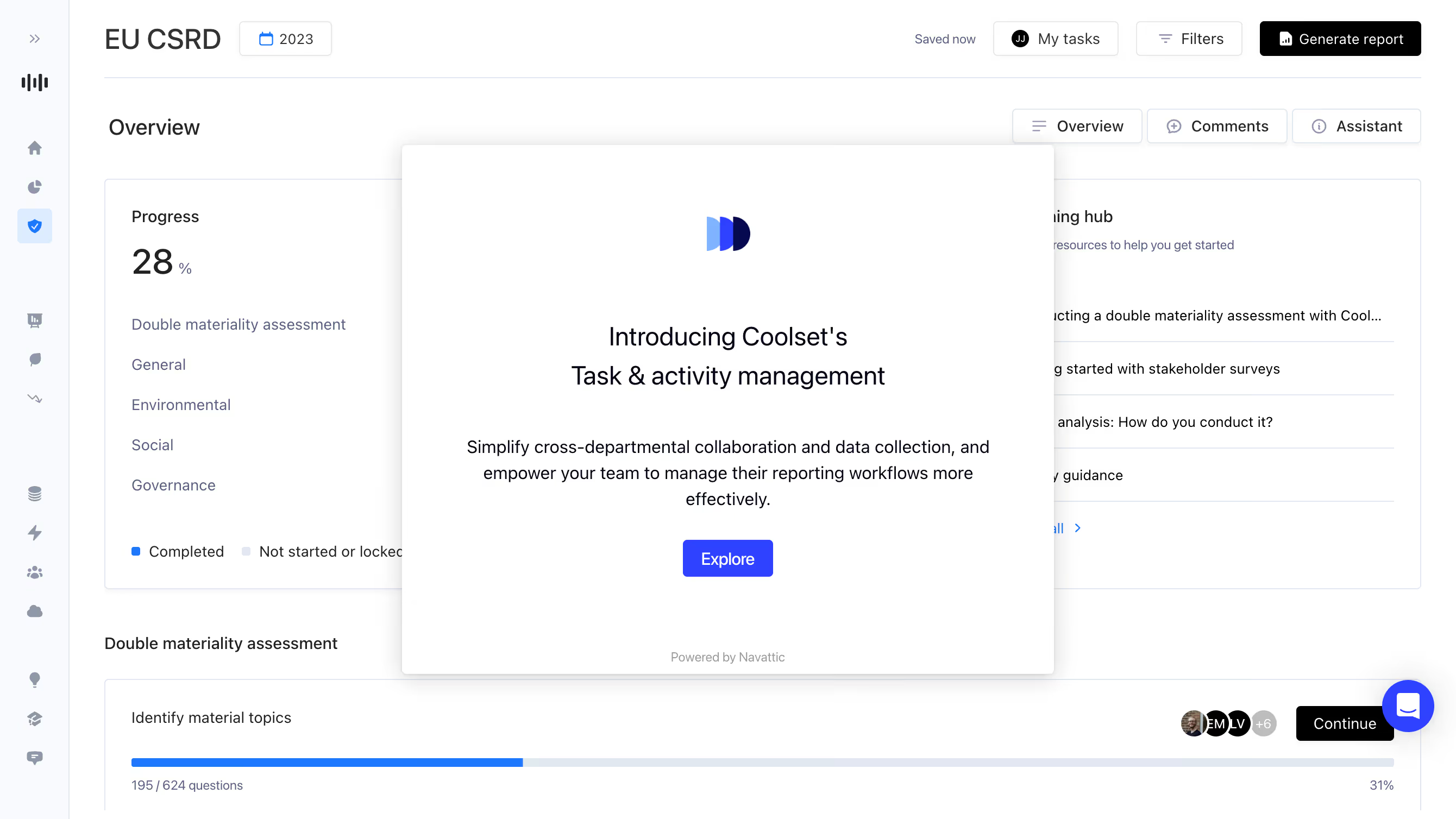


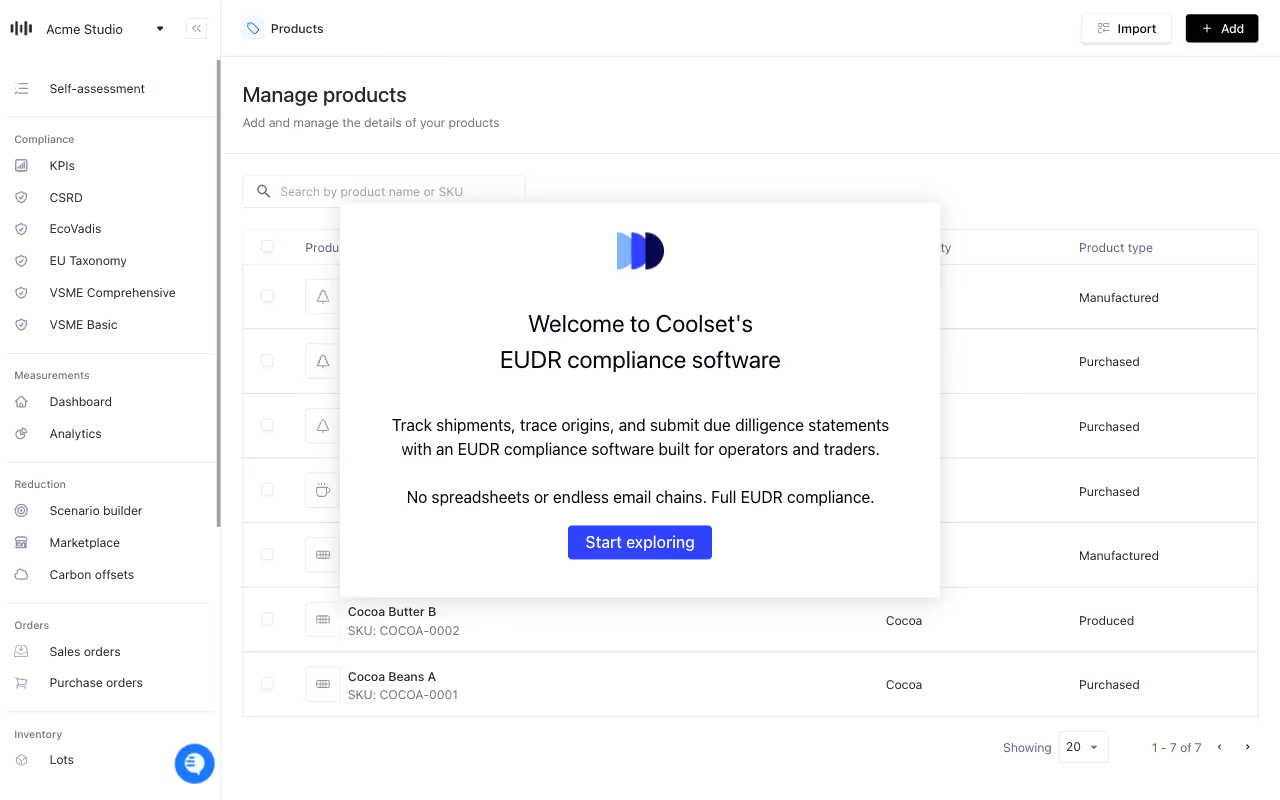
Do your audit-proof double materiality assessment with Coolset
Coolset has developed in-depth sustainability software that helps you produce reports in line with CSRD.

.webp)