Decarbonization certifications for mid-market companies: how to get them



Disclaimer: New EUDR developments - December 2025
In November 2025, the European Parliament and Council backed key changes to the EU Deforestation Regulation (EUDR), including a 12‑month enforcement delay and simplified obligations based on company size and supply chain role.
Key changes proposed:
- New enforcement timeline: 30 December 2026 for large/medium operators, 30 June 2027 for small/micro operators
- Simplified DDS: One-time declarations for small and micro primary producers
- Narrowed scope: Most downstream actors and non‑SME traders would no longer need to submit DDSs
- New DDS requirement: Estimated annual quantity of regulated products must be included
These updates are not yet legally binding. A final text will be confirmed through trilogue negotiations and formal publication in the EU’s Official Journal. Until then, the current EUDR regulation and deadlines remain in force.
We continue to monitor developments and will update all guidance as the final law is adopted.
Key takeaways
- Decarbonization certifications (ISO 14064, PAS 2060, SBTi) validate a company's emissions reduction efforts and build credibility with investors, regulators and customers.
- The process starts with a comprehensive Scope 1-3 emissions baseline, followed by clear targets, an action plan and ongoing monitoring.
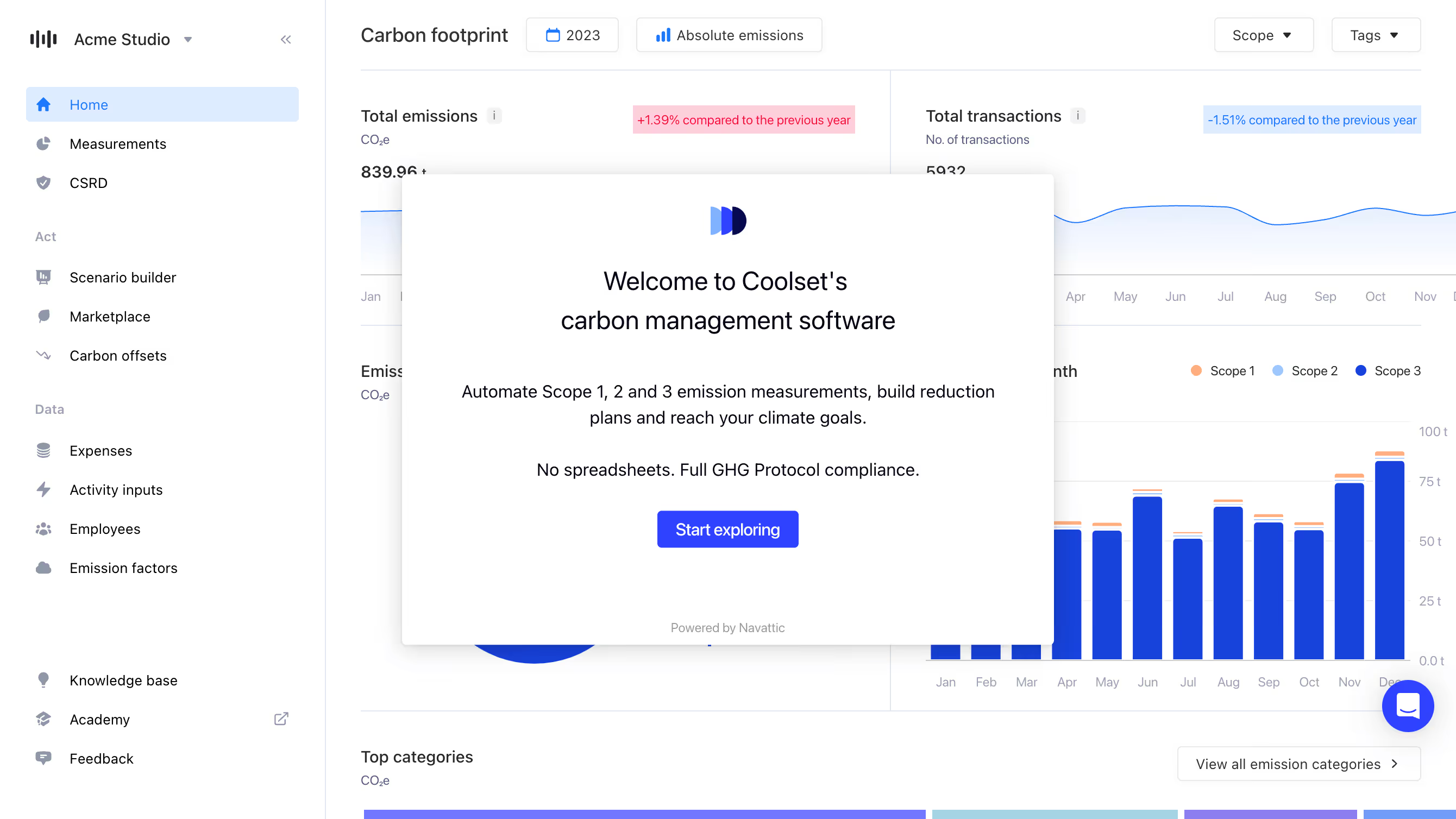
- Coolset's carbon management platform automates emissions tracking, identifies reduction opportunities and generates audit-ready reports to support certification.
Businesses today face growing pressure to reduce their environmental impact. With mid-market companies responsible for a significant portion of global emissions, decarbonization certifications have become a key tool for demonstrating climate credibility to investors, customers, and regulators.
But the landscape of certifications is complex. Some focus on carbon offsetting, others on emissions measurement, and others on supply chain practices. This guide helps mid-market companies understand which certifications are most relevant and how to approach them strategically.
Why certifications matter for mid-market companies
Mid-market companies increasingly face sustainability requirements from multiple directions:
- Enterprise customers demanding supply chain ESG data (often via EcoVadis, CDP, or similar platforms)
- Regulatory requirements such as CSRD for companies in scope
- Investor and lender ESG due diligence
- Procurement gates at larger companies requiring sustainability credentials
Certifications can help meet these demands, but they work best when grounded in real emissions measurement rather than used as a substitute for it.
Key decarbonization certifications for mid-market companies
Science Based Targets initiative (SBTi)
SBTi is the gold standard for emissions reduction commitments. Companies set targets aligned with a 1.5°C or 2°C pathway and have their targets validated by the SBTi. It requires a credible Scope 1, 2, and 3 emissions baseline and a roadmap to reduce emissions in line with climate science.
SBTi is highly credible with investors, enterprise buyers, and regulators. It does not involve offsetting—it's about real reduction commitments. For mid-market companies, the SMB (Small and Medium-Sized Business) pathway offers a simplified target-setting process.
EcoVadis
EcoVadis is a sustainability performance assessment platform widely used in procurement. Companies complete a questionnaire covering environment, labor practices, ethics, and sustainable procurement, and receive a scored medal rating. Many enterprise buyers require EcoVadis participation as a supplier qualification criterion.
EcoVadis is not a certification in the traditional sense—it’s an assessment—but it functions as one in procurement contexts. It is increasingly aligned with CSRD requirements, making CSRD preparation and EcoVadis improvement mutually reinforcing activities.
CDP (formerly Carbon Disclosure Project)
CDP operates a global disclosure system for companies to report their environmental data. Companies receive a scored rating (from D to A) based on the completeness and quality of their disclosure. Many institutional investors use CDP scores as a screening criterion.
CDP participation requires detailed emissions data across Scope 1, 2, and 3 and is aligned with TCFD and ESRS E1 requirements. Mid-market companies can participate even without being CSRD-regulated.
ISO 14001 (Environmental Management Systems)
ISO 14001 certifies that a company has implemented an environmental management system (EMS) meeting international standards. It focuses on processes and governance rather than specific emissions targets and is valuable for demonstrating structured environmental management to customers and regulators.
TÜV Rheinland GHG Protocol certification
Some companies pursue third-party verification of their greenhouse gas inventory under the GHG Protocol. This is distinct from offsetting—it certifies that your measurement methodology meets international standards. Coolset's carbon accounting methodology is TÜV Rheinland-certified, which supports this verification for customers using the platform.
The role of emissions measurement
Every credible certification starts with accurate emissions measurement. Certifications that don't require a verified emissions baseline—such as some simple offsetting schemes—are increasingly scrutinized and offer less credibility than measurement-based approaches.
Before pursuing certifications, establish your Scope 1, 2, and 3 baseline. This is the foundation that makes everything else credible. Our guide to measuring your company's carbon footprint covers the key steps.
Strategic approach for mid-market companies
Rather than pursuing certifications for their own sake, approach them as milestones in your decarbonization journey:
- Measure your emissions baseline (Scope 1, 2, 3)
- Identify which certifications your key customers or investors require
- Prioritize SBTi for emissions credibility, EcoVadis for procurement, CDP for investors
- Use certifications to drive internal accountability and supplier engagement
For companies navigating supply chain sustainability, see our guide to 9 decarbonization methods to reduce supply chain emissions.
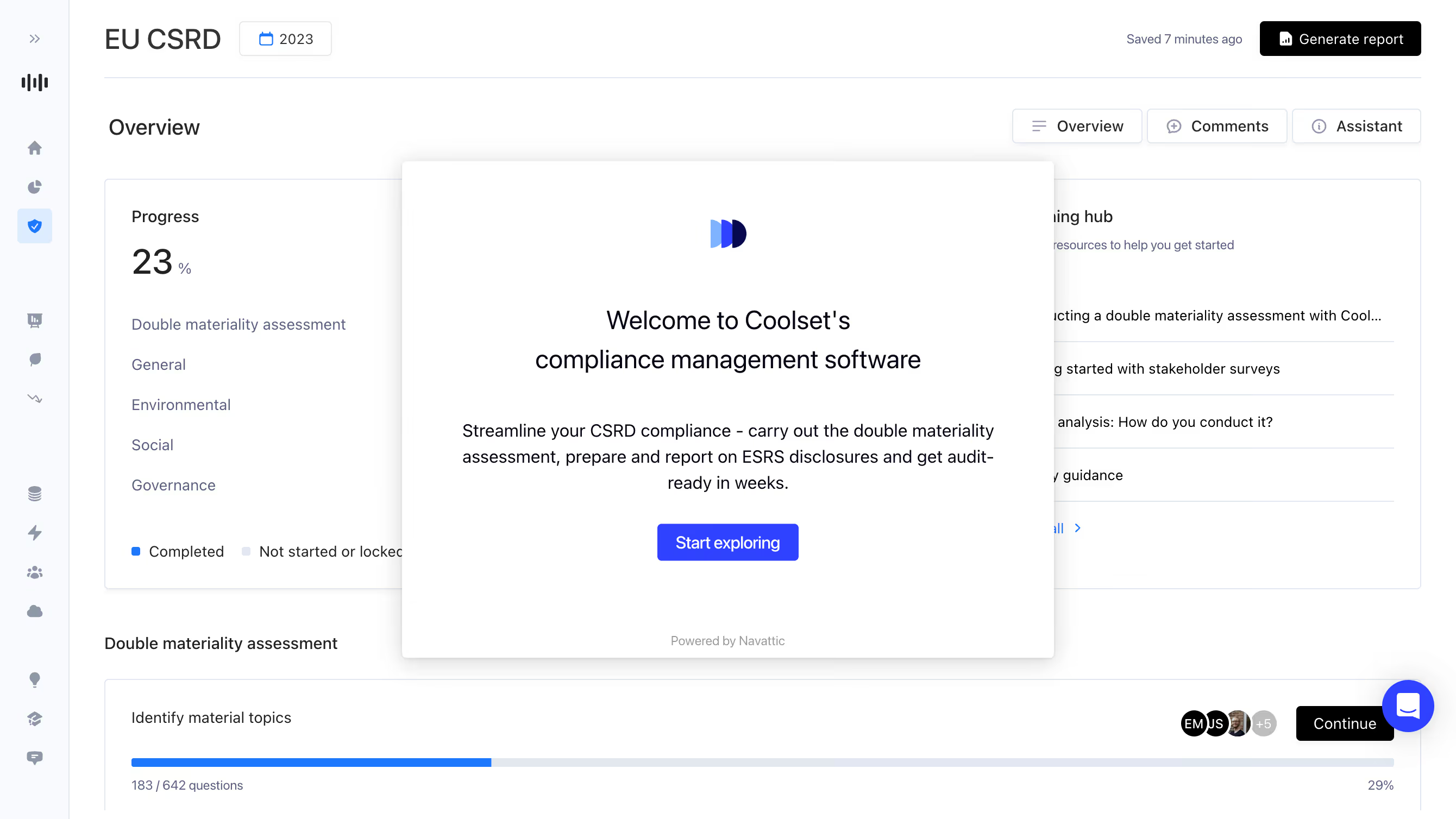
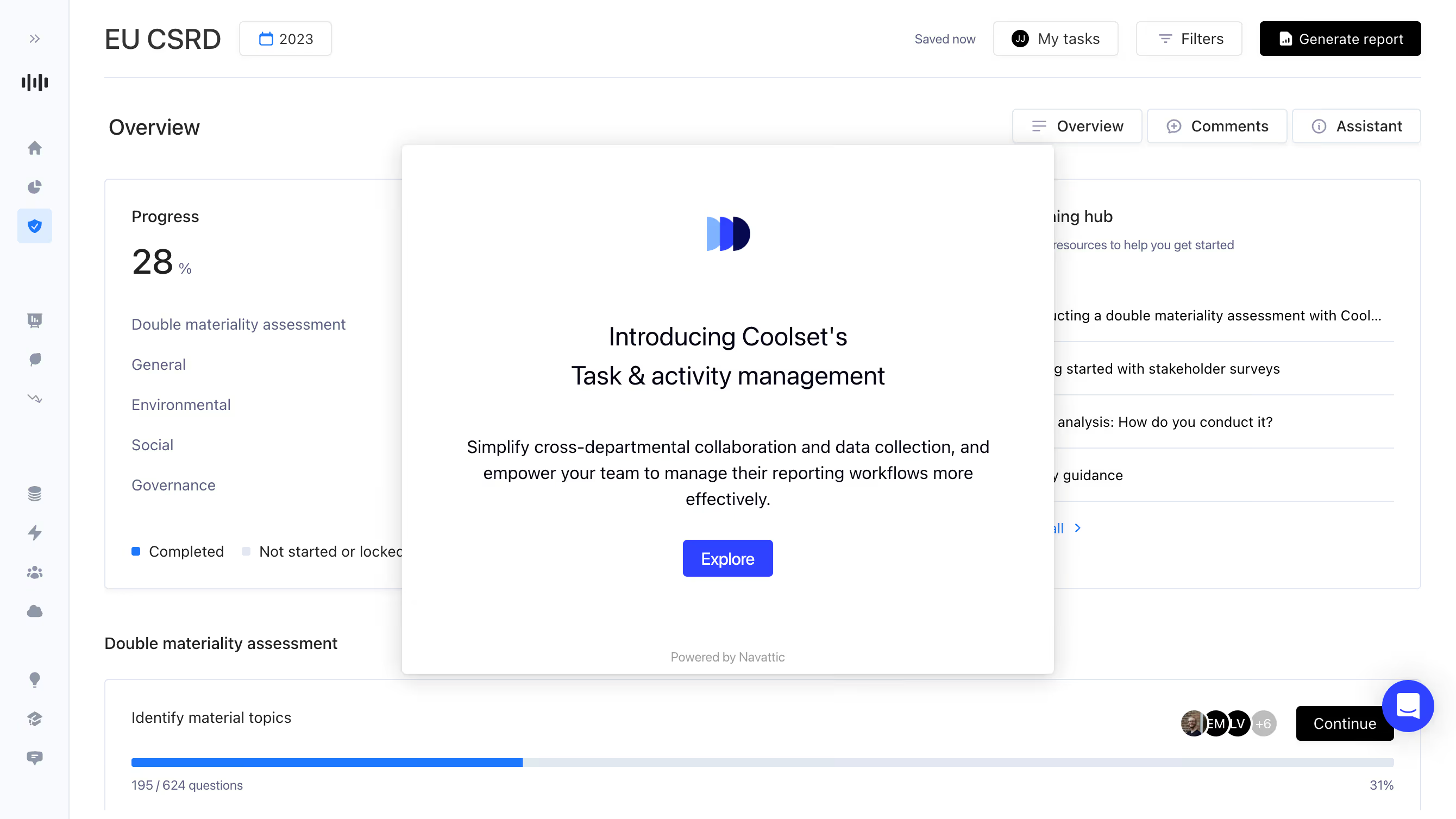
Coolset supports the emissions measurement and reporting foundation that makes all of these certifications achievable. Book a demo to see how the platform works.
Download our collection of free sustainability e-books for mid-market companies.


on mobile screens
to experience this demo.


↘ Check if your documentation meets PPWR requirements
This free compliance checker scans your packaging documentation and maps it against mandatory PPWR data requirements, giving you a clear view of your compliance status. Get actionable insights on documentation gaps before they become compliance issues.
Become certified with Coolset's sustainability solutions.
Coolset offers a range of sustainability solutions for your company.

.webp)