How to audit-proof your greenhouse gas assessment (according to the GHG Protocol)



Disclaimer: New EUDR developments - December 2025
In November 2025, the European Parliament and Council backed key changes to the EU Deforestation Regulation (EUDR), including a 12‑month enforcement delay and simplified obligations based on company size and supply chain role.
Key changes proposed:
- New enforcement timeline: 30 December 2026 for large/medium operators, 30 June 2027 for small/micro operators
- Simplified DDS: One-time declarations for small and micro primary producers
- Narrowed scope: Most downstream actors and non‑SME traders would no longer need to submit DDSs
- New DDS requirement: Estimated annual quantity of regulated products must be included
These updates are not yet legally binding. A final text will be confirmed through trilogue negotiations and formal publication in the EU’s Official Journal. Until then, the current EUDR regulation and deadlines remain in force.
We continue to monitor developments and will update all guidance as the final law is adopted.
Key takeaways
- An independent GHG audit adds credibility to your emissions data and is mandatory under the CSRD, which requires limited assurance on sustainability reports.
- Audit-proofing requires identifying all Scope 1-3 sources, gathering accurate data, calculating emissions per GHG Protocol standards and verifying quality with a pedigree matrix.
- Coolset's carbon accounting platform ensures GHG Protocol-compliant data collection, consistent emission factors and audit-ready documentation.
Starting your journey toward net zero or any environmental goal requires a detailed inventory of your greenhouse gas (GHG) emissions. This entails measuring your organization's carbon footprint across three categories of emissions that the Greenhouse Gas Protocol established – Scope 1, Scope 2, and Scope 3 – in line with established reporting standards.
Whether it's conducting a GHG assessment for the first time or improving existing practices, companies often struggle with where to start. Many organizations lack the internal expertise, tools, or guidance to conduct a thorough and reliable GHG assessment. Others don't know which framework to follow, who to involve, or what level of detail is needed to pass third-party audits.
In this article, we walk you through a step-by-step process for building an audit-proof GHG assessment – one that is accurate, traceable, and ready for assurance review.
Step 1: Understand the purpose of your GHG assessment
Before collecting any data, it's important to understand why you're conducting the assessment. This shapes the scope of your work.
For most companies in the EU, the most immediate driver is the Corporate Sustainability Reporting Directive (CSRD), which mandates comprehensive sustainability reporting including climate-related disclosures. But other drivers include investor requests, supply chain due diligence, internal net-zero targets, or pre-emptive compliance with standards like the GHG Protocol.
Understanding your purpose helps you make scoping decisions: which organizational entities to include, whether to report on all three scopes, and what level of accuracy is expected.
Step 2: Choose the right reporting framework
The most widely used framework for GHG accounting is the Greenhouse Gas Protocol (GHG Protocol), which is aligned with reporting standards like the CSRD's ESRS E1. This framework defines Scope 1, 2, and 3 emissions and establishes the principles of relevance, completeness, consistency, transparency, and accuracy.
Aligning to the GHG Protocol is essential if you want your results to be auditable. It provides the standard definitions, emission factor sources, and documentation requirements that auditors will expect.
Step 3: Set your organizational boundary
Decide which legal entities, sites, or subsidiaries are included in the assessment. The GHG Protocol offers two approaches:
- Equity share: Include emissions proportional to your equity stake in each entity
- Control approach: Include 100% of emissions from entities you operationally or financially control
The control approach is most common and aligns well with CSRD reporting requirements. Document your boundary clearly – auditors will want to understand what was included and why.
Step 4: Define the operational boundary (Scope 1, 2, 3)
Once your organizational boundary is set, define the operational scope:
- Scope 1: Direct emissions from sources you own or control (company vehicles, on-site fuel combustion)
- Scope 2: Indirect emissions from purchased electricity, heat, or steam
- Scope 3: All other indirect emissions in your value chain, including purchased goods and services, business travel, and product use/disposal
For audit-readiness, you need to document why certain Scope 3 categories are included or excluded, particularly if you claim they're not relevant to your operations.
Step 5: Collect emissions data across all scopes
Data collection is often the most time-consuming part of a GHG assessment. The key is to be systematic and document everything.
For Scope 1 and 2, gather energy bills, fuel receipts, and facility data. For Scope 3, you'll need supplier data, spend figures, logistics records, and employee commuting surveys, depending on the categories you're reporting on.
Where primary data (actual measurements from suppliers or operations) isn't available, you can use spend-based estimates or physical activity data combined with emissions factors from databases like Exiobase, Ecoinvent, or the UK DEFRA dataset.
Document the source of every figure: where did the number come from, what emission factor was applied, and how was it calculated. This documentation trail is critical for audits.
Step 6: Apply emission factors correctly
Each activity data point is converted into CO2-equivalent (CO2e) emissions using an emission factor. These factors come from standardized databases and vary by region, energy source, or material type.
Common considerations:
- Use market-based emission factors for Scope 2 where contractual instruments like renewable energy certificates are in place
- Use location-based factors where contractual data isn't available
- Ensure emission factors are specific to your region and year, as they are updated regularly
- Document all factor sources – auditors will verify that appropriate, up-to-date factors were used
Step 7: Validate data quality and run internal checks
Before finalizing your results, perform internal quality checks:
- Cross-check energy data against invoices and meter readings
- Verify that Scope 3 estimates are calculated correctly and that emission factors are applied consistently
- Check that the sum of scopes aligns with your expected total footprint
- Flag and document any data gaps or estimation assumptions
For audit readiness, it's important to be transparent about uncertainty. Auditors don't expect perfection – they expect documentation of your methodology, assumptions, and known limitations.
Step 8: Prepare to handle prepare accounting for sustainability reporting
Accounting teams play a growing role in sustainability reporting – especially as the CSRD brings non-financial disclosures into the annual report. Understanding how to integrate sustainability data into financial reporting processes is increasingly important for companies preparing for assurance.
This includes aligning data governance, maintaining audit trails, and ensuring consistency between financial and sustainability disclosures.
Step 9: Prepare for third-party assurance
An audit-proof GHG assessment needs to be verifiable by an external auditor. To prepare:
- Organize data into a structured format with source references and calculation logic
- Ensure clear ownership of each data point (who provided it, when, and from which system)
- Document your materiality decisions and any emissions excluded from the scope
- Prepare supporting documentation for material line items (e.g. utility bills, supplier invoices)
Under CSRD, limited assurance is required from 2025 onwards for Wave 1 entities, with a planned move to reasonable assurance by 2028. Third-party auditors will assess not just your numbers but your methodology and documentation.
Using technology to streamline GHG assessments
Most companies that try to manage GHG assessments manually – in spreadsheets or disconnected systems – struggle with data quality, version control, and audit trails. Purpose-built software like Coolset is designed to address these challenges directly.
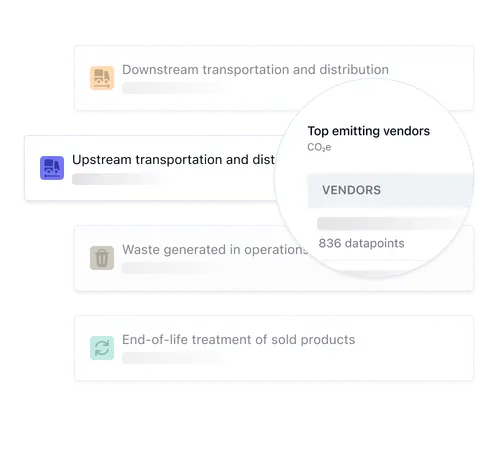
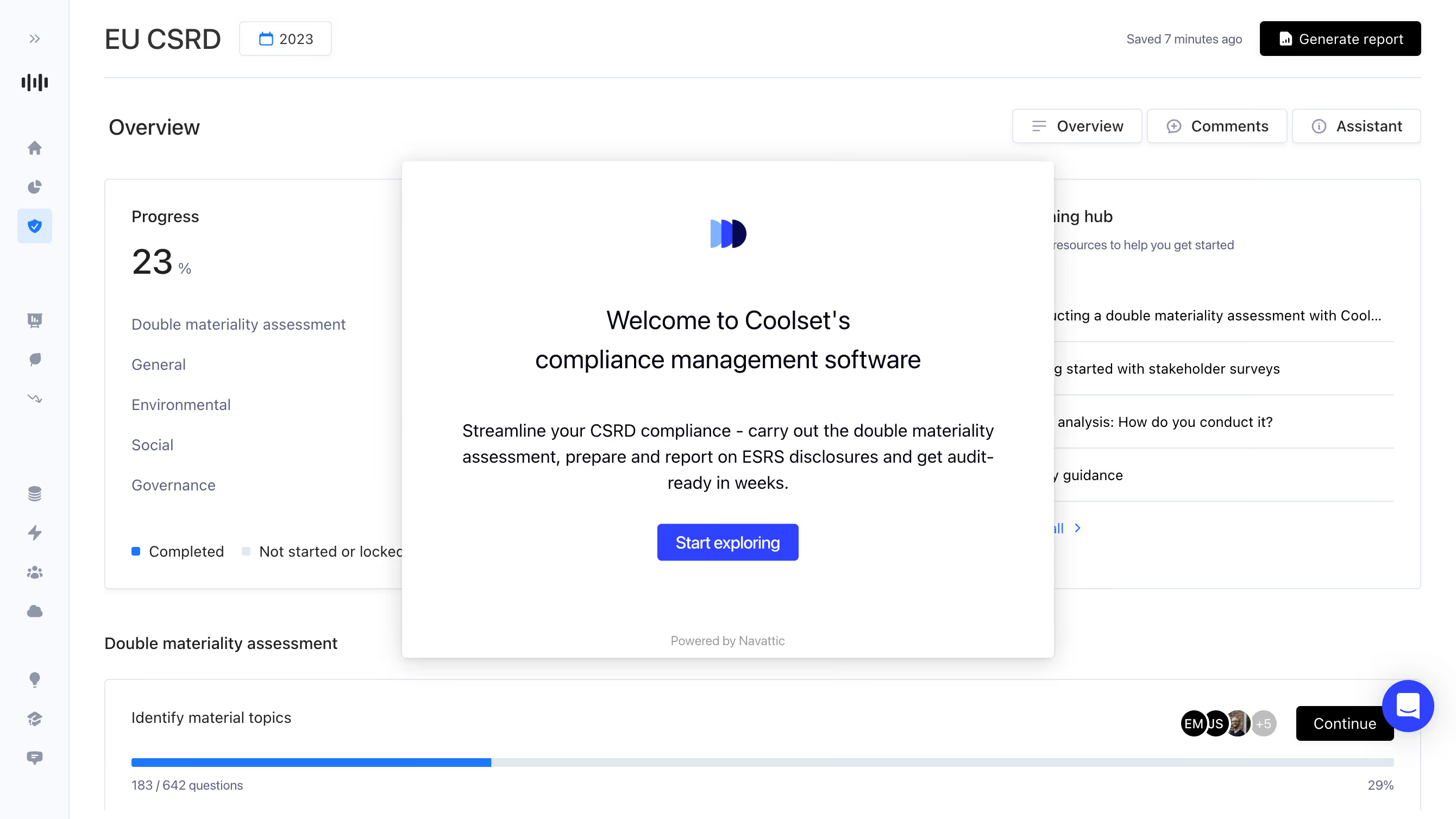
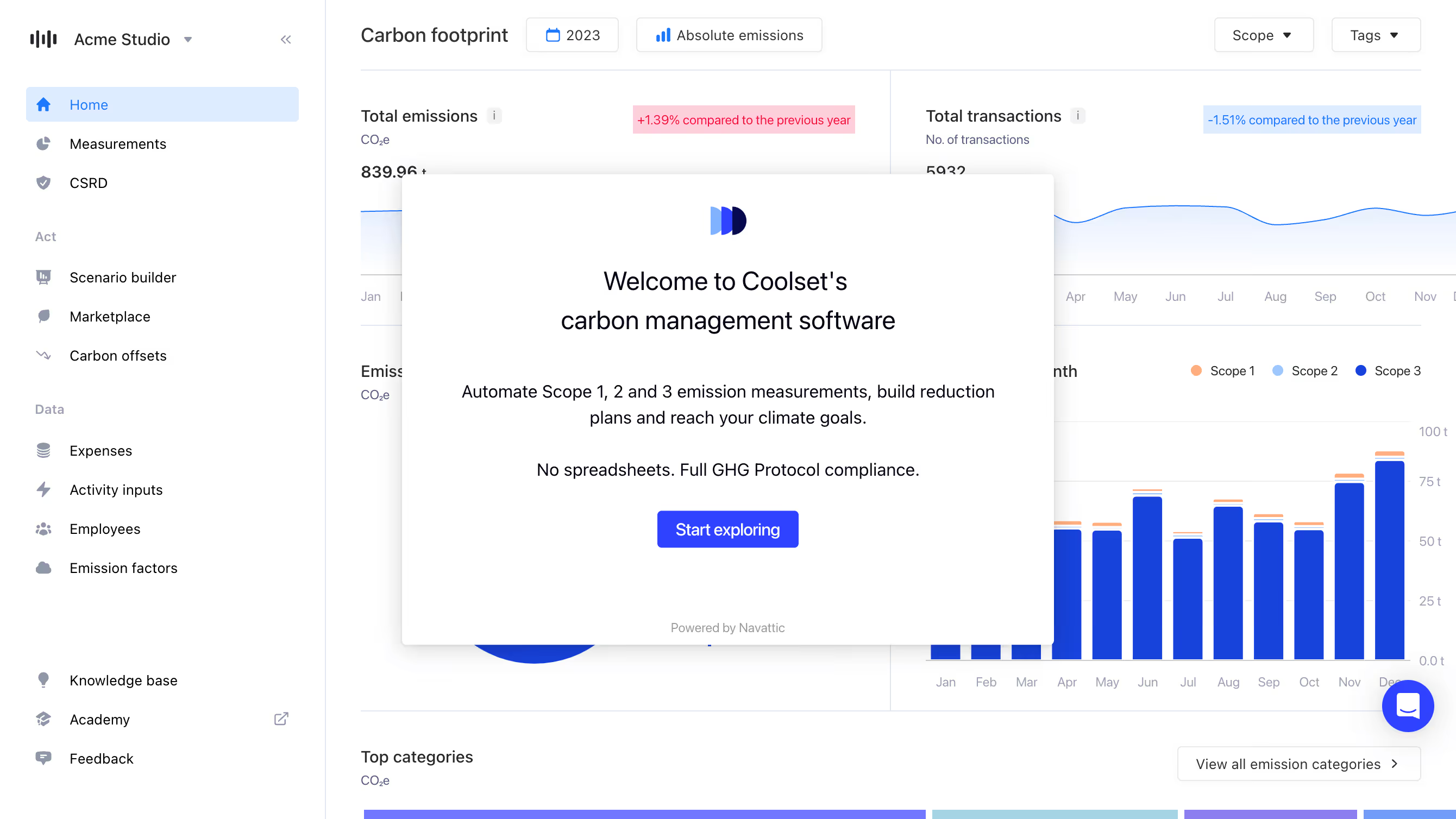
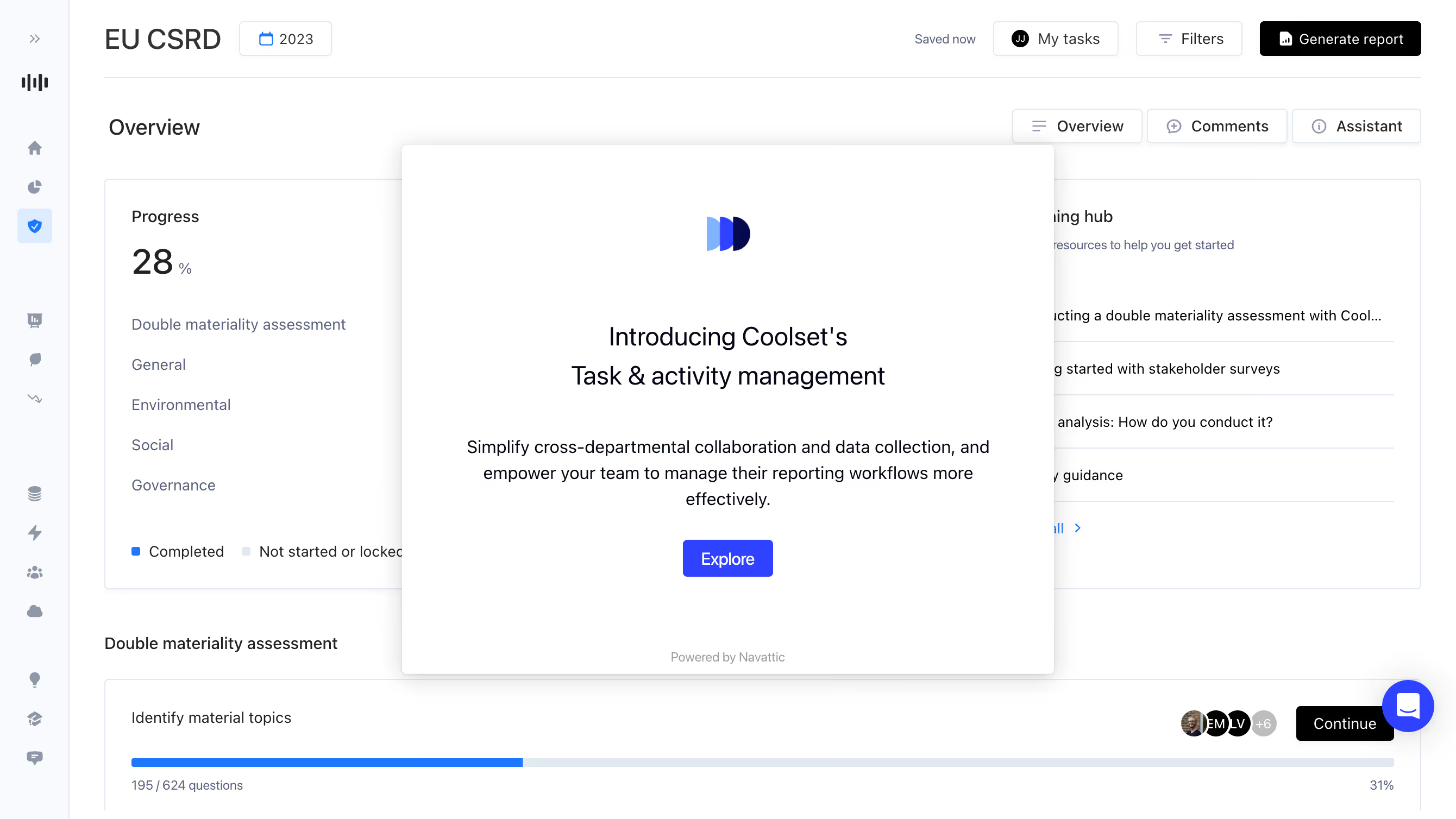
Coolset helps companies collect, organize, and audit Scope 1, 2, and 3 data in a structured environment. With built-in emission factor libraries, data traceability, and CSRD-ready reporting, it significantly reduces the time and effort required to produce an audit-ready GHG assessment.
Ready to make your GHG assessment audit-proof? Book a free demo with our team to see how Coolset can support your sustainability reporting.
Discover how Coolset can support your next GHG audit by speaking to one of our carbon accounting experts.

on mobile screens
to experience this demo.


Make your next GHG audit hassle-free
Discover how Coolset can support your next GHG audit by speaking to one of our carbon accounting experts.


.webp)