What are the reporting timelines for EUTR compliance (and when does EUDR take over)?


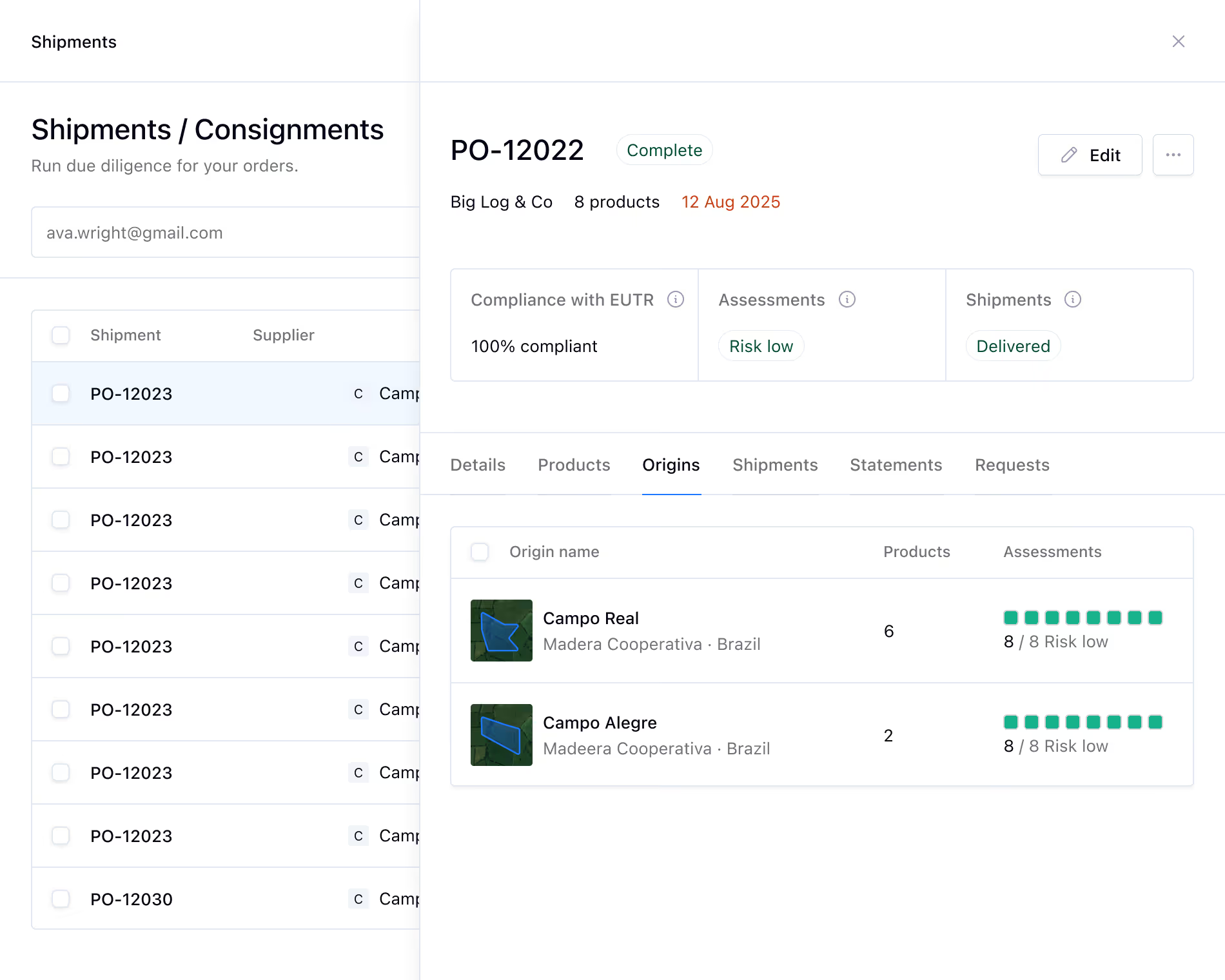
Disclaimer: New EUDR developments - December 2025
In November 2025, the European Parliament and Council backed key changes to the EU Deforestation Regulation (EUDR), including a 12‑month enforcement delay and simplified obligations based on company size and supply chain role.
Key changes proposed:
- New enforcement timeline: 30 December 2026 for large/medium operators, 30 June 2027 for small/micro operators
- Simplified DDS: One-time declarations for small and micro primary producers
- Narrowed scope: Most downstream actors and non‑SME traders would no longer need to submit DDSs
- New DDS requirement: Estimated annual quantity of regulated products must be included
These updates are not yet legally binding. A final text will be confirmed through trilogue negotiations and formal publication in the EU’s Official Journal. Until then, the current EUDR regulation and deadlines remain in force.
We continue to monitor developments and will update all guidance as the final law is adopted.
Key takeaways:
- EUTR applies now and stays enforceable throughout the transition.
- EUDR applies to timber from 30 Dec 2026 and adds deforestation-free, geolocation, and formal due diligence statements.
- Which rules apply depends on harvest date: pre-29 Jun 2023 timber can use EUTR until 31 Dec 2028; from 2029 it’s all EUDR.
- Coolset helps manage both regimes in one system, including harvest-date tracking, evidence, geolocation, and TRACES-ready due diligence statements.
Companies that import timber in the EU are now navigating two overlapping regulations: the EU Timber Regulation (EUTR) and the EU Deforestation Regulation (EUDR).
The EU Timber Regulation focuses on legality, making sure timber placed on the EU market is not illegally harvested. The EU Deforestation Regulation keeps the same due diligence logic but raises the bar: timber must be deforestation-free and companies need to show compliance with a wider set of legal production requirements, which can include third-party and human rights-related laws in the country of production.
The EUTR has been the rulebook since March 2013, which means it has shaped timber due diligence for almost 13 years. On the other hand, the EUDR was adopted much later and its enforcement has been pushed back again. The latest EU decision postpones application to 30 December 2026.
That combination, a long-running timber law plus a delayed replacement with a different evidence bar, is exactly where timeline confusion starts. Many companies are wondering which rules apply during this transitional period and when the switch will actually happen for timber.
What is the timeline for EUTR and EUDR?
The EUTR has been in force since March 2013, making it illegal to place illegally harvested timber on the EU market. For more than a decade, it has been the baseline of timber due diligence in the EU, requiring companies to assess legality risks and keep supporting documentation. Importantly, the EUTR remains fully applicable today. Its obligations do not pause or weaken because of the EUDR. Enforcement continues without interruption until the EUDR formally replaces it after a phase-out period.
Read our detailed breakdown of the EUTR and who must follow it.
The EUDR was adopted in June 2023, as a broader framework covering seven forest-risk commodities, including timber. While it builds on the same due diligence logic as the EUTR, it adds stricter requirements around deforestation-free production, geolocation, and expanded legality checks. The regulation was originally expected to apply from the end of 2024, but its rollout has been postponed twice. Following the latest delay, the EUDR will apply from 30 December 2026 for large and medium companies.
Although the regulation provides a later application date for small and micro enterprises in general, this additional SME deferral does not apply to timber and timber products already covered by the EUTR. For timber operators, including SMEs, due diligence obligations therefore continue without a sector-specific grace period.
Crucially for timber companies, the EUTR and EUDR are designed to operate alongside each other during a defined transition period. The EUTR does not stop applying when the EUDR enters into force. Instead, the EUDR creates a transitional framework under which timber harvested before a specific cutoff date can continue to follow EUTR requirements.
Under these rules, timber harvested before 29 June 2023 may be placed on the EU market in line with the EUTR until 31 December 2028. From 1 January 2029 onwards, all timber placed on the EU market must comply with the EUDR and EUTR will completely phase out as a regulation. The key factor determining which regulation applies is the harvest date of the timber.
{{custom-cta}}
Does the EUTR still apply?
The EUTR remains in force and enforceable for timber both before the EUDR starts applying and throughout the EUDR transition period. It does not stop applying when the EUDR enters into force.
For timber companies, this means that an EUTR-compliant due diligence system is still required. Companies must continue to assess legality risks and retain supporting documentation for timber placed on the EU market today, and for timber harvested before 29 June 2023 that can continue to follow EUTR rules until 31 December 2028. There is no enforcement gap during this period.
At the same time, companies are expected to prepare for, and eventually apply, the EUDR due diligence system for newly harvested timber. Importantly, an EUDR due diligence system does not replace the EUTR one. It must be aligned with EUTR requirements. In practice, this means due diligence systems need to support both regimes at once.
For timber companies, the transition is therefore not about switching from one system to another, but about building on existing EUTR due diligence so it remains valid while expanding it to meet EUDR obligations.
How often do companies need to report or do due diligence under EUTR?
Companies do not need to submit periodic reports under the EUTR, but they must apply due diligence continuously for every placement of timber on the EU market and repeat the process at least annually.
A key point when preparing for EUTR compliance is that due diligence is not a one-off reporting exercise. Unlike regulations that require scheduled submissions to authorities, the EUTR is built around continuous due diligence. Operators are required to have a due diligence system in place and to apply it every time they place timber or timber products on the EU market. There is no obligation to file regular reports with authorities as compliance is assessed through inspections rather than recurring filings.
At the same time, this does not mean that companies must rebuild their due diligence from scratch for every shipment if the underlying supply conditions have not changed. In practice, many companies organise EUTR compliance around supplier-product combinations. However, this due diligence is not static. It must be updated whenever key elements change, such as the supplier, country or region of harvest, species, product type, or the risk profile of the supply chain.
It is also important to distinguish between operators and traders under the EUTR, as their obligations differ:
- Operators are companies that place timber or timber products on the EU market for the first time. They are responsible for carrying out full due diligence, including information gathering, risk assessment, and risk mitigation where needed.
- Traders deal with timber that has already been placed on the EU market. They are not required to perform risk assessments themselves, but must maintain records identifying their suppliers and customers and keep those records for at least five years.
EUTR vs EUDR: What changes and what stays the same?
The EUTR and the EUDR share the same overarching objective: keeping illegal and unsustainable forest-related products out of the EU market. However, the EUDR significantly expands both the scope and the evidence required to demonstrate compliance.
Key differences:
- Scope: EUTR covers timber only; EUDR covers seven commodities including timber, cattle, cocoa, coffee, palm oil, rubber, and soy.
- EUTR focuses on legality; EUDR adds a deforestation-free requirement with plot-level traceability.
- EUDR requires submission of due diligence statements via TRACES before each placement; EUTR does not require this.
- EUDR requires geolocation coordinates for the land where production took place; EUTR does not.
What stays the same: timber is covered under both regulations; responsibility lies with the company placing products on the EU market; the logic of risk assessment carries over from EUTR to EUDR.
Which regulation applies to my shipment?
During the transition from the EUTR to the EUDR, the regulation that applies to a specific shipment depends on when the timber was harvested and when it is placed on the EU market.
- Timber harvested before 29 June 2023, placed on the EU market before EUDR enforcement: EUTR applies.
- Timber harvested before 29 June 2023, placed on the EU market after EUDR applies but before 31 December 2028: EUTR transition regime applies.
- Timber harvested on or after 29 June 2023, placed on the EU market after EUDR enforcement: EUDR applies.
What to do now: dual compliance checklist for 2025-2027
Until the EUDR becomes enforceable, and throughout the transition period that follows, timber companies must continue applying the EUTR while progressively preparing for the EUDR.
- Continue full EUTR due diligence. EUTR enforcement has not slowed down. Companies should continue applying EUTR due diligence rigorously: assessing legality risks, maintaining documentation, and ensuring non-negligible risks are addressed.
- Review whether your EUTR system already meets EUDR legality expectations. The interim period is a good moment to assess whether your existing EUTR processes are sufficiently robust to support the expanded legality checks under the EUDR.
- Introduce a harvest-date tag at order level. Because the applicable regulation during the transition depends on when the timber was harvested, companies should introduce a clear harvest-date identifier in their systems.
- Start EUDR data collection with your most mature suppliers. Begin with your most transparent suppliers, moving from chain-of-custody information to plot-level identification, including geolocation.
How software helps manage the EUTR to EUDR transition
Managing EUTR and EUDR obligations in parallel is difficult to do manually. Dedicated compliance software becomes particularly valuable during the transition period.
Coolset's platform is designed to help timber companies manage both EUTR and EUDR requirements in one place. Instead of duplicating efforts or starting from scratch, teams can extend their existing EUTR due diligence system to meet EUDR expectations.
See Coolset for EUTR in action - reach out to our team.
Frequently Asked Questions
What is the timeline for the EUDR?
The EUDR officially entered into force on 29 June 2023, but its obligations apply after a phase-in. As of the latest update, large and medium companies must start complying by 30 December 2026, and small/micro companies by 30 June 2027 for non-timber commodities. Small and micro companies in the timber industry have to comply from 30 December 2026.
Does the EUDR replace the EUTR?
Yes. The EUDR will completely replace the EUTR but not instantly. There is a transitional overlap: timber harvested before the EUDR's cutoff date (29 June 2023) can still be traded under EUTR rules until the end of 2028. After 2028, EUTR will no longer be used at all.
Is the EUDR delayed?
Yes, the EUDR's enforcement has been delayed twice from its original schedule. The new enforcement dates are December 2026 (large/medium firms) and June 2027 (small firms). Read Coolset's article on whether the EUTR still applies if the EUDR is delayed for more information.
How long do I need to keep EUTR documents?
At least five years. Both the EUTR and EUDR have a five-year record-keeping requirement. Operators and traders must retain information related to due diligence and supply chain transactions for a minimum of five years.
A step-by-step guide transition guide for companies

Get ready for EUTR and EUDR
Prepare your systems for both regulations: map suppliers, trace origins and assess risks in one connected platform.
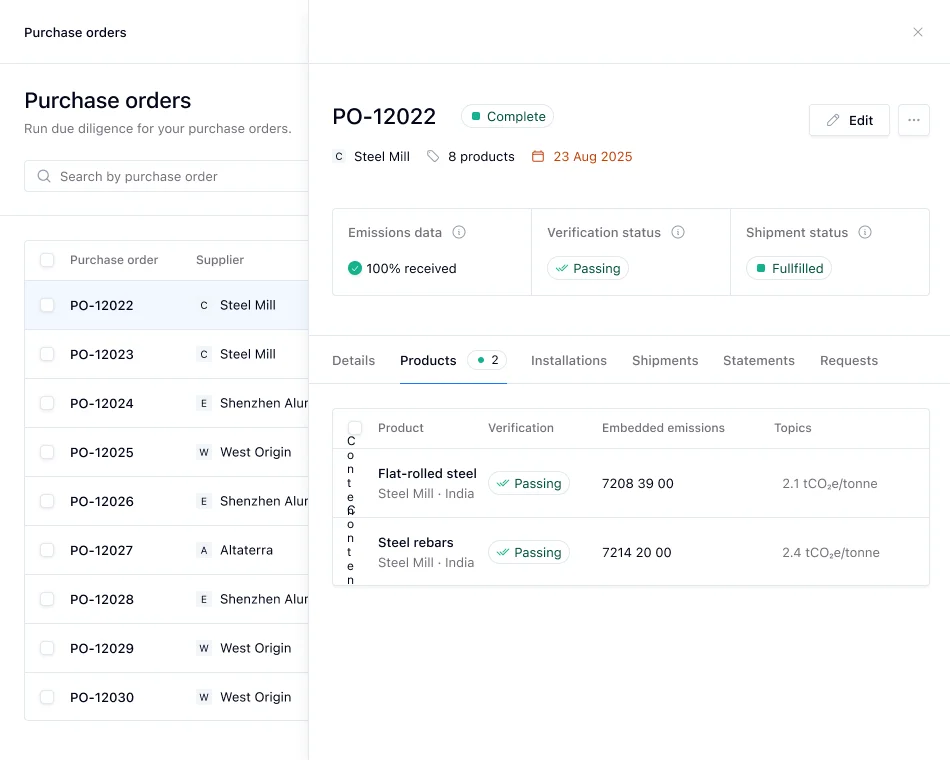

.webp)