Interview: Mastering sustainability with the Co-author of ‘How to be a CSO’

.avif)
Disclaimer: New EUDR developments - December 2025
In November 2025, the European Parliament and Council backed key changes to the EU Deforestation Regulation (EUDR), including a 12‑month enforcement delay and simplified obligations based on company size and supply chain role.
Key changes proposed:
- New enforcement timeline: 30 December 2026 for large/medium operators, 30 June 2027 for small/micro operators
- Simplified DDS: One-time declarations for small and micro primary producers
- Narrowed scope: Most downstream actors and non‑SME traders would no longer need to submit DDSs
- New DDS requirement: Estimated annual quantity of regulated products must be included
These updates are not yet legally binding. A final text will be confirmed through trilogue negotiations and formal publication in the EU’s Official Journal. Until then, the current EUDR regulation and deadlines remain in force.
We continue to monitor developments and will update all guidance as the final law is adopted.
Since the announcement of the Corporate Sustainability Reporting Directive (CSRD) in 2021, environmental regulations have found their way into boardroom conversations all across Europe. The reason: The new CSRD regulation requires companies to report on 1,100 data points across the Environmental, Social and Governance (ESG) pillars, and the sustainability reports are set to take at least 5 months to complete for experienced reporters, and 9-12 months for new reporters.
To help sustainability professionals prepare for the implications of this regulation to their jobs, Anna Krotova and Jennifer Geary wrote “How to be a Chief Sustainability Officer”. Much more than a simple guide on how to be a CSO, this book is an extensive toolkit for everyone working, or upskilling themselves in the corporate sustainability field.
We read the book and spoke to Anna about her lessons learnt along the way.
What was the idea behind this book?
Anna Krotova began her sustainability journey in 2010, and has since worked for big names like the International Finance Corporation and the Global Reporting Initiative. She now heads sustainability at Picnic - a rapidly growing home-delivery supermarket chain in the Netherlands.
One of the main changes Anna has seen in the sustainability scene during her career is the switch from sustainability being a “niche topic and an activist movement” to “being top of the political and corporate agenda”.
The biggest driver for this recent reporting upswing was also the reason to start writing the book: “with the release of CSRD last year – when it was very clear that if everything goes as intended with this regulation – We’ll see 40,000 companies hiring or looking to help them with sustainability reporting, in addition to the 11,000 companies who already fall in scope of the NFRD [CSRD’s predecessor].”
With this in mind, Anna and Jennifer noticed a clear gap: the demand for sustainability professionals was going up, while the knowledge equity was lagging behind. Hence the book, wherein the two seasoned professionals “offer a framework, basically a one-stop-shop to help people navigate organizational dynamics and understand how a sustainability function actually slots into a company, while also giving them a really basic and necessary overview of key tools and standards to perform in the role. If they were to only read one book on sustainability or on how to be a CSO, it would be this.”
The result is a 344-page book that tackles all angles of what it takes, really takes, to be a CSO. From a deep-dive into the intricacies of working with various C-level executives to dealing with organizational inertia and resistance, by the end you’ll know how to lead a sustainability team through the evolving expectations of the corporate sustainability department.
How the authors met
Jennifer lives in London and Anna in Amsterdam. The two met during an event in 2021. It was during Covid times, so they met online (and funnily enough, still haven’t met in-person). At the time, Jennifer had already written two books: “How to be a Chief Operating Officer” and “How to be a Chief Risk Officer”, based on her own experiences in these positions. After reading one of Jennifer’s books, Anna was sold: “this is such a clear framework on how someone should do this job. I wish there was a book like that for sustainability professionals”
Months later, the two got together and discussed writing a book, combining Anna’s sustainability expertise with Jennifer’s “How to be a...” book framework: “A year later we had the book”.
The ever-present dilemma of a CSO
CSOs, or any sustainability professional for that matter, always face a recurring dilemma, as is well described in the book: “on the one hand, you’re ultimately serving growth objectives, and on the other, you’re charged to minimize the negative impacts of that growth.”
Aligning these economic values with environmental and social ones is the crux of sustainability management, and a win-win won’t always be possible, as Anna notes: “Ultimately you’ll work for a corporation and you will have to commit to whatever it’s doing, whether you like it or not. You have to learn to agree to disagree and look forward.”
Convincing your team of choosing the sustainable path won’t always be possible from the start: “Not every CSO will be in a position to do that immediately. You have to be prepared to be patient and resilient and attempt a conversation several times before people hear you. We talk a lot about it in the book, the human and cultural aspects of the role, where in the end you’re dealing with human beings who may not be on the same page as you are in your sustainability awareness, passion, and recognition.”
The Corporate Sustainability Reporting Directive as a trigger
With her long-spanning career in sustainability, Anna understands like few others how the reporting environment has changed: “We had the Paris agreement in 2015, based on which the EU adopted the Green Deal, which set really serious targets around decarbonisation for the whole region.”
The spotlight on the private sector soon followed: “And from there, the EU Commission was developing regulatory packages year on year, affecting every actor of the economy. It started with capital markets saying – look – we want to have more transparency into where money is flowing. Then investors realized, we don’t actually know. So we need to ask companies. That’s when CSRD came along”.
Chapter 9 of the book – titled Investor Relations — dives further into this. Along with various examples of which frameworks are relevant for investors, the chapter summarizes what investors are, and will be, looking for when assessing ESG profiles: Your sector, operations and sustainability report are just some of the key focus points they consider.
.png)
Why CSRD is helping companies
Many companies that have to report on CSRD next year are still in the scoping phase of what they need to do, and how to prepare. The resulting stress is expected, but avoidable, says Anna: “Companies can organize very quickly to achieve economic goals. It’s hard to believe that you can’t organize something like internal data management, that just means you’re not prioritizing it.”
Her view: It’s a matter of shifting priorities and changing the narrative: “The reason you’re not prioritizing is because you treat this as a burden rather than an investment, something that will help you see better into your risks and your opportunities, and ultimately become a more resilient business.”
The narrative of seeing sustainability as an investment is one of the recurring themes of the book. From maintaining good relationships with the CFO to reducing energy consumption (and thus costs), a clear takeaway is that sustainability should be viewed as an opportunity to transform for the better.
Hiring in-house versus fishing in new ponds
CSOs, and any other C-level executive for that matter, have two options when hiring: to develop talent internally or to seek new expertise from outside the organization. Since sustainability at this level of quality sets a new standard, experienced individuals are rare – and upskilling is all the more valuable.
Anna’s approach is fluid: “For sustainability to be transformative in the way it was intended with CSRD reporting, it should be everyone’s job.” Just like explained in chapter 1 (The Role of the CSO), the CSO is at the wheel of the operation, gathering knowledge from the various teams and making sure that knowledge equity is maximized. Whether this job is filled by an internal or external hire is secondary.
Financial teams – for example – should be called in to collect accurate sustainability metrics, because they “have years of accounting and internal control experience where they have applied pretty much the same principles that we need to apply now to sustainability reporting.”
Legal teams, on the other hand, should be scanning the horizon for ESG regulation and upskilling on sustainability vocabulary to help organizations avoid greenwashing,
The commercialization of sustainability
While the corporate sustainability landscape expands and companies begin navigating the reporting requirements, the competitiveness of knowledge equity remains high. Many beginning companies aren’t willing to share best practices, either because they’re still figuring them out, or because they simply don’t want to give away information that cost them months to gather.
Anna dives deeper: “the commercialization of sustainability was one of the negative developments that I saw back in 2019/2020, which also triggered me to write this book – because sustainability is growing into an industry. It’s odd to call it an industry, but that’s what it has become. It’s becoming harder and noisier to navigate and focus.”
On the other hand, Anna also sees that the shift in reporting regulations is creating a real need to talk about solutions and challenges more candidly compared to the always upbeat and celebratory tone of the past: “What I do see at conferences, for example, is that the discussion is getting more transparent for the first time in many years. Companies are prepared to say, look, we actually don’t have all the answers, and we don’t exactly know how we’re going to do this. But we’re going to give it our best shot.”
And that openness is leading to progress: “That humility, I suppose, creates an opening for a conversation, between peers, CSOs, and others about the reality of managing impacts.”

How double materiality assessments have shaped the reporting landscape
Double materiality assessments are the first step of reporting under the CSRD. Their main purpose is to help companies understand what its impacts are on the world around them, and how that world impacts the company.
As chapter 2 of the book (Sustainability Vocabulary) notes, double materiality assessments aren’t new – the first framework was published by the Global Reporting Initiative back in 2006. Anna points out: “materiality is hugely important because it helps you understand what’s actually relevant to you in terms of how you impact the world and what you should be managing.”
It also helps in cutting out the noise: “It gives you the confidence to cut out, ignore or decline many of these other peripheral topics. You look at a company’s sustainability project portfolio, and it’s huge. And then you look at the relevance of these projects to materiality and immediately the question arises - why are we chasing this whilst it has literally no effect on our material topics? And that gives the confidence to say ‘no’ and to focus.”
How impacts, risks and opportunities relate to stakeholder engagement - and how they don’t
When companies conduct a double materiality assessment, they’re essentially looking at which impacts, risks and opportunities (IROs) are connected to their company. A much discussed point in recent months has been the involvement of stakeholders herein.
Anna: “IRO is a good frame to start thinking about material issues. Good business leaders should be doing that type of horizon scanning already. What are my risks, what are my opportunities? And then, to see if you’re missing blind spots, you talk to stakeholders.”
As Anna confirms, a recent point of criticism regarding stakeholder engagement has been that stakeholders have been blindly targeted with massive surveys and non-specific questions: “We’re moving away from questionnaires to 100 people who have no idea about how the business in question operates nor are qualified or positioned to provide any insight into what the risks are. I think stakeholder engagement has been misinterpreted over the years to be thought of as the ‘more the better’; quantity over quality exercise.”
Getting started with CSRD
As the book states in chapter 4: Developing a Strategy “the first one-to-two years [are for] setting foundations, bringing everyone up to speed, setting focus and building muscle, before you can accelerate. If you’re under the reporting obligations, you will need to move quickly to produce your first ‘best effort’ report.”
Regardless of the complexities ahead, Anna is convinced that the reporting landscape is well equipped to take on CSRD: “Sustainability reporting transitioned from soft law to hard law. With the exception of adopting a few new elements, the core principles and approaches have remained the same as they have been for 20 years. I do protest against the narrative that this is entirely new - let’s all do our homework”.
The main takeaway – just start: “The EFRAG guidance on how to conduct a double materiality assessment was finalized a few months ago whilst implementation is due next year already so I think there will be some forgiveness and understanding if DMAs are not perfect immediately as long as they follow key requirements set out in the ESRS and are clear about the gaps. Start with the obvious things. Do your materiality assessment. Do it well by involving your C-suite, by trying to understand the impacts together and quantifying risks and opportunities. Start with what you have and do what you can.”
{{custom-cta}}
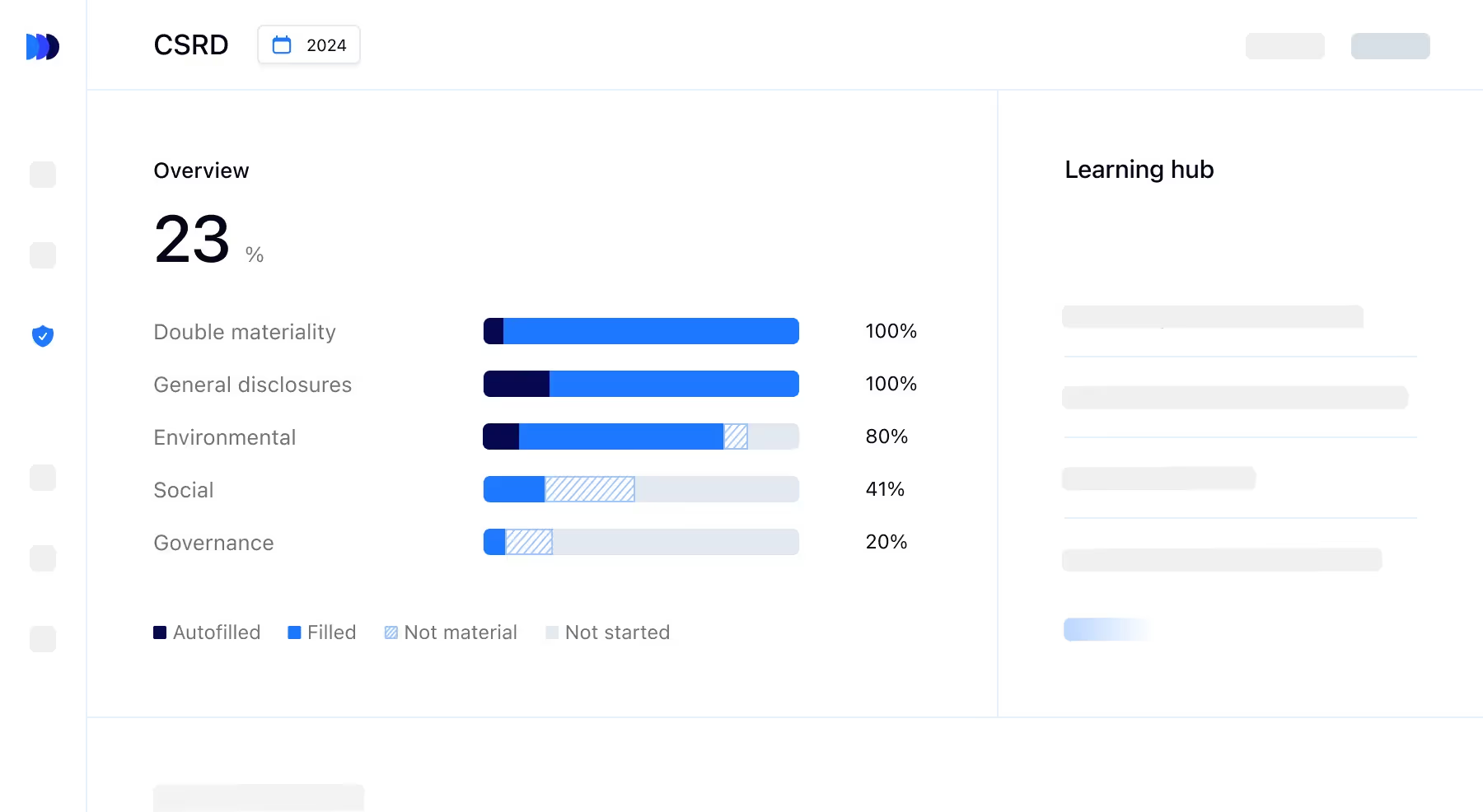
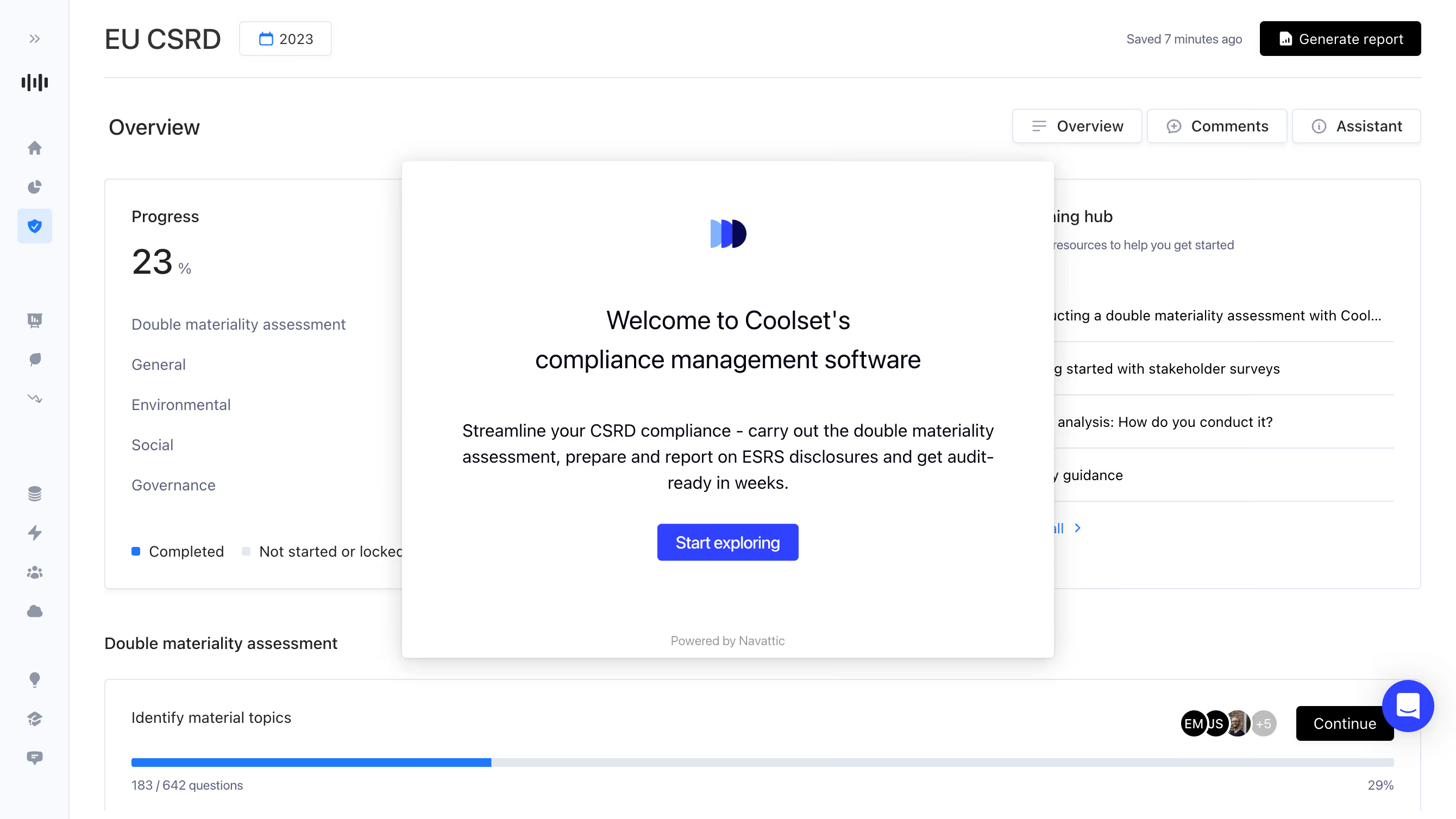
How software can help
Chapter 14 of How to be a CSO is titled Investing in Technology, and explores what the benefits and challenges of ESG software are. Its opening sentence: “The main objective of enterprise software systems is to help the organization streamline its business processes in a way that brings efficiency, reduces errors, frees up time, and helps extract analytics.”
The chapter also mentions warning signs – hints that a tool might not do what it promises. This includes buggy demos, lack of a feature roadmap, lack of subject-matter experts on the vendor’s side and long onboarding times.
Anna builds on this in the interview: “We do warn in the book that technology is not going to replace the manual work you have to do yourself in terms of actually understanding where the data sits.”
But: “Once those data collection processes, the discipline, and the communication between departments are there, technology can really help you bring it all together in a structured way, such that you can start extracting intelligence from it to inform strategy. ”
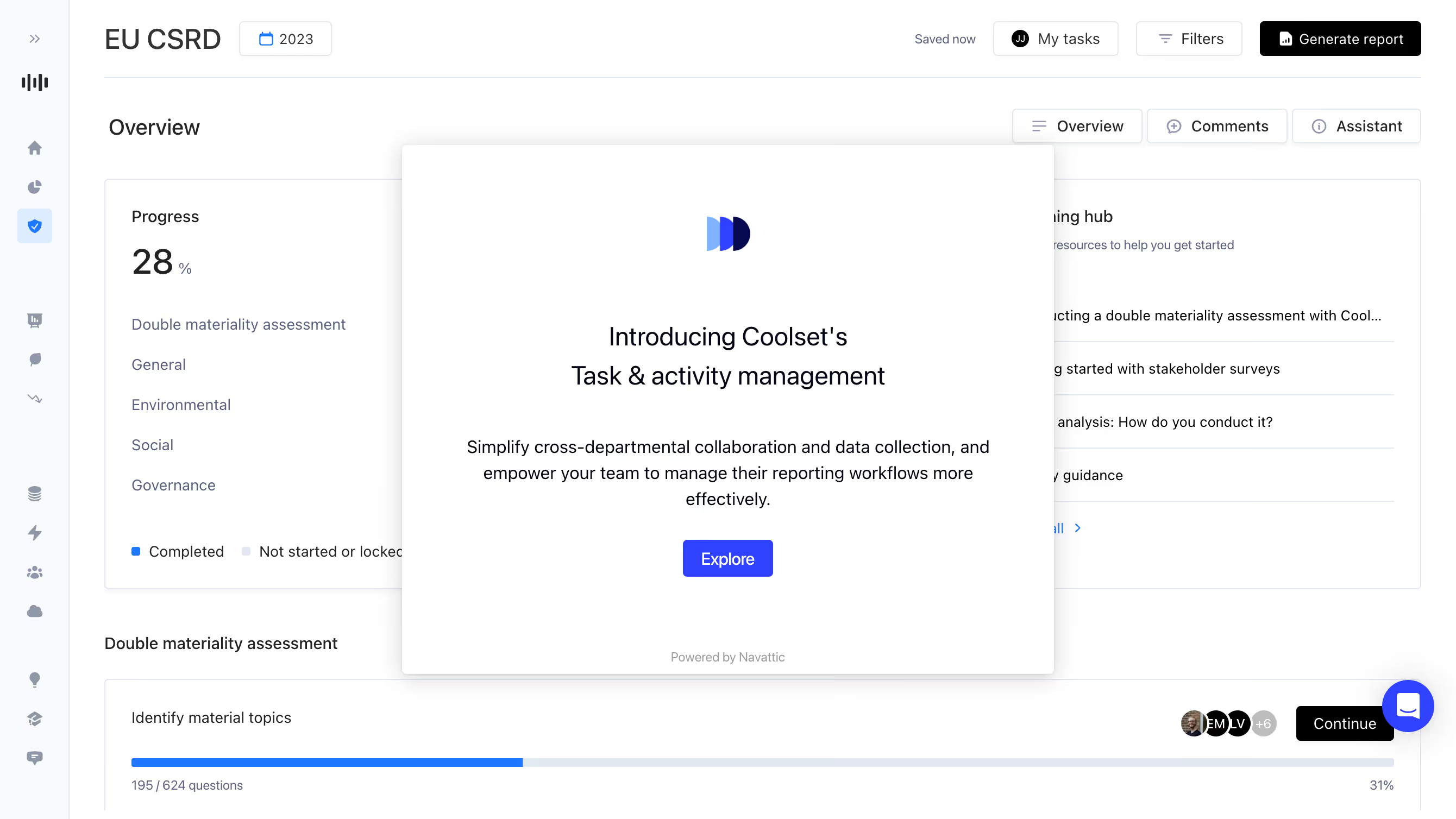
{{product-tour-injectable}}
The guide to sustainability
How to be a CSO is set to become a leading sustainability book, albeit with a misleading title: It’s much more than a guide for CSOs, it’s a playbook for everyone looking to kickstart their sustainability career.
Its 15 chapters are clearly structured to cater to professionals at various stages of their sustainability journey, from beginners and upskillers to seasoned experts. By combining theoretical insights with practical examples, Anna Krotova and Jennifer Geary have created a comprehensive resource that deconstructs the complex landscape of the sustainability industry and so gives individuals the toolset to make a tangible impact within their organizations.
For those eager to start or advance their sustainability career, grab your copy here.
Book a free demo with one of our sustainability experts

on mobile screens
to experience this demo.


↘ Check if your documentation meets PPWR requirements
This free compliance checker scans your packaging documentation and maps it against mandatory PPWR data requirements, giving you a clear view of your compliance status. Get actionable insights on documentation gaps before they become compliance issues.
Accelerate your CSRD compliance journey
Book a free demo with one of our sustainability experts.

.webp)