EUDR postponement: How companies are responding (Updated June 2026)



Disclaimer: New EUDR developments - December 2025
In November 2025, the European Parliament and Council backed key changes to the EU Deforestation Regulation (EUDR), including a 12‑month enforcement delay and simplified obligations based on company size and supply chain role.
Key changes proposed:
- New enforcement timeline: 30 December 2026 for large/medium operators, 30 June 2027 for small/micro operators
- Simplified DDS: One-time declarations for small and micro primary producers
- Narrowed scope: Most downstream actors and non‑SME traders would no longer need to submit DDSs
- New DDS requirement: Estimated annual quantity of regulated products must be included
These updates are not yet legally binding. A final text will be confirmed through trilogue negotiations and formal publication in the EU’s Official Journal. Until then, the current EUDR regulation and deadlines remain in force.
We continue to monitor developments and will update all guidance as the final law is adopted.
Key takeaways:
- Most companies (91%) are continuing EUDR preparations despite the proposed one-year delay.
- Trust in EU regulatory direction is weakening, with 69% expressing concern.
- Coolset supports preparation now, helping teams stay ready even amid shifting signals.
The proposed EUDR postponement raises an important question: how are companies responding? Are they pausing their preparations, or using the extra time to strengthen their compliance processes? This article covers what companies actively working on EUDR compliance are experiencing.
Most companies aren't pausing
Despite uncertainty around the timeline, most companies are choosing to continue their EUDR preparations. The reason is simple: the regulation itself isn't changing. Whether enforcement starts in 2025, 2026, or 2027, the core requirements (traceability, deforestation-free sourcing, and due diligence statements) remain exactly the same.
Companies that pause now risk running into bottlenecks later. Suppliers being approached all at once, rushed due diligence statements, and incomplete datasets that won't hold up to an audit. The cost of waiting is simply higher than the cost of continuing.
Three response patterns companies are experiencing
Broadly speaking, three ways companies are responding to the proposed postponement have emerged:
1. Accelerators: treating the delay as an opportunity
A growing group of companies is treating the postponement as breathing room to refine their compliance approach. They're using the extra time to:
- Improve supplier data and verify geolocation information
- Test due diligence processes via the TRACES test environment
- Clearly define internal roles (operator vs. trader)
- Conduct risk assessments and define mitigation measures
These companies understand that early movers build a competitive advantage. They'll end up with stronger supplier relationships, cleaner data, and a smoother compliance journey.
2. Strategic pausers: selectively moving forward
Some companies are taking a more nuanced approach. They're pausing timeline-dependent tasks (such as actually submitting due diligence statements) while continuing with the fundamentals:
- Supplier engagement and data collection
- Inventorying legal documentation
- Documenting internal processes and responsibilities
This is a sensible strategy, as long as you don't lose sight of the fundamentals. The tasks with the longest lead times (such as collecting plot-level supplier data) are precisely the ones you can't afford to delay.
3. Wait-and-see: the risk of standing still
A smaller group of companies has decided to wait until the final timeline is confirmed. This may seem cost-efficient in the short term, but it carries significant risks:
- Supplier bottlenecks when thousands of companies request data simultaneously
- Higher costs for accelerated implementation
- The risk that consultants and software vendors become overloaded just before the deadline
Experience with previous EU regulations shows that companies that start early ultimately spend less and achieve better outcomes.
What the industry is saying
Major players like Ferrero and Mars, through their industry associations, have already publicly criticized the postponement. They argue that a delay "puts the world's forests at risk and undermines confidence in Europe's environmental commitments." This signal is telling: the companies furthest along in their EUDR preparations are precisely the ones advocating against a delay.
At the same time, companies that are less advanced in their preparations tend to welcome the postponement as a "second chance." That reasoning deserves caution: a second chance is only valuable if you use it.
Recommended next steps
Based on patterns observed among companies actively working with EUDR, the direction is clear:
- Keep preparing. The regulation isn't going away. Use any extra time to strengthen your processes, not to pause them.
- Focus on "no-regret" actions. Collecting supplier data, verifying geolocation and defining internal roles are steps that will always pay off.
- Test your systems. Use the extra time for stress tests and trial runs of due diligence submissions.
- Keep your team engaged. Uncertainty around the timeline can lead to a reduced sense of urgency. Make sure your team understands why staying the course is the smartest strategy.
{{custom-cta}}
How Coolset helps during the postponement
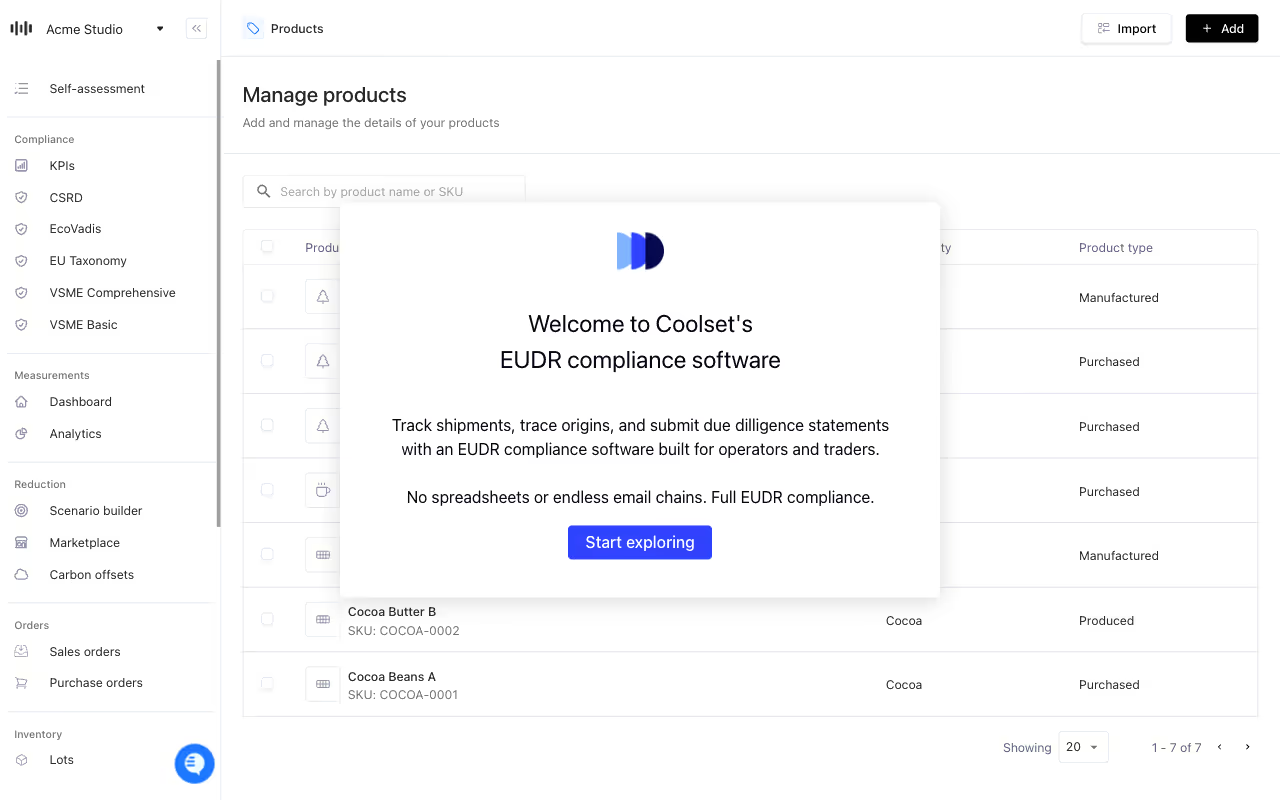
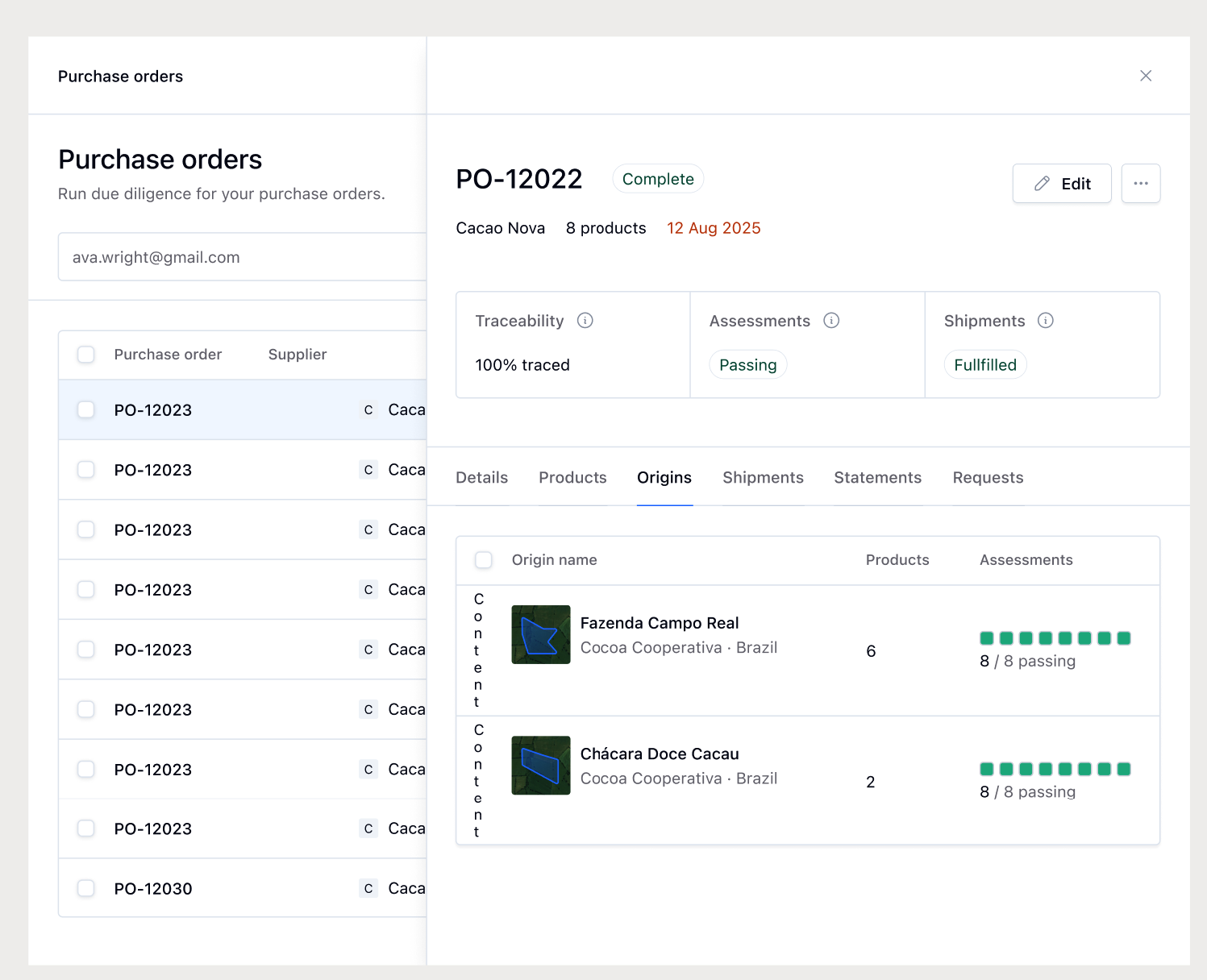
Coolset's EUDR solution helps companies make productive use of the postponement: from collecting supplier data and verifying geolocation to conducting risk assessments and preparing due diligence statements. The platform enables you to build a solid foundation right now, regardless of when enforcement officially begins.
Frequently asked questions
Should we pause our EUDR preparations because of the proposed postponement?
No. The core obligations under the EUDR are not changing. A postponement only shifts the enforcement date. Companies that continue now will be in a stronger position when it matters.
Which tasks should we prioritize right now?
Focus on tasks with long lead times: supplier engagement, geolocation data collection, legal documentation and risk assessments. These form the foundation of compliance.
What are most companies doing?
The majority are continuing with EUDR preparations. Some are taking a selective approach, continuing to build the fundamentals while deferring timeline-dependent tasks. A minority is waiting, but they carry the greatest risk.
What if the postponement doesn't go through?
Companies that kept preparing will be ready for the deadline. Companies that waited will face a sprint they may not be able to complete in time.
Our research team walks you through every step - from supplier engagement to submitting in TRACES.


on mobile screens
to experience this demo.


Start preparing for EUDR
Get your systems ready for traceability, risk assessment and due diligence. for EUDR

.webp)