CSRD compliance roadmap: from double materiality to audit-ready reporting



Disclaimer: New EUDR developments - December 2025
In November 2025, the European Parliament and Council backed key changes to the EU Deforestation Regulation (EUDR), including a 12‑month enforcement delay and simplified obligations based on company size and supply chain role.
Key changes proposed:
- New enforcement timeline: 30 December 2026 for large/medium operators, 30 June 2027 for small/micro operators
- Simplified DDS: One-time declarations for small and micro primary producers
- Narrowed scope: Most downstream actors and non‑SME traders would no longer need to submit DDSs
- New DDS requirement: Estimated annual quantity of regulated products must be included
These updates are not yet legally binding. A final text will be confirmed through trilogue negotiations and formal publication in the EU’s Official Journal. Until then, the current EUDR regulation and deadlines remain in force.
We continue to monitor developments and will update all guidance as the final law is adopted.
Key takeaways
Corporate Sustainability Reporting Directive (CSRD) compliance in 2026 comes with planning challenges. Many companies face questions about where to start, which European Sustainability Reporting Standards (ESRS) apply to their business, and how to manage a process that involves multiple teams and sources of data. This guide walks through the key steps and what to expect at each stage.
Step 1: Complete your double materiality assessment (DMA)
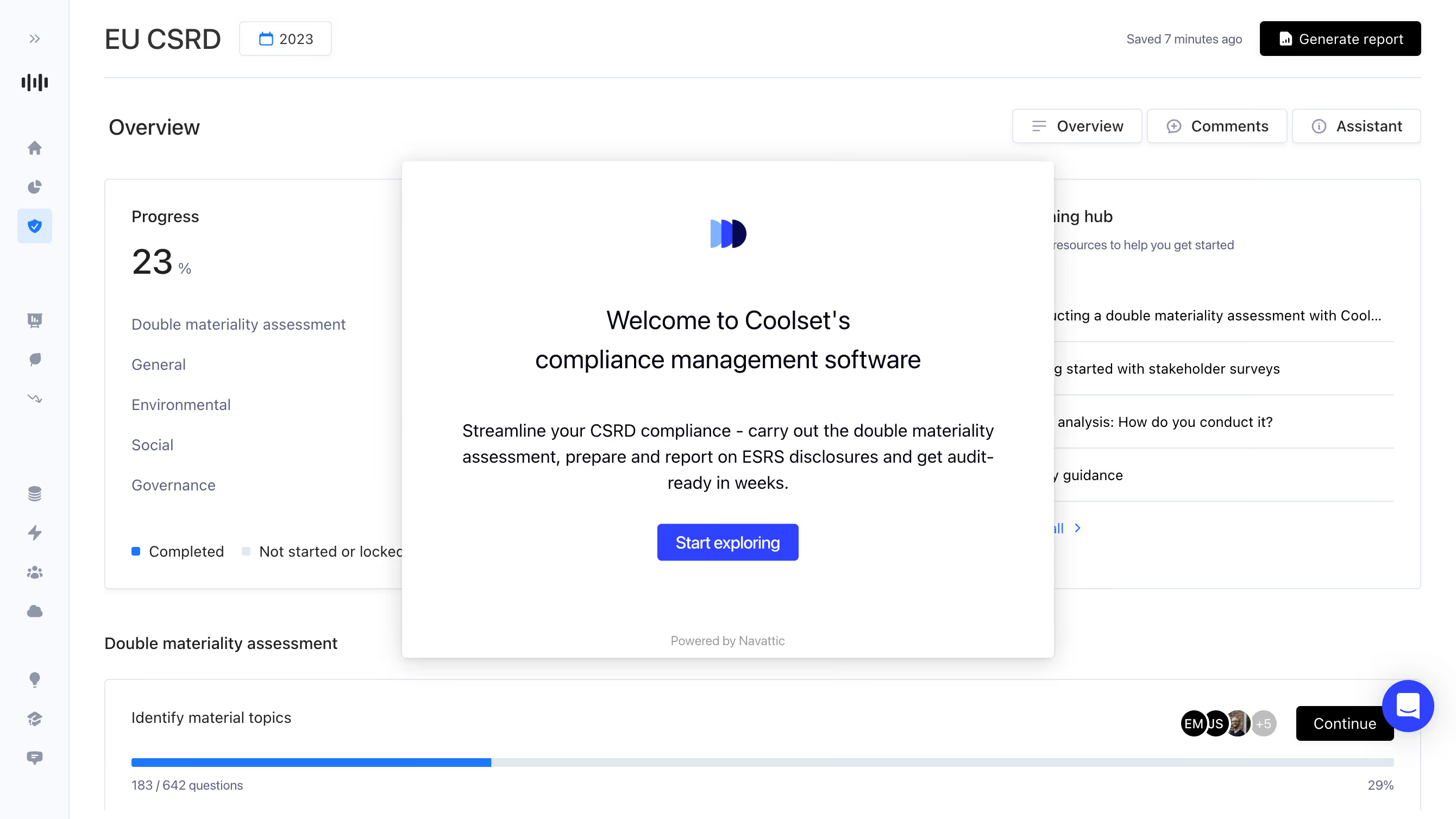
The DMA is the entry point for CSRD compliance. It determines which ESRS standards are relevant for your company and drives everything downstream: which data you need to collect, which disclosures you must make, and how much of your sustainability statement must go to assurance.
A DMA assesses sustainability topics along two dimensions:
- Impact materiality (inside-out): How your company's operations affect people and the environment
- Financial materiality (outside-in): How sustainability issues affect your company's financial performance and position
A topic is considered material if it crosses the threshold on either dimension — not both. This is the defining feature of double materiality and the key difference from financial materiality assessments used in traditional reporting.
Your DMA must cover all ESRS topical standards: E1–E5 (environmental), S1–S4 (social), and G1 (governance). For each topic, you assess whether the relevant impacts, risks, or opportunities are material. The result is a list of material topics that determines the scope of your ESRS disclosures.
For guidance on how to conduct the assessment in practice, see our step-by-step guide to the double materiality assessment.
Step 2: Map your material topics to ESRS standards
Once you have a list of material topics, translate them into the corresponding ESRS standards. Each standard has a set of disclosure requirements — some mandatory for all companies in scope, others conditional on materiality.
Under the amended ESRS following the Omnibus I Directive, mandatory data points have been reduced significantly — from over 1,000 to approximately 320. This simplification reduces reporting burden for most companies, particularly on environmental and social standards where many data points were previously conditional but now clarified as optional.
Review the structure of each applicable standard carefully. ESRS 1 and ESRS 2 are required for all companies in scope and establish the framework. The topical standards (E1–E5, S1–S4, G1) apply only where the topic is material per your DMA.
Step 3: Assess your current data
Before you can report, you need to understand what data you currently have and what gaps exist. For each applicable ESRS disclosure requirement, ask:
- Does this data exist in your organization?
- Where is it held (HR systems, finance, operations, suppliers)?
- Is it in a format that can be verified?
- Who owns it?
This gap analysis drives your data collection work plan and helps you prioritize effort.
Step 4: Set up data collection processes
CSRD reporting requires structured data from across the organization. This typically involves:
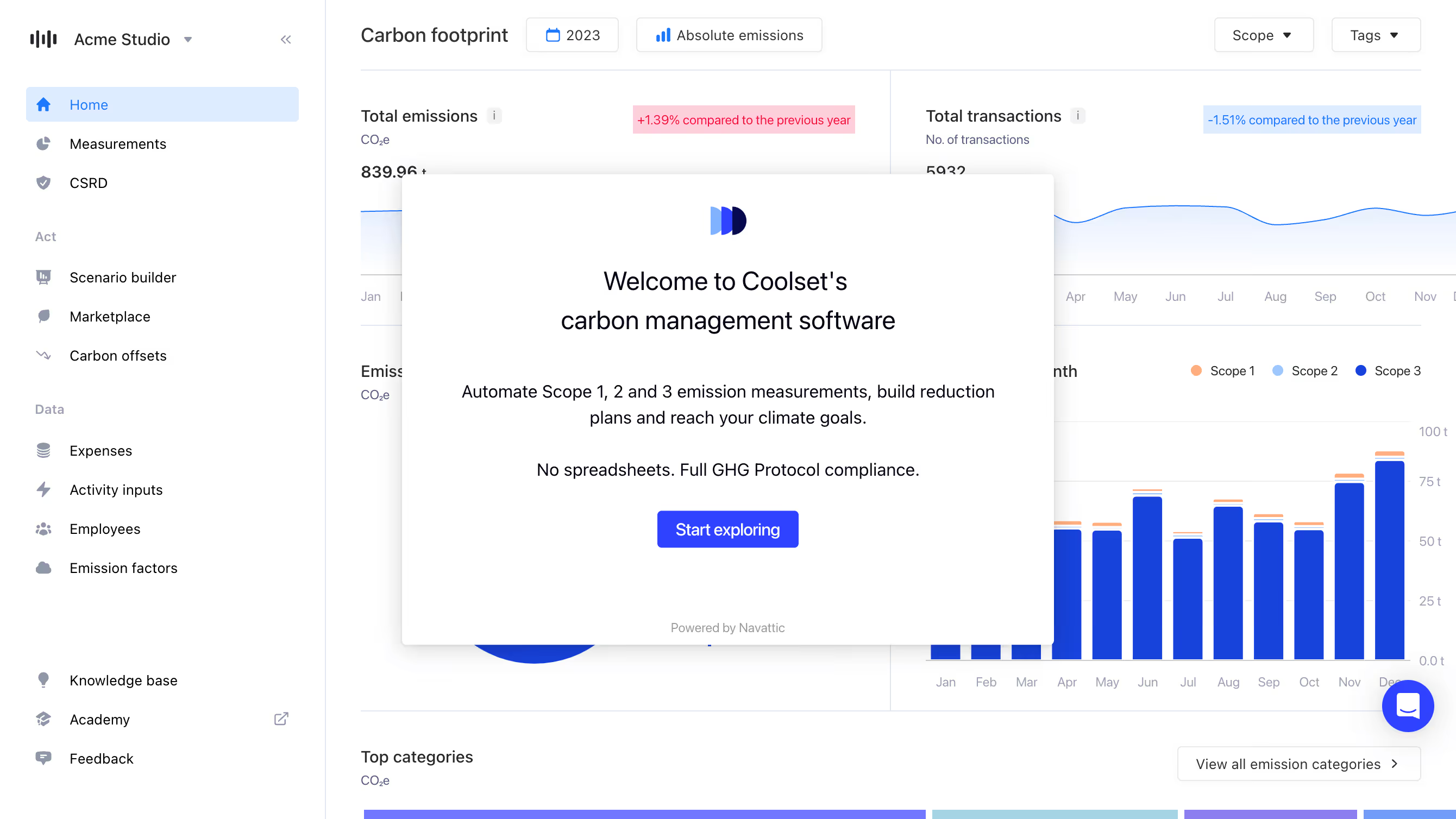
- Carbon emissions: Scope 1, 2, and 3 GHG inventory aligned with ESRS E1 requirements
- Workforce data: Headcount, diversity metrics, health and safety data under ESRS S1
- Governance information: Board composition, remuneration policies, business conduct under ESRS G1
- Policy documentation: Descriptions of your policies and actions related to material topics
Build collection templates and workflows that make it easy for data owners across the business to contribute. Sustainability data is rarely held in one place — effective CSRD reporting requires coordination across finance, HR, legal, operations, and procurement.
Step 5: Draft your sustainability statement
The sustainability statement is the output of your CSRD reporting process. It sits within your annual report and must follow the structure and content requirements of the ESRS.
A well-structured sustainability statement includes:
- Overview of your DMA process and outcomes
- Governance and strategy disclosures (ESRS 2)
- Topical disclosures for each material ESRS standard
- Policies and actions taken on material topics
- Targets and progress metrics
The statement must be machine-readable in XBRL format, which requires tagging your disclosures against the ESRS taxonomy. This is typically handled by specialist software or your audit firm.
Step 6: Prepare for limited assurance
CSRD requires your sustainability statement to undergo limited assurance by an accredited third party (typically your financial auditor). Limited assurance means the auditor performs procedures sufficient to identify material misstatements, but does not provide the same level of scrutiny as reasonable assurance.
To pass limited assurance, you need:
- A documented and defensible DMA
- Traceable evidence for quantitative metrics
- Consistent application of ESRS definitions and methodology
- Internal review and sign-off by management
Audit-readiness should be treated as a design principle throughout the process, not an afterthought. Building traceable documentation as you go is far more efficient than reconstructing it after the fact.
Where Coolset fits in
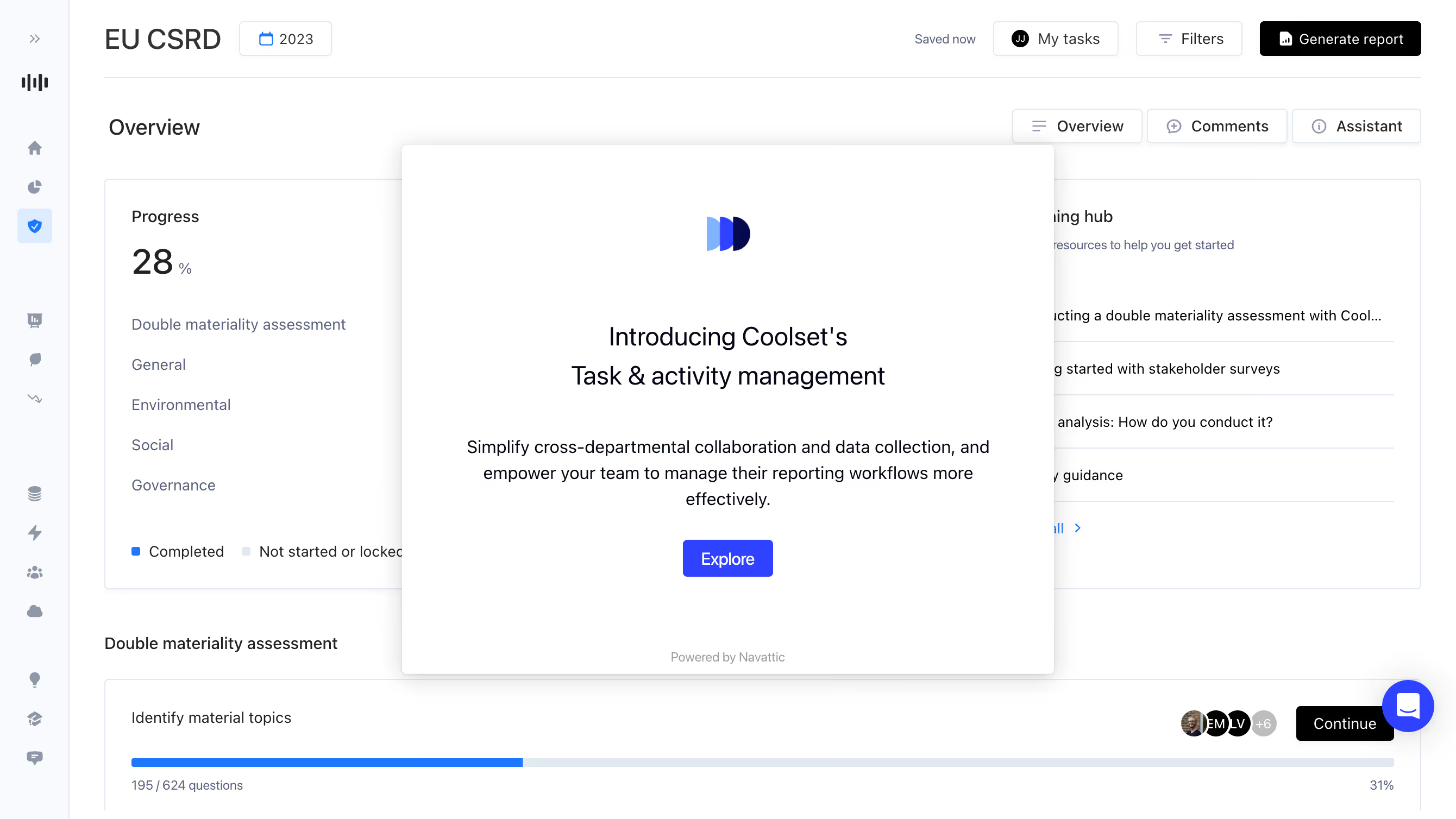
Coolset supports each stage of this process. The platform provides a structured DMA workflow, ESRS data collection templates, carbon accounting aligned with current CSRD scope and timelines, and audit-ready documentation with linked evidence. For more on how to work with your supply chain on CSRD-related requirements, see our guide to the EUDR compliance process.
To see Coolset in action, book a demo with our team.
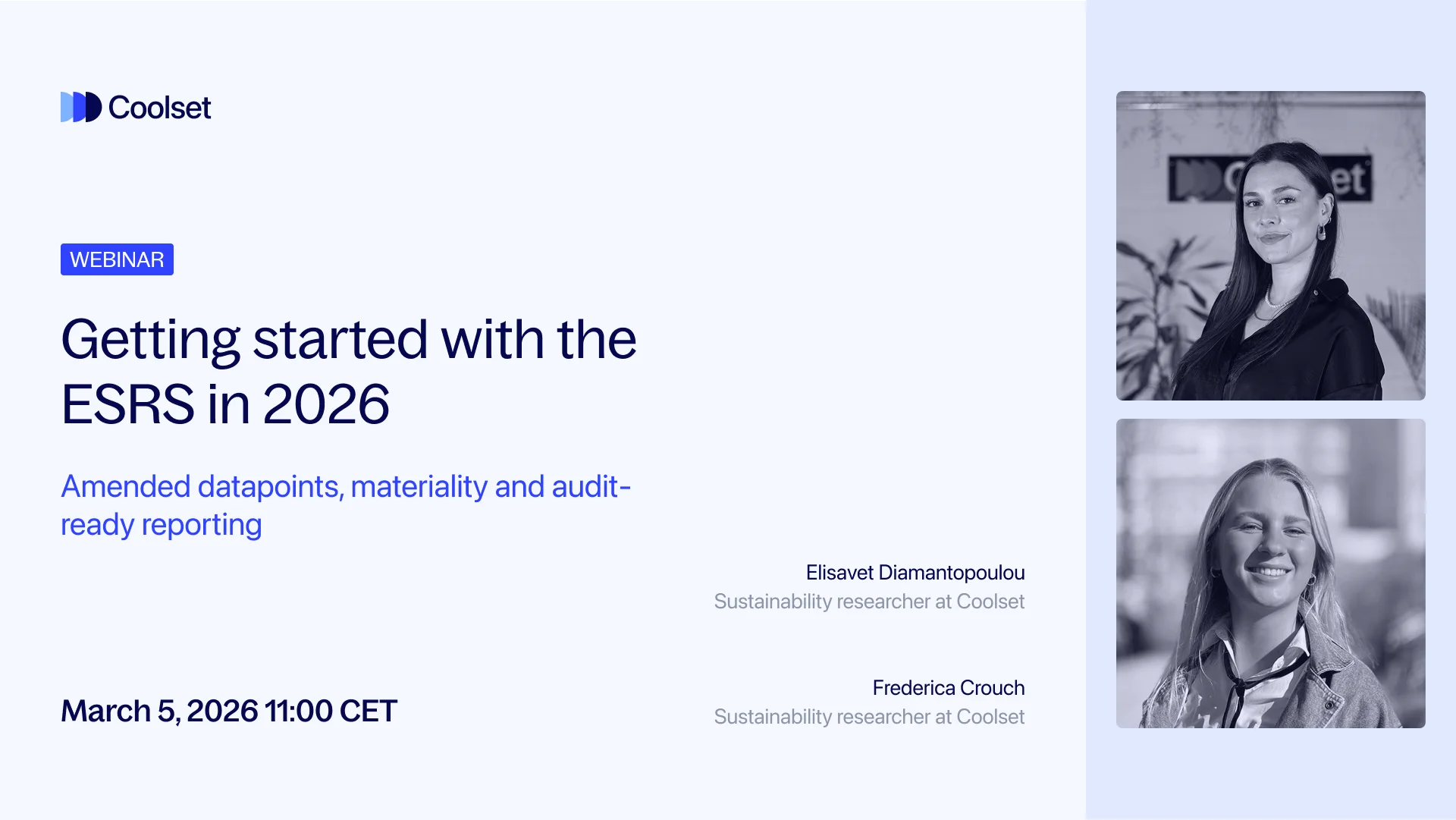
A practical guide to amended datapoints, materiality, and preparing for audit.

on mobile screens
to experience this demo.


↘ Check if your documentation meets PPWR requirements
This free compliance checker scans your packaging documentation and maps it against mandatory PPWR data requirements, giving you a clear view of your compliance status. Get actionable insights on documentation gaps before they become compliance issues.

.webp)