PPWR compliance checklist: what companies must implement by August 12, 2026

Disclaimer: New EUDR developments - December 2025
In November 2025, the European Parliament and Council backed key changes to the EU Deforestation Regulation (EUDR), including a 12‑month enforcement delay and simplified obligations based on company size and supply chain role.
Key changes proposed:
- New enforcement timeline: 30 December 2026 for large/medium operators, 30 June 2027 for small/micro operators
- Simplified DDS: One-time declarations for small and micro primary producers
- Narrowed scope: Most downstream actors and non‑SME traders would no longer need to submit DDSs
- New DDS requirement: Estimated annual quantity of regulated products must be included
These updates are not yet legally binding. A final text will be confirmed through trilogue negotiations and formal publication in the EU’s Official Journal. Until then, the current EUDR regulation and deadlines remain in force.
We continue to monitor developments and will update all guidance as the final law is adopted.
Key takeaways
- Regulation (EU) 2025/40 (PPWR) applies from 12 August 2026, with direct effect in every Member State and no national transposition.
- Five areas must be operational on that date: substance limits (Art. 5), recyclability design, minimization, conformity documentation, and reuse-system rules (Art. 11).
- Harmonized labelling under Art. 12(1) starts from 12 August 2028; the reusable label applies from 12 February 2029.
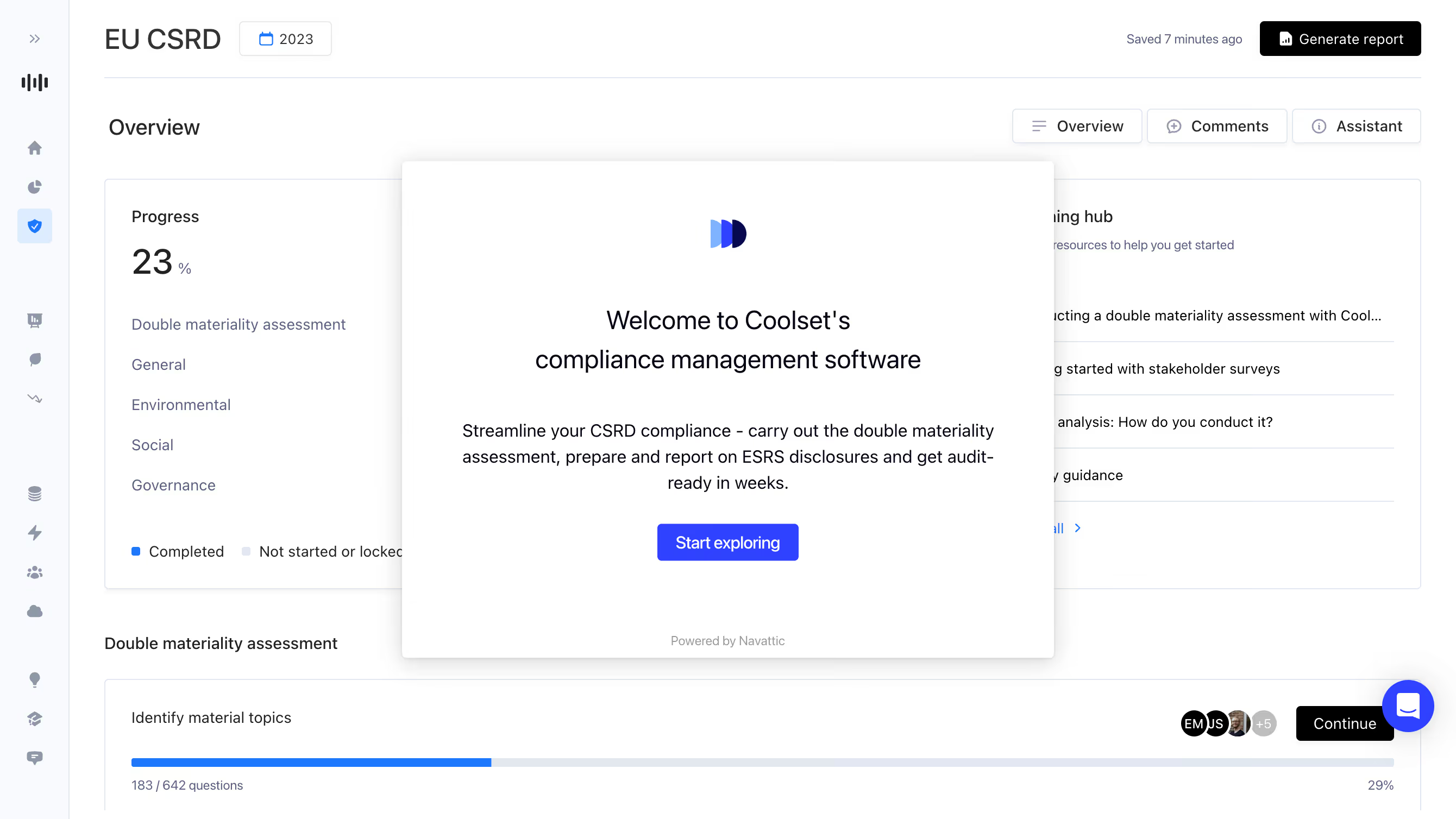
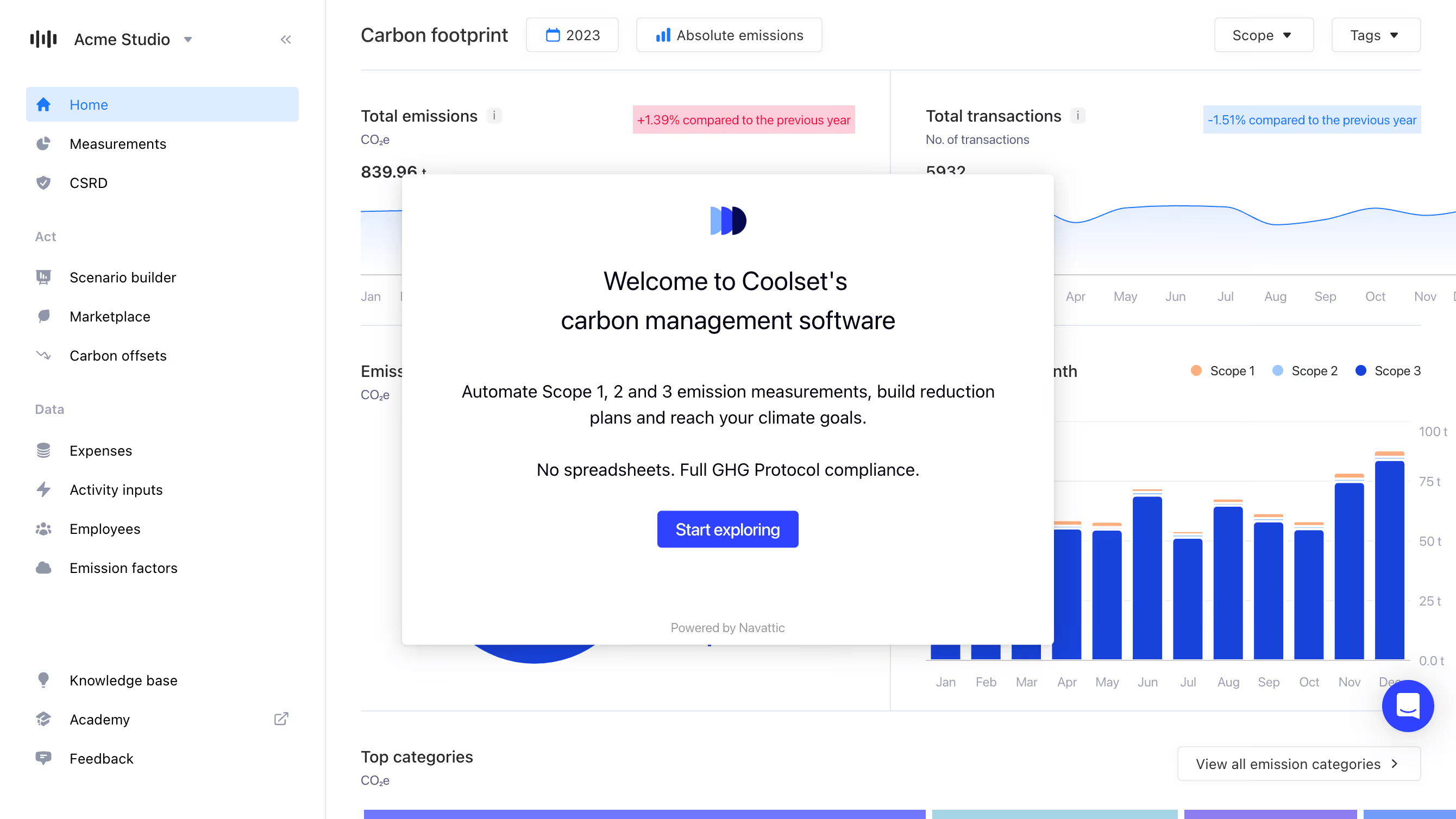
- Coolset helps compliance teams run PPWR readiness against a live packaging inventory.
Regulation (EU) 2025/40, the Packaging and Packaging Waste Regulation (PPWR), entered into force on 11 February 2025 and applies generally from 12 August 2026. It replaces Directive 94/62/EC. Packaging rules now bind every Member State directly, without national transposition.
The application date 12 August 2026 matters because the 2030 milestones grab most of the headlines, but the horizontal framework that customs and market surveillance can enforce lands earlier. Treating PPWR as a 2030 problem leaves gaps at 12 August 2026 in substance limits, recyclability design, minimization, conformity documentation, and reuse systems. Each of those five fronts has to be operational on day one, and the technical file behind them must be retrievable per SKU.
What changes on 12 August 2026, and what does not
Two things are noteworthy for 12 August 2026: the horizontal framework of PPWR becomes enforceable in every Member State, and the quantitative targets that dominate the public debate (recycled content, reuse rates, single-use bans) do not yet apply. From that date, each economic operator carries its own liability for placing non-compliant packaging on the EU market.
The European Commission confirms that the Regulation covers all packaging and packaging waste, whatever the material or origin. It sets rules on manufacturing, composition, and reusable or recoverable nature for packaging placed on the EU market. Internal policies that referenced national transpositions of Directive 94/62/EC need rewriting against PPWR Articles. The Regulation amends Regulation (EU) 2019/1020 and Directive (EU) 2019/904 and repeals Directive 94/62/EC, so the old Directive stops being the legal basis on the application date.
The 2026 baseline is not the full Regulation. Recycled-content minimums, reuse targets, and harmonized labelling under Art. 12 will only apply later. What must be operational on 12 August 2026 is the horizontal framework:
- substance restrictions
- recyclability as a design duty
- minimization of packaging
- conformity documentation
- reuse-system rules for operators that already market reusable packaging.
The Commission's PPWR FAQ, published on 3 August 2026, complements the guidance document and addresses the practical questions raised by stakeholders since adoption. The guidance document itself interprets selected provisions to support uniform application, though it does not replace or amend the Regulation text.
{{product-tour-injectable}}
Substance restrictions: heavy metals and PFAS in food-contact packaging
Substance restrictions are the first substantive obligation to apply from 12 August 2026, and with no grace period. Under Art. 5 of Regulation (EU) 2025/40, packaging on the EU market must stay below a combined 100 mg/kg limit for lead, cadmium, mercury and hexavalent chromium. Art. 5 also requires operators to minimize substances of concern in packaging and its components. The obligation covers intentional and unintentional presence, so ink formulations, adhesives, coatings and closures all sit inside the scope.
Art. 5 also introduces concentration limits on PFAS in food-contact packaging from 12 August 2026. Suppliers of grease-resistant paper, board and moulded fiber sit in the direct path of that restriction, and self-declared attestations from the 94/62/EC era are not a substitute for verified test data.
Enforcement runs through two channels: market surveillance authorities are the primary enforcer in-market, while customs acts downstream at the border on packaging already flagged. Evidence has to be retrievable for each packaging type with a signed DoC and Annex VII technical file for each type. Refresh supplier declarations for inks, adhesives, coatings, and closures with PPWR-specific attestations rather than carrying old Directive 94/62/EC compliance files across.
Recyclability, minimization and the Annex VII technical file
Recyclability under PPWR is a design duty from 12 August 2026. The EUR-Lex summary confirms that the Regulation sets sustainability and labelling requirements for packaging throughout its life cycle, covering production, use and waste management, with the aim of preventing unnecessary packaging and promoting reuse, refill and recycling. Packaging placed on the market from the application date must be designed for recycling against the criteria set out in the Regulation.
Minimization is the second design obligation. Weight, volume and layers must be reduced to the minimum necessary to ensure functionality, safety, hygiene and consumer acceptance. Composite and multi-material structures need a design review well before the enforcement date, because reformulating laminates, coatings, and closures runs through supplier qualification and validation cycles that do not shrink to fit a deadline.
The paper trail behind these obligations is the technical documentation and the EU Declaration of Conformity. Each packaging unit needs a file demonstrating conformity with the horizontal requirements, structured as set out in Annex VII of Regulation (EU) 2025/40. Companies without a packaging inventory keyed to SKU, material, weight, recyclability assessment and substance declarations cannot produce that file on request, and market surveillance authorities can act on the gap.
Packaging complying with the Regulation can be freely marketed across the EU. That single market benefit is what replaces the patchwork of national implementations under Directive 94/62/EC, and it is why the Regulation harmonizes national measures rather than leaving them to transposition.
Labelling and the harmonized pictogram obligation
Harmonized labelling is not live on 12 August 2026, but the groundwork is. The Commission guidance confirms the Art. 12(1) labelling start date. It applies from 12 August 2028, or 24 months after the implementing acts under Art. 12(6) or (7) enter into force, whichever is later. The Regulation requires the Commission to adopt the implementing acts referred to in Art. 12(6) on labelling by 12 August 2026, which sets the clock for the harmonized material-composition pictogram.
For producers on 12 August 2026, existing on-pack sorting instructions should not contradict the forthcoming harmonized symbols, and green claims (recyclable, compostable, made from recycled content) must be substantiated with evidence in the technical file. Under the Regulation text, labels and QR codes must be in languages that end users understand easily. Each Member State decides which languages that means for packaging sold there. Multi-market portfolios need language mapping built into the artwork process well before the pictogram deadline.
Deposit-and-return packaging carries its own marking obligation under Art. 12(1), for packaging covered by the Art. 50(1) deposit-and-return systems. Reusable packaging placed on the market from 12 February 2029, or 30 months after the relevant implementing act (whichever is later), must bear a label informing users that it is reusable. Producers running DRS-eligible SKUs across borders should treat the deposit label as a separate workstream from the material-composition pictogram. The two obligations sit in Art. 12 (1) & 12(2) and follow different timelines.
Reuse system rules become checkable on 12 August 2026
Reuse systems become checkable on 12 August 2026, even though the reuse targets themselves phase in later. The Commission guidance is clear. Reusable packaging placed on the market after 11 February 2025 must comply with the Regulation. Competent authorities can only check Art. 11 compliance from 12 August 2026. The guidance also confirms that Art. 11 requirements on reusable packaging are substantially similar to those in the previous Packaging and Packaging Waste Directive and harmonized standard EN 13429:2004, which gives producers a familiar reference point for evidence.
Operators cannot simply label packaging as reusable without a functioning system behind it. Companies operating deposit-return schemes or pooled transport packaging need contractual clarity on which operator holds the PPWR compliance obligation for each rotation, because liability does not pool automatically across a scheme.
Member States retain some room to move ahead of harmonized standards. The Commission guidance confirms that Member States can require home-compostability before the harmonized standards are adopted. Multi-market compostable portfolios must track national rules alongside the Regulation. For a breakdown of which operator in your chain carries which duty, see the Coolset explainer on roles in PPWR.
{{custom-cta}}
The readiness sequence economic operators are running now
Compliance ownership needs a named accountable role. PPWR assigns obligations per economic operator (manufacturer, importer, distributor, fulfilment provider), not per group, so the compliance owner is the legal entity that places the packaging on the market or imports it. Corporate policies that treat packaging compliance as a group function without an entity-level owner will fail the first market surveillance request.
The base data layer is a packaging inventory keyed to SKU. Each item needs its material composition, weight and volume, recyclability assessment, substance-of-concern declarations, and reuse status recorded and linked back to supplier evidence. Without that inventory, the Annex VII technical file cannot be produced on request. Companies that already run supplier data programs for EUDR or CSRD can extend the same architecture to packaging inputs.
Supplier contracts and quality agreements need PPWR clauses before the next tender cycle closes. That means specific attestations on Art. 5 substance limits (including PFAS testing for food-contact packaging), design-for-recycling assessments, and chain-of-custody evidence for any recycled-content claims. Internal governance should treat 12 August 2026 as the enforcement start and later milestones on recycled content, reuse targets, and single-use bans as a second wave planned against the same inventory model.
Where to focus before 12 August 2026
The most useful preparatory move is to build the packaging inventory that will sit under every downstream obligation. That single dataset becomes the input for the Annex VII technical file, the supplier contract refresh, and the later planning cycle on recycled content and reuse targets.
Frequently asked questions
What is the new packaging Regulation 2026?
The new packaging Regulation is Regulation (EU) 2025/40, the Packaging and Packaging Waste Regulation (PPWR). It entered into force on 11 February 2025 and applies generally from 12 August 2026, replacing Directive 94/62/EC. It sets EU-wide requirements for the manufacturing, composition, and reusable or recoverable nature of packaging, and covers all packaging and packaging waste regardless of material or origin.
What is Article 12 of the PPWR?
Art. 12 sets the harmonized labelling rules for packaging, including the material-composition pictogram that helps consumers sort waste. The Commission guidance confirms that Art. 12(1) labelling obligations apply from 12 August 2028, or 24 months after entry into force of the implementing acts under Art. 12(6) or (7), whichever is later. Green claims on packaging must also be substantiated under Art. 12.
Does PPWR apply to the UK?
PPWR is EU law and does not apply to packaging placed on the UK domestic market. Any packaging placed on the EU market must comply with PPWR regardless of where it was produced, because the Regulation covers all packaging and packaging waste regardless of material or origin.
What is Annex VII of the PPWR?
Annex VII of Regulation (EU) 2025/40 sets out the structure of the technical documentation that manufacturers must prepare to demonstrate conformity of packaging with the sustainability requirements. The file supports the EU Declaration of Conformity and must be made available to market surveillance authorities on request. It is the paper trail behind substance limits, recyclability design, minimization, and labelling claims.
When does PPWR start being enforced?
PPWR obligations start being enforced from the general date of application, 12 August 2026, for substance restrictions, minimization, recyclability design, conformity documentation, and reuse-system rules under Art. 11. Under Commission Notice, harmonized labelling under Art. 12(1) starts from 12 August 2028. If the relevant implementing acts enter into force later, the clock is 24 months from that date. A further date of application is set at 12 February 2029.
The Packaging and Packaging Waste Regulation (PPWR) makes each economic operator liable per SKU from 12 August 2026. Coolset helps compliance teams map packaging portfolios against Article 5 substance limits, recyclability design, Annex VII documentation, and reuse-system evidence in one place.
.webp)

on mobile screens
to experience this demo.


↘ Check if your documentation meets PPWR requirements
This free compliance checker scans your packaging documentation and maps it against mandatory PPWR data requirements, giving you a clear view of your compliance status. Get actionable insights on documentation gaps before they become compliance issues.

.webp)