Disclaimer: New EUDR developments - December 2025
In November 2025, the European Parliament and Council backed key changes to the EU Deforestation Regulation (EUDR), including a 12‑month enforcement delay and simplified obligations based on company size and supply chain role.
Key changes proposed:
- New enforcement timeline: 30 December 2026 for large/medium operators, 30 June 2027 for small/micro operators
- Simplified DDS: One-time declarations for small and micro primary producers
- Narrowed scope: Most downstream actors and non‑SME traders would no longer need to submit DDSs
- New DDS requirement: Estimated annual quantity of regulated products must be included
These updates are not yet legally binding. A final text will be confirmed through trilogue negotiations and formal publication in the EU’s Official Journal. Until then, the current EUDR regulation and deadlines remain in force.
We continue to monitor developments and will update all guidance as the final law is adopted.
Wichtigste Erkenntnisse
- Der CSRD-Anwendungsbereich wurde erheblich eingeschränkt, doch betroffene Unternehmen stehen vor komplexen ESG-Anforderungen und müssen sich strukturiert auf 2027 vorbereiten.
- Die richtige ESG-Software vereint Compliance, CO2-Management, Lieferanteneinbindung und Automatisierung in einer skalierbaren Plattform.
- Coolset bietet eine integrierte ESG-Plattform, aktualisiert nach dem Omnibus, die Doppelarbeit reduziert.
Im Dezember 2025 wurde der Omnibus-Vorschlag angenommen, der den Anwendungsbereich der CSRD erheblich einschränkt. Nur noch Unternehmen mit mehr als 1.000 Mitarbeitenden und einem Umsatz von über 450 Mio. Euro müssen diese EU-Verordnung einhalten. Zudem wurden die ESRS-Datenpunkte neu gefasst, was auf eine deutliche Reduzierung hindeutet. Die endgültige Genehmigung durch einen delegierten Rechtsakt wird für Mitte 2026 erwartet.
Ab 2027 müssen große, betroffene Unternehmen die CSRD einhalten. Damit stellt sich die Frage: Wie lässt sich die Compliance möglichst effizient vorbereiten? Ob Sie neu im Bereich Nachhaltigkeitsberichterstattung sind oder bestehende Prozesse optimieren möchten: Die richtige CSRD-Software ist dabei entscheidend.
Dieser Leitfaden erklärt, warum Sie CSRD-Software benötigen, was sie leistet und wie Sie die beste Lösung für Ihr Unternehmen auswählen.
Wer benötigt nach den Omnibus-Änderungen eine CSRD-Compliance-Software?
Der Omnibus-Vorschlag legt eine doppelte Schwelle für den Anwendungsbereich fest. Unternehmen müssen die CSRD einhalten, wenn sie mehr als 1.000 Mitarbeitende haben und ihr Umsatz 450 Mio. Euro übersteigt. Durch diese neuen Schwellenwerte sind rund 90 % der ursprünglich betroffenen Unternehmen nun von der Pflicht zur Compliance befreit. Auch die ESRS wurden erheblich gestrafft: 61 % der bisherigen Datenpunkte wurden gestrichen.
Der abschließende delegierte Rechtsakt mit den finalen ESRS wird für Mitte 2026 erwartet, sodass Unternehmen noch Zeit haben, sich strategisch vorzubereiten. Die erste Berichterstattung beginnt im Januar 2027, Welle 2 und 3 wurden um jeweils zwei Jahre verschoben: Welle 2 startet im Januar 2028, Welle 3 im Januar 2029. Unternehmen, die weiterhin im Anwendungsbereich der CSRD liegen, haben in der Regel auch weitere ESG-Verpflichtungen und benötigen daher umfassende ESG-Plattformen, nicht nur CSRD-spezifische Lösungen.
{{custom-cta}}
Warum große Unternehmen integrierte ESG-Plattformen brauchen und keine reinen CSRD-Tools
Unternehmen nutzen ESG-Software, um jeden Schritt ihres Nachhaltigkeitsberichterstattungsprozesses zu vereinfachen und die Anforderungen der CSRD effizienter zu erfüllen. Zu den typischen Funktionen gehören:
- ESG-Daten verwalten und regulatorische Anforderungen einhalten
- CO2-Emissionen messen und reduzieren
- Fortschritte bei Nachhaltigkeitszielen verfolgen
- Entwicklung gegenüber Emissionsszenarien bewerten
- Nachhaltigkeitsmaßnahmen entlang der Lieferkette steuern
- Audits vorbereiten und transparente Berichte erstellen
- Nachhaltigkeitsrisiken identifizieren und minimieren
- Leistung mit Branchenstandards und Best Practices vergleichen
- Fortschritte gegenüber Stakeholdern kommunizieren
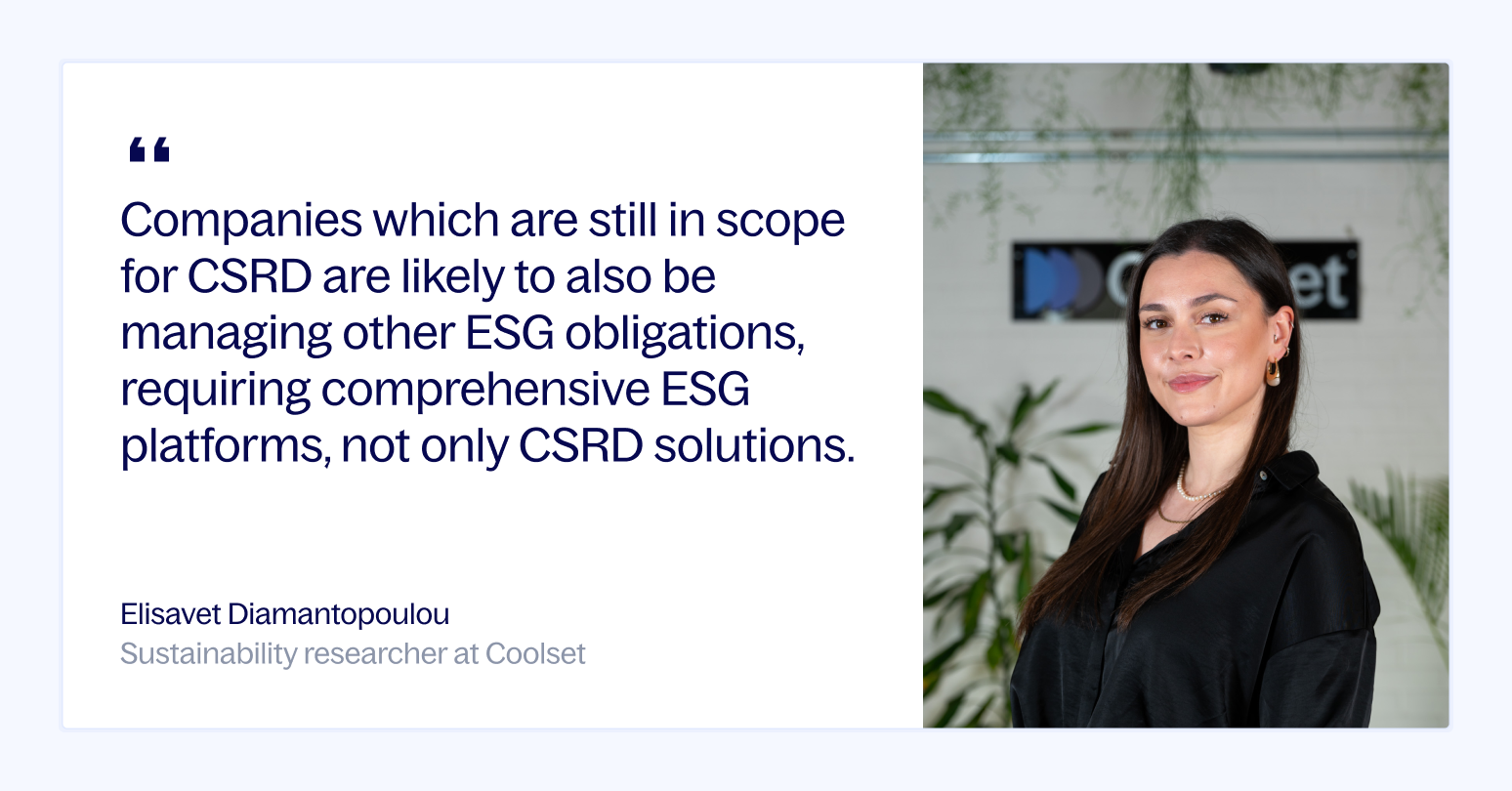
Große Unternehmen, die nach dem Omnibus-Vorschlag weiterhin unter die CSRD fallen, sind sehr wahrscheinlich mit überschneidenden ESG-Verpflichtungen konfrontiert. Sie müssen gleichzeitig Standards und Regelwerke wie CSRD, CDP, EU-Taxonomie und GRI berücksichtigen. Eine umfassende ESG-Plattform, die mehrere dieser Anforderungen abdeckt, spart Ihrem Nachhaltigkeitsteam wertvolle Zeit, die sonst für die doppelte Dateneingabe und den Abgleich verschiedener Anforderungen aufgewendet werden müsste.
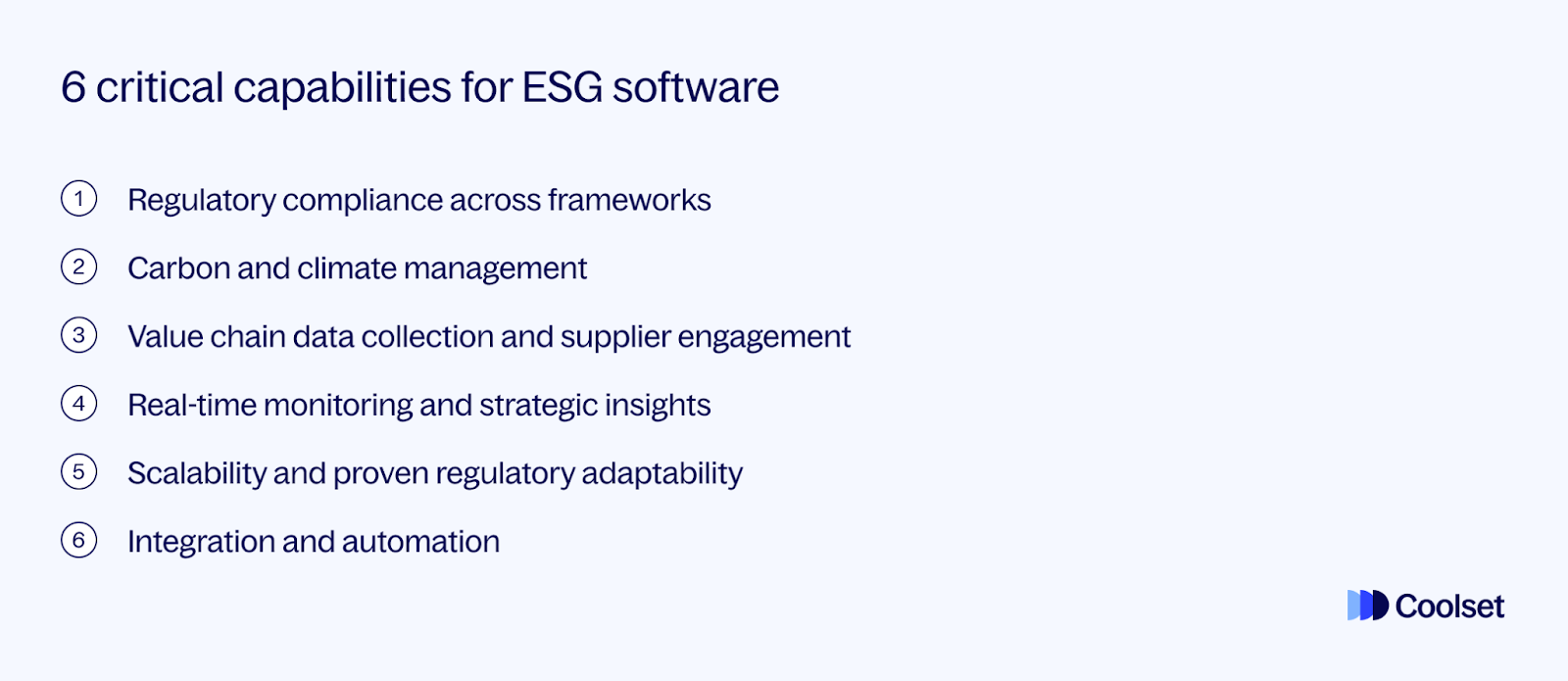
6 zentrale Funktionen für ESG-Software im Unternehmenseinsatz
- Regulatorische Compliance über mehrere Rahmenwerke hinweg: Umfassende ESG-Software verfügt über fundiertes Know-how zu verschiedenen ESG-Rahmenwerken und ermöglicht die gleichzeitige Einhaltung mehrerer Standards. Das eliminiert doppelte Dateneingaben und stellt sicher, dass die Dokumentation für Audits geprüft ist. Die Software kann fehlende oder inkonsistente Daten automatisch erkennen und so zu qualitativ hochwertigeren Ergebnissen beitragen.
- CO2- und Klimamanagement: ESG-Lösungen können Scope-1-3-Emissionsdaten speichern, wobei Scope 3 in die erforderlichen Kategorien gemäß dem GHG-Protokoll unterteilt ist. Tools zur Verfolgung und Validierung von Science-based Targets (SBTi) helfen Ihrem Unternehmen, den Fortschritt gegenüber Zielen und einem Transformationsplan zu überwachen.
- Datenaggregation entlang der Wertschöpfungskette: Die Datenerhebung entlang der Wertschöpfungskette ist einer der komplexesten Aspekte der CSRD-Compliance. Die Einbindung von Lieferanten und die systematische Datenerhebung aus vor- und nachgelagerten Wertschöpfungsketten erfordern strukturierte Prozesse. Achten Sie auf eine Plattform, die die Lieferkette integriert und die Zusammenarbeit mit Lieferanten direkt in der Oberfläche ermöglicht.
- Echtzeit-Monitoring und strategische Erkenntnisse: Live-Dashboards für CO2- und ESG-Daten geben einen klaren Überblick über den Fortschritt und ermöglichen den Vergleich mit Branchenpeers. Tools mit integrierter doppelter Wesentlichkeit unterstützen die Verbindung zwischen Auswirkungs- und finanzieller Wesentlichkeit. Eine Plattform, die neben Datenübersichten auch strategische Erkenntnisse liefert, hilft Ihnen, Daten und Strategie zu verknüpfen und messbare Ergebnisse zu erzielen.
- Skalierbarkeit und nachgewiesene regulatorische Anpassungsfähigkeit: Das regulatorische Umfeld der EU entwickelt sich kontinuierlich weiter. Es ist entscheidend, dass Ihre gewählte Softwarelösung in der Vergangenheit schnell auf regulatorische Änderungen reagiert hat. Plattformen mit einer transparenten Produkt-Roadmap, die regulatorische Entwicklungen und Unsicherheiten berücksichtigt, zeigen ein klares Engagement für Aktualität. Der Kundenerfolg sollte regulatorisches Fachwissen bieten und nicht nur technischen Support.
- Integration und Automatisierung: Die nahtlose Integration verschiedener Datenquellen ist für ein effizientes ESG-Datenmanagement unerlässlich. Plattformen mit integrierten Konnektoren zu gängigen Systemen wie Energiemanagement, Logistik und Finanzen vermeiden manuelle Datentransfers, die Zeit kosten und Fehler verursachen können. Automatisierte Elemente wie Qualitätsprüfungen und automatische Berechnungen helfen dabei, schnell zu erkennen, welche Daten vor der Compliance noch Aufmerksamkeit erfordern.
Warnsignale bei der Bewertung von ESG-Plattformen 2026
Bei der Suche nach einer Softwarelösung, die Ihren ESG-Anforderungen gerecht wird, gibt es einige Anzeichen, die darauf hindeuten können, dass eine Lösung nicht optimal für Ihre Bedürfnisse ist.
- Seien Sie vorsichtig bei hohen Preisen für Funktionen und Regulierungen, die verschoben wurden. Das deutet darauf hin, dass Plattformen regulatorische Unsicherheit vermarkten statt echten Mehrwert zu liefern.
- Wenn eine Plattform keine Funktionen zur Lieferanteneinbindung als Teil ihres Wertschöpfungskettenangebots erwähnt, deutet das darauf hin, dass die Komplexität der vor- und nachgelagerten Datenerhebung nicht ausreichend berücksichtigt wurde, was für die CSRD jedoch entscheidend ist.
- Einzelrahmen-Lösungen, die ausschließlich auf CSRD ausgerichtet sind, erzeugen Datensilos und führen zu unnötigem Aufwand bei der Dateneingabe.
- Starre Verträge ohne Berücksichtigung regulatorischer Änderungen können Sie anfällig machen, wenn sich Standards weiterentwickeln. Stellen Sie sicher, dass Ihre Vereinbarung Flexibilität für Plattformanpassungen bei regulatorischer Unsicherheit vorsieht.
- Anbieter, die vage Versprechen rund um „KI-gestützte
Understanding the amended datapoints, materiality and audit-ready reporting

auf mobilen Bildschirmen
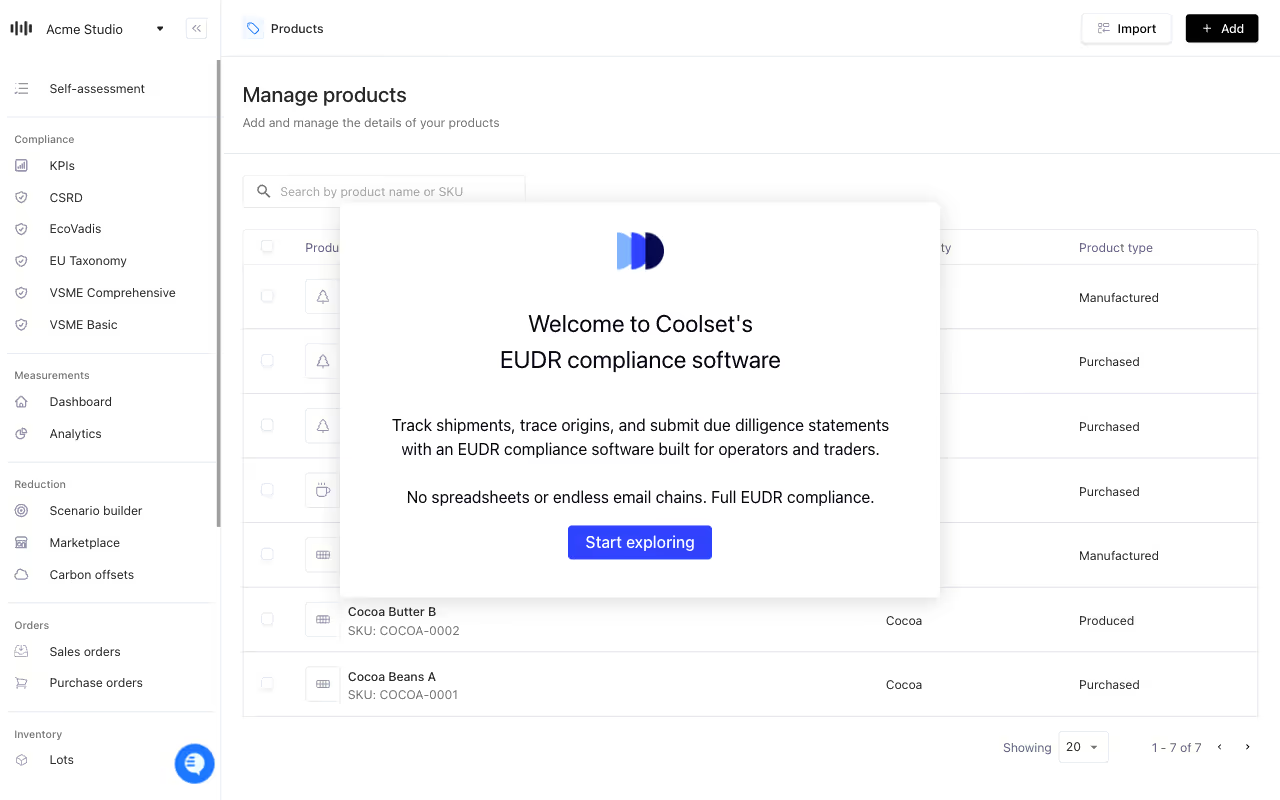
um diese Demo zu erleben.


↘ Check if your documentation meets PPWR requirements
This free compliance checker scans your packaging documentation and maps it against mandatory PPWR data requirements, giving you a clear view of your compliance status. Get actionable insights on documentation gaps before they become compliance issues.
Get CSRD compliant
From double materiality to audit-ready ESRS disclosures - Coolset gives your team the tools to report with clarity, accuracy and confidence.