

Disclaimer: New EUDR developments - December 2025
In November 2025, the European Parliament and Council backed key changes to the EU Deforestation Regulation (EUDR), including a 12‑month enforcement delay and simplified obligations based on company size and supply chain role.
Key changes proposed:
- New enforcement timeline: 30 December 2026 for large/medium operators, 30 June 2027 for small/micro operators
- Simplified DDS: One-time declarations for small and micro primary producers
- Narrowed scope: Most downstream actors and non‑SME traders would no longer need to submit DDSs
- New DDS requirement: Estimated annual quantity of regulated products must be included
These updates are not yet legally binding. A final text will be confirmed through trilogue negotiations and formal publication in the EU’s Official Journal. Until then, the current EUDR regulation and deadlines remain in force.
We continue to monitor developments and will update all guidance as the final law is adopted.
Key takeaways
- Companies that fall below the new CSRD thresholds (1,000 employees, EUR 450M turnover) after Omnibus can transition to the VSME standard to maintain structured ESG reporting without the full ESRS burden.
- Much of the data already collected for CSRD materiality assessments and ESRS data points maps directly to VSME requirements, making the transition efficient.
- Coolset's VSME module automatically maps existing CSRD data to VSME frameworks, reducing duplicate effort during the transition.
The EU’s Omnibus proposal has raised the CSRD employee threshold from 250 to 1,000, removing many Wave 2 companies from mandatory CSRD scope. But these companies still face sustainability reporting demands — from customers, investors, banks, and supply chain partners who are themselves subject to CSRD.
The Voluntary SME Standard (VSME) provides a structured, proportionate pathway for companies no longer required to report under CSRD but still needing to respond to stakeholder requests for sustainability data. This guide explains how to transition from CSRD preparation to VSME reporting.
Why the transition matters
Companies that have been preparing for CSRD have invested in their double materiality assessment, data collection processes, and sustainability reporting capabilities. This investment is not wasted — the work done for CSRD provides a strong foundation for VSME reporting and meets the needs of most stakeholder requests.
The key difference: VSME is proportionate and voluntary. It covers a focused set of sustainability disclosures aligned with what large CSRD reporters need from their suppliers — without the full complexity of the ESRS framework. For more on how the Omnibus changed CSRD scope, see our guide on CSRD under Omnibus.
CSRD vs VSME: what’s different
Understanding the differences helps you reuse CSRD work efficiently:
- Scope: VSME covers a subset of sustainability topics compared to full ESRS. Environmental data (GHG emissions, energy), basic social data (workforce), and governance fundamentals are all included — sector-specific and highly granular ESRS requirements are not.
- Materiality: VSME does not require a formal double materiality assessment, though the work done for CSRD provides useful context for prioritizing VSME disclosures.
- Assurance: VSME is voluntary and does not require third-party assurance, though companies may choose to have their disclosures reviewed.
- Format: VSME uses a simpler reporting format than ESRS, focused on practical metrics that supply chain customers and lenders can use.
How to reuse CSRD work for VSME
Most of the foundational work done for CSRD can be reused for VSME:
- GHG emissions data: Scope 1, 2, and 3 emissions measured for CSRD align directly with VSME environmental disclosures
- Workforce data: HR metrics collected for ESRS S1 carry over to VSME social disclosures
- Governance documentation: Policies and codes of conduct developed for ESRS G1 can be referenced in VSME governance disclosures
- Materiality insights: Even without a formal VSME DMA, the insights from your CSRD DMA help prioritize which VSME topics are most relevant to your stakeholders
What VSME adds that CSRD didn’t require
VSME has some specific disclosure formats that differ from ESRS. The VSME Basic Module and Narrative Policy Module have their own structure. You may need to reformat or supplement existing CSRD data to fit the VSME template.
For a detailed breakdown of what the VSME standard requires, see our guide to understanding the VSME Basic Module.
Practical steps for the transition
- Confirm whether your company is out of CSRD scope under the Omnibus thresholds
- Identify which customers, investors, or lenders are requesting sustainability data and what format they prefer
- Map your existing CSRD data to the VSME reporting template
- Identify any VSME disclosures that require new data collection
- Publish your VSME report or share it with stakeholders on request
How Coolset supports the CSRD-to-VSME transition
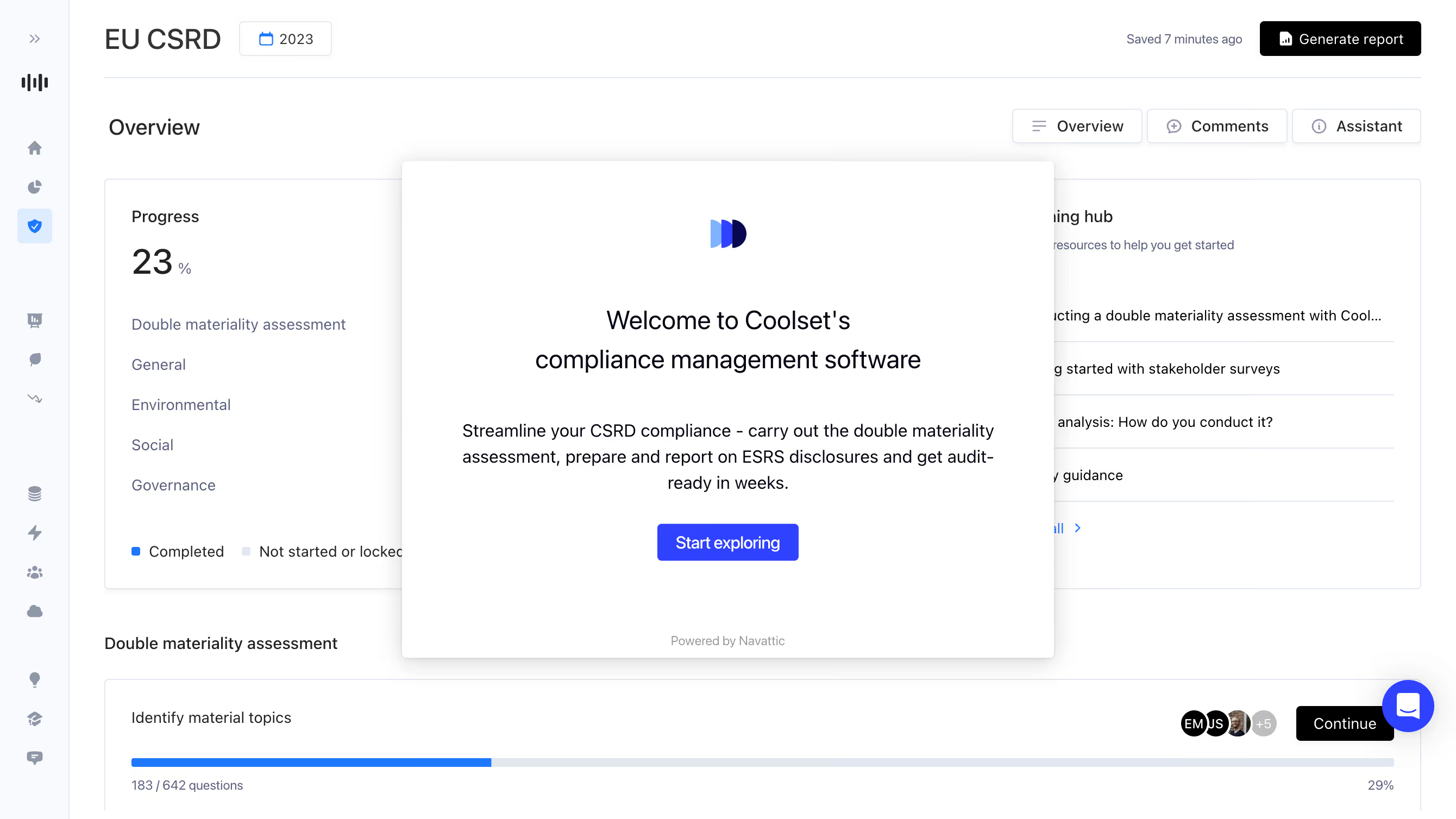
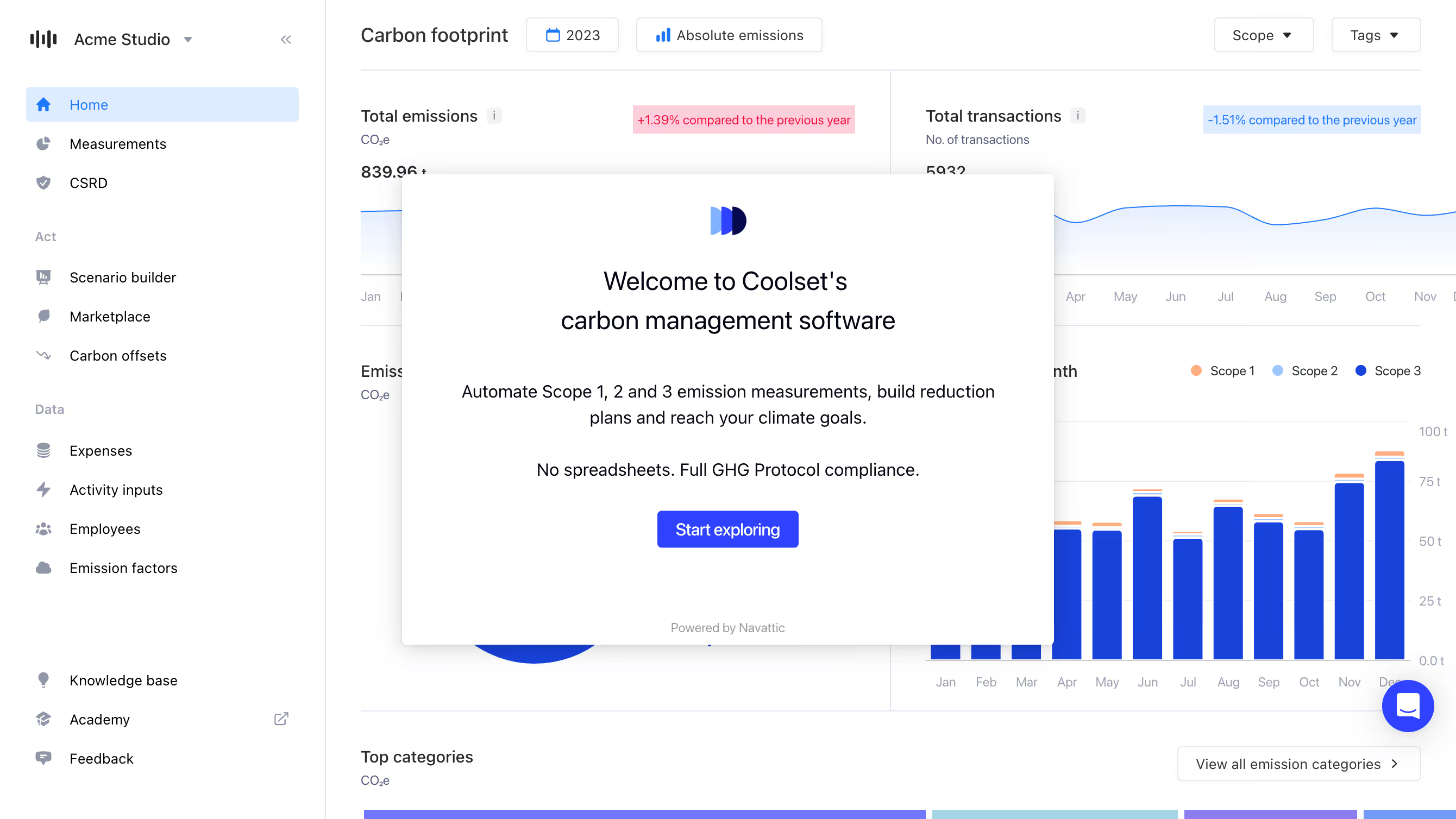
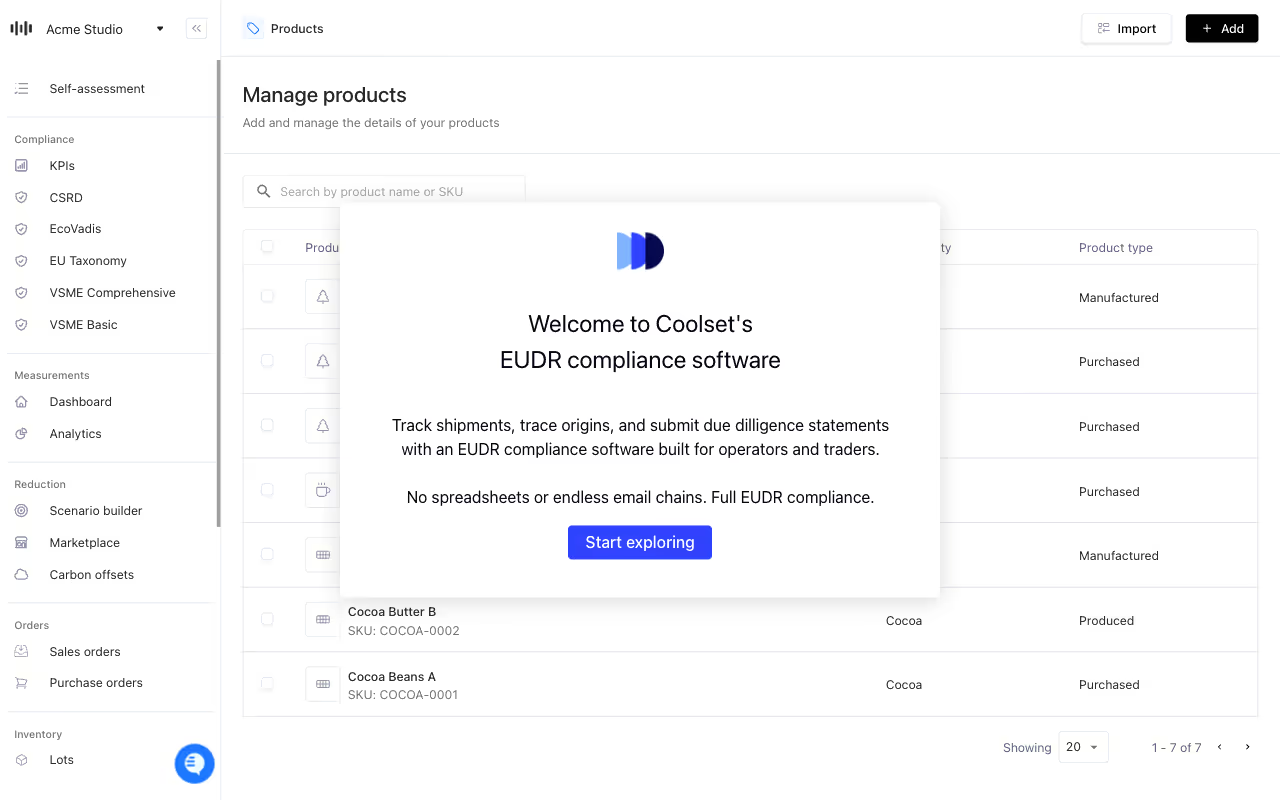
Coolset’s platform supports both CSRD and VSME reporting. For companies transitioning from CSRD to VSME, the platform helps you understand how your existing data maps to VSME requirements. The VSME module provides a structured reporting workflow aligned with the current EU regulatory framework. Book a demo to see how it works.
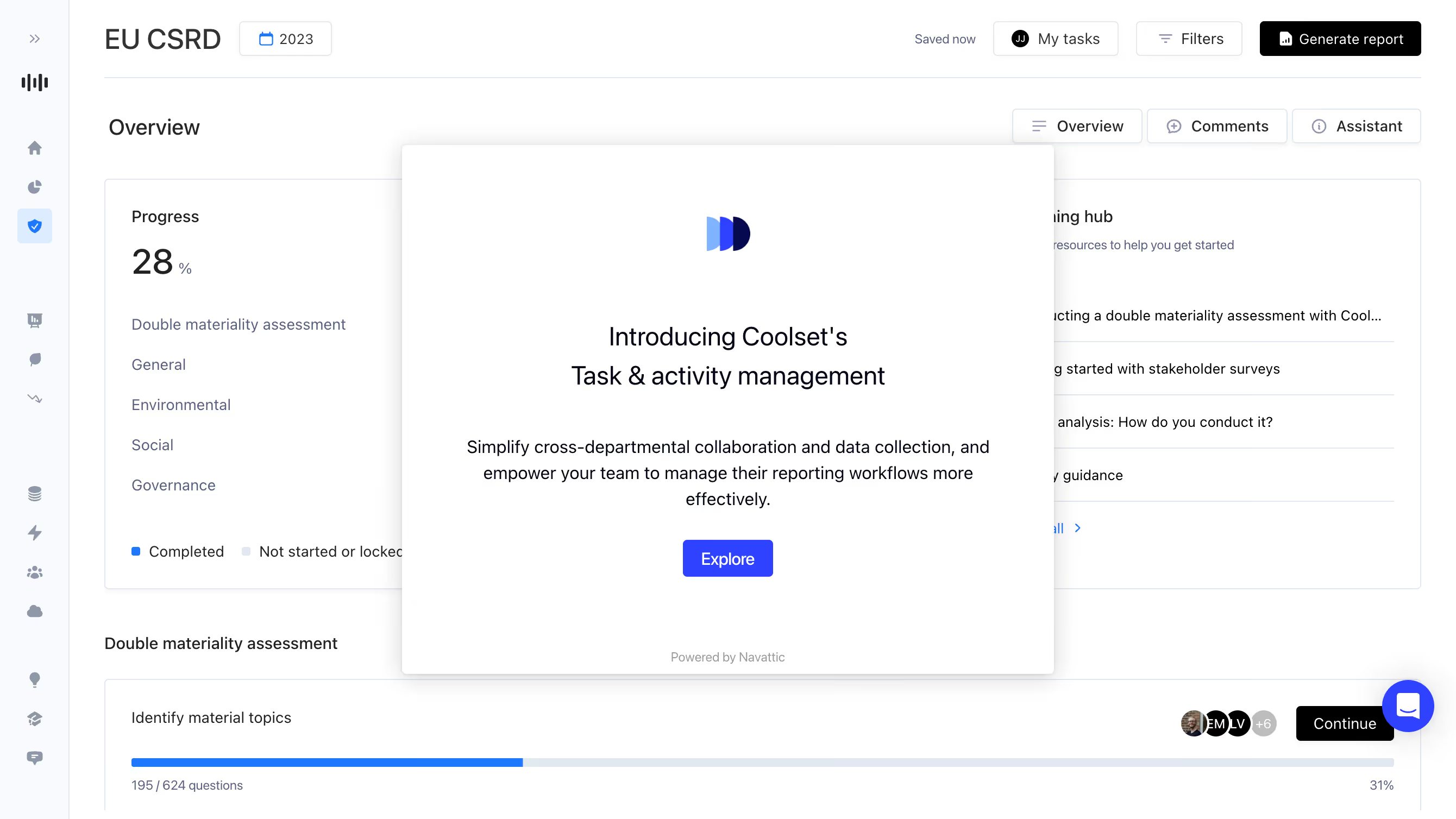
Explore how you can reuse your CSRD work by mapping disclosures to the new VSME framework.

on mobile screens
to experience this demo.



.webp)