EUDR supplier tiers: mapping your full supply chain beyond Tier 1 and 2


Disclaimer: New EUDR developments - December 2025
In November 2025, the European Parliament and Council backed key changes to the EU Deforestation Regulation (EUDR), including a 12‑month enforcement delay and simplified obligations based on company size and supply chain role.
Key changes proposed:
- New enforcement timeline: 30 December 2026 for large/medium operators, 30 June 2027 for small/micro operators
- Simplified DDS: One-time declarations for small and micro primary producers
- Narrowed scope: Most downstream actors and non‑SME traders would no longer need to submit DDSs
- New DDS requirement: Estimated annual quantity of regulated products must be included
These updates are not yet legally binding. A final text will be confirmed through trilogue negotiations and formal publication in the EU’s Official Journal. Until then, the current EUDR regulation and deadlines remain in force.
We continue to monitor developments and will update all guidance as the final law is adopted.
Key takeaways
- Article 9 requires plot-level geolocation, so Tier 1 and Tier 2 supplier lists alone cannot support a valid DDS.
- Redraw tiers around the commodity's physical journey, with the origin tier defined as whoever holds the polygon coordinates and legality file.
- Sequence mapping by commodity volume and country risk before the 30 December 2026 application date for medium and large operators as well as SMEs covered by the EUTR.
- Coolset's EUDR platform helps teams collect, validate and file plot-level supplier data at scale.
Article 9 of Regulation (EU) 2023/1115 requires operators to collect the geographic coordinates of every plot of land where the relevant commodity was produced, which means a Tier 1 supplier list, however clean, cannot satisfy the due diligence statement (DDS) filed in the EU Information System. The obligation reaches the plot, not the invoice. Any operator whose upstream map stops at the direct supplier or the first processor is filing on partial evidence.
That is the binding constraint behind the EU Deforestation Regulation (EUDR). The Council formally adopted the targeted revision on 18 December 2025, moving application to 30 December 2026 for large and medium operators and for micro/small operators already covered by the EUTR, and from 30 June 2027 for other micro and small operators. That means that the timeline shifted - the evidence bar did not. This guide sets out how to redraw supplier tiers around the commodity's physical journey, what to collect at each level, and how to sequence the mapping before submissions ramp.
Why Tier 1 and Tier 2 mapping fails the EUDR evidence test
Tier 1 and Tier 2 visibility fails the EUDR because the regulation demands plot-level geolocation and a legal production check that only exist at the origin tier. A direct supplier can attest to a country of harvest and a volume, but the coordinates that anchor a DDS sit with the farmer, plantation, forest concession or cattle establishment several tiers upstream. Article 9(1)(d) of the EUDR requires geolocation of all plots of land where the relevant commodity was produced, and for cattle, of all establishments where the animals were kept. That data cannot be synthesized from procurement records.
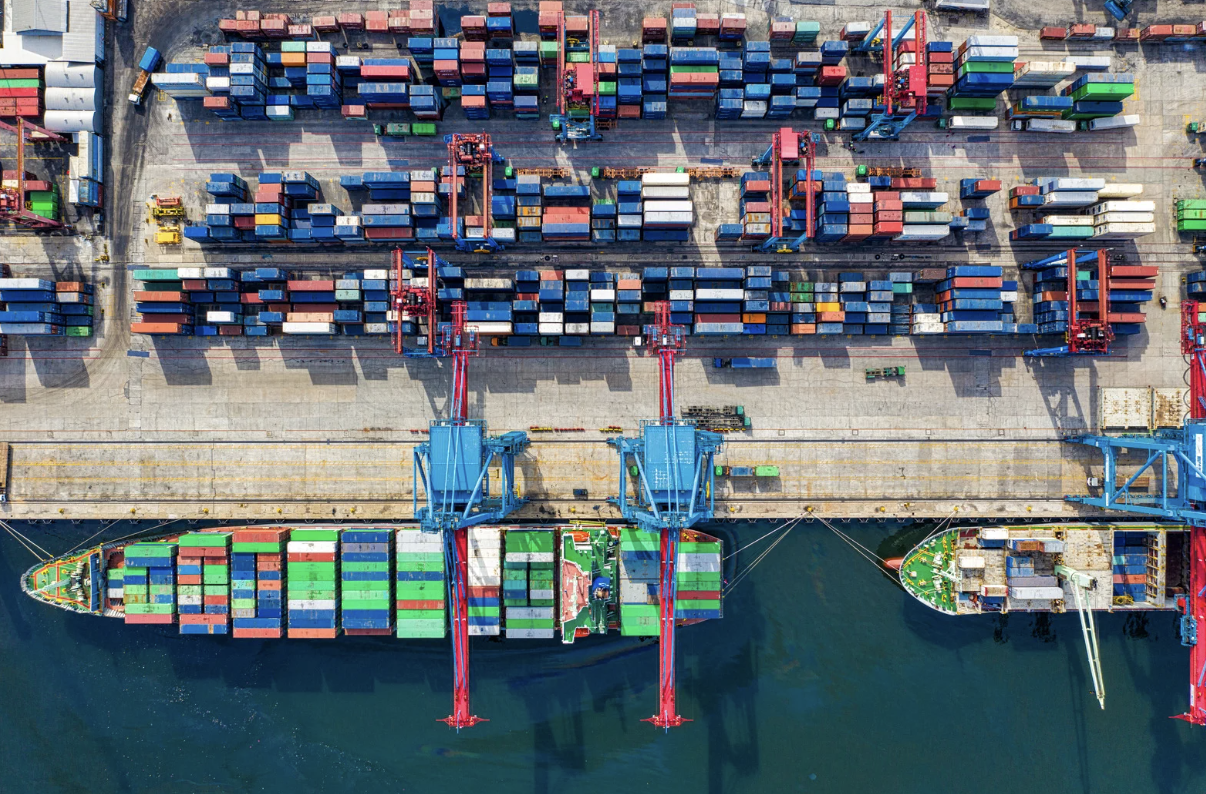
The mismatch matters most in aggregated commodity flows. Soy leaves a farm, moves through a first buyer, an inland silo, a crushing plant, a port trader and an EU importer. Cocoa passes cooperatives, licensed buying companies, exporters and grinders. Each intermediate node blends batches, and the polygon that made the shipment lawful sits behind two or three transformations. A supplier map that lists only the port trader as Tier 1 and the crusher as Tier 2 hides everything the regulation actually cares about.
The consequence is legal, not reputational. Operators file the DDS and stand behind its content. The regulation gives competent authorities the power to sanction, and the Commission's own July 2026 update on Information System tools and supply-chain infographics underlines that operators carry the burden of proof for what they submit. Mapping is therefore a compliance activity, not a procurement one.
How EUDR redefines supplier tiers around the commodity, not the contract
Under EUDR, tiers should follow the commodity's physical journey from plot to EU placement, not the invoice trail. A contractual Tier 1 might be a European trader whose actual role in the physical chain is to book a container; the plot of land is five tiers back. Rebuilding the map around the commodity means numbering tiers by transformation and custody, with the origin tier defined as whoever holds the polygon coordinates and the legality file.
A workable scheme looks like this:
- Tier 1: direct contractual supplier placing the goods with the operator.
- Tiers 2 to N: intermediate processors, aggregators, cooperatives, mills, refiners, gins and traders that hold custody of the commodity between the plot and the operator.
- Origin tier: the producer, farm, plantation, forest concession or cattle establishment where the commodity was grown or kept, and where geolocation exists.
Each intermediate tier owes chain-of-custody documentation showing volume reconciliation, so purchased tonnage matches sold tonnage, and confirming that compliant material was not mixed with non-compliant material. The sourcing model determines what evidence is possible. Segregated supply keeps a specific batch identifiable from plot to EU border and preserves the polygon link end to end. Mass balance allows compliant and non-compliant volumes to be tracked on paper without physical separation. For EUDR, compliant commodities must be segregated from unknown-origin/non-deforestation-free ones at every step to satisfy the information requirements under Art. 9.
The re-import case is a separate wrinkle worth flagging. Where a product leaves the EU, is transformed abroad and returns, the operator needs to know whether a new DDS is required. See the Coolset guide on EUDR re-imports and processed products for the decision tree.
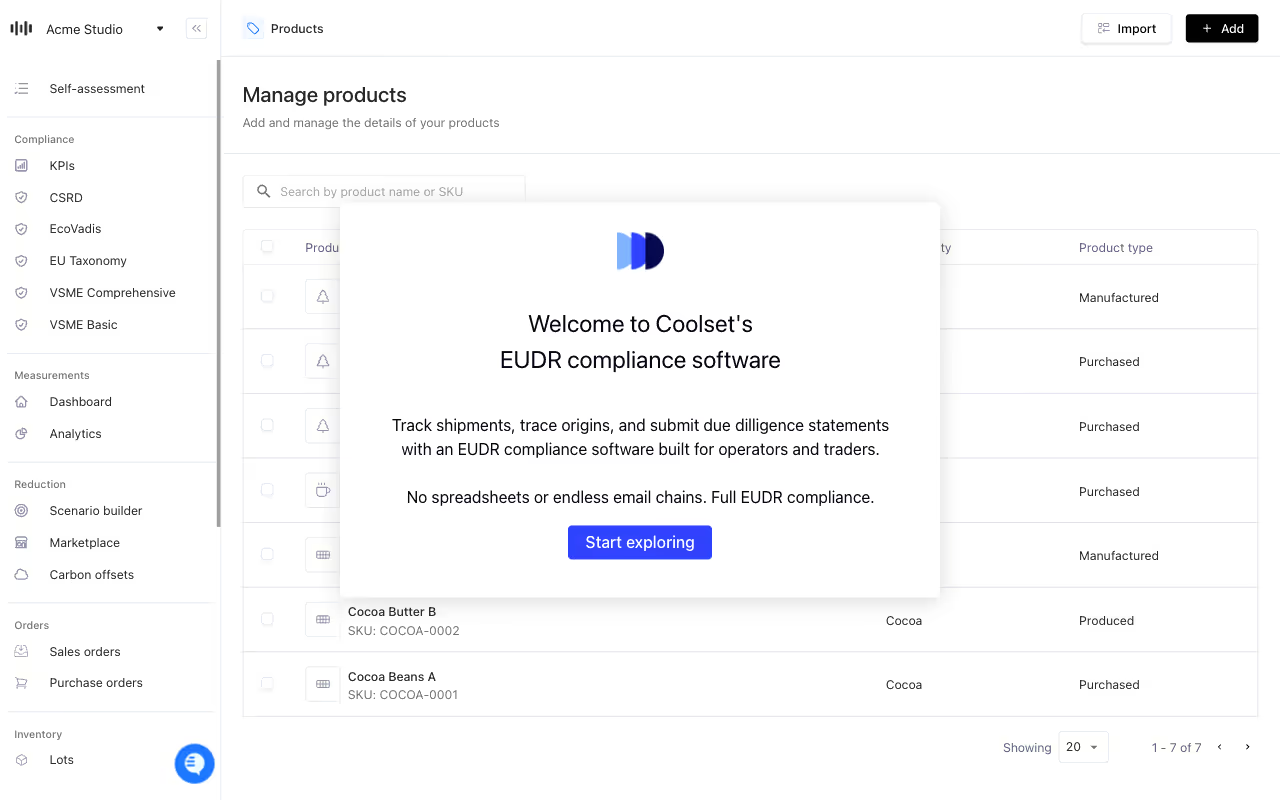
{{product-tour-injectable}}
What to collect at each tier to satisfy Article 9 and Article 10
Each tier owes a specific evidence package, and the operator's job is to assemble those packages into a single defensible file per DDS. The information set is fixed by Article 9 EUDR, and the risk assessment sits in Article 10. Nothing in the December 2025 revision changes the substance of these obligations.
Tier 1: direct supplier
The direct supplier provides commodity description, quantity, country of production, its own identity and contact details, and a contractual assurance that upstream due diligence has been performed. Where the supplier is itself an operator that has already filed a DDS, the reference number of that statement should be recorded. All operators, regardless of size, are required to collect and retain for five years data on the operators, downstream operators or traders that supplied them.
Intermediate tiers: processors, aggregators, cooperatives, mills, traders
Intermediate tiers provide volume reconciliation and transformation records. For each batch entering and leaving their custody, they should be able to show inbound volume, outbound volume, conversion factors where processing changes weight, and the absence of mixing with material lacking geolocation. Where a cooperative buys from 800 farmers and sells to a mill, the operator needs the cooperative's list of member plots that feed the specific batch, not the full membership roster.
Origin tier: the plot
The origin tier provides the geolocation and the legality file. Coordinates must be delivered as polygons for plots above four hectares and as points for smaller plots, in the format the EU Information System accepts. The Coolset guide on EUDR geolocation requirements covers the technical bar in detail. Legal production evidence under Article 9(1)(h) covers land use rights, environmental protection, third-party rights including free, prior and informed consent where relevant, labor rights, tax, anti-corruption, and trade and customs rules. Each of these should be documented at the tier where the underlying risk sits, which for land use and environmental compliance is the plot itself.
Article 10 risk assessment
Article 10 requires operators to assess risk using criteria including the complexity and length of the supply chain, mixing with products of unknown origin, stage of processing, adjacency of plots to forests, and the country risk classification assigned under the benchmarking system. The EU country benchmarking system was adopted on 22 May 2025 and classifies countries as low, standard or high risk. Even for low-risk countries, imports must be sourced from land not subject to deforestation or forest degradation after 31 December 2020, and the full EUDR framework still applies with reduced scrutiny. Country risk data only becomes usable once the origin tier is known, which is another reason a Tier 1 view is insufficient. The Coolset guide on EUDR country risk classification covers the benchmarking review in more depth.
Building upstream visibility when suppliers refuse to disclose
When intermediate suppliers refuse to name their upstream sources, the operator has three commercial and technical tools to close the gap. Each works in a different situation, and most programmes use them in combination.
- Contractual leverage. Amend purchase contracts so that delivery of Article 9 data, including polygon coordinates and the legality file, is a condition of acceptance. Tie payment or volume allocation to data completeness, not to intent. Cooperatives, aggregators and traders resist disclosure primarily to protect margin, and volume commitments in exchange for traceability data typically unlock what desk requests cannot.
- Segregated sourcing programmes. Move specific volumes into segregated supply, where a batch is identifiable from plot to EU border. Segregation is more expensive per tonne but delivers a clean Article 9 file and removes the mixing risk in the Article 10 assessment. For high-volume flows in high-risk countries, segregation is often the only workable route.
- Independent corroboration. Satellite monitoring, isotope testing and DNA verification can corroborate supplier-declared origin where documentation gaps remain. This is particularly relevant for timber and cocoa, where declared origin can be checked against remote-sensing data or laboratory profiles. Corroboration does not replace geolocation, but it supports the plausibility of the file.
Sector platforms and shared traceability schemes can reduce duplication where multiple operators share suppliers, but the operator remains legally responsible under EUDR for the accuracy of its own DDS. Outsourced data does not outsource liability. For the mechanics of escalating with a supplier that will not deliver, see the Coolset guide on EUDR supplier management.
{{custom-cta}}
Sequencing the mapping work before the 30 December 2026 application date
Mapping should be sequenced by commodity risk and volume, not attempted uniformly across every SKU at once. The revised regulation applies from 30 December 2026 for medium and large operators, with an extra six months for most micro and small operators, and the Information System reopened at the end of June 2026 after technical updates. Submission volumes will concentrate in the second half of 2026, and mapping cycles need to close before that window opens.
A workable sequence:
- Rank commodity flows by EU-placed volume within scope of the regulation, which covers cattle, cocoa, coffee, oil palm, rubber, soya and wood and derived products.
- Overlay the country risk classification from the benchmarking system. Standard and high-risk sourcing countries move to the front of the queue.
- Lock down Tier 1 declarations first for the top flow, including supplier identity, country of production, volumes and any existing DDS reference numbers.
- Work backward tier by tier until every batch has a geolocation set that reconciles with purchased volume.
- Feed the gaps identified during mapping into the Article 10 risk assessment and mitigation plan. Gaps are not a blocker to the risk assessment; they are the input.
Downstream operators, meaning natural or legal persons who place regulated products already covered by a DDS on the market, do not file their own DDS but must register in the Information System and retain supplier data. If your role in a given flow is downstream, the mapping burden narrows to reference-number custody and record retention, but the classification has to be confirmed per flow, not assumed at company level.
Micro and small primary operators have a lighter path. Under the December 2025 revision, they submit a one-off simplified declaration rather than repeated DDSs. The Coolset guide on EUDR simplified declarations covers when this route applies.
Where to start
Pick the single EUDR commodity with the highest EU-placed volume in your portfolio and request plot-level geolocation and legality evidence from every Tier 1 supplier for that commodity. The response rate is the honest calibration of how much upstream mapping work remains before the 30 December 2026 application date, and it tells you which suppliers need commercial pressure, which need technical support, and which need replacing.
Frequently asked questions
Does an operator have to map every tier of every commodity?
Yes for commodities in scope, because Article 9 requires plot-level geolocation regardless of how many intermediaries sit between the operator and the plot. The depth of documentation at intermediate tiers can scale to the risk, but the polygon at the origin tier is non-negotiable for a valid DDS.
What is the difference between an operator and a downstream operator under the revised EUDR?
An operator places a regulated product on the EU market for the first time and files the DDS. A downstream operator places a regulated product that is already covered by a DDS filed further upstream. Downstream operators register in the Information System and retain supplier data but do not file their own DDS.
Do low-risk countries reduce the tier mapping burden?
Partially. Imports from low-risk countries face reduced scrutiny under a simplified due diligence procedure, but the deforestation cut-off of 31 December 2020 and the core Article 9 information set, including geolocation, still apply. Country risk lowers the depth of the Article 10 assessment, not the Article 9 evidence bar.
When can operators start submitting DDSs in the Information System?
Large and medium operators as well as micro/small operators already covered by the EUTR must comply from 30 December 2026, and other micro and small operators from 30 June 202, following the targeted revision adopted by the Council on 18 December 2025. The Information System reopened at the end of June 2026 after technical updates, with further improvements and training sessions announced by the Commission from end of July 2026.
Can an operator reuse an upstream supplier's DDS reference number?
SME operators can reference an existing DDS filed under Article 4(8), in reference to Article 33, for parts of products already subject to due diligence, and exercise full due diligence for any parts not covered. Under Art. 4(9), non-SME operators can refer to prior DDSs only after ascertaining that the earlier due diligence was properly performed. Reference does not transfer liability.
EUDR compliance depends on plot-level data from every tier of your supply chain. Coolset helps teams collect geolocation coordinates, validate legality evidence and file due diligence statements in the EU Information System.


on mobile screens
to experience this demo.


↘ Check if your documentation meets PPWR requirements
This free compliance checker scans your packaging documentation and maps it against mandatory PPWR data requirements, giving you a clear view of your compliance status. Get actionable insights on documentation gaps before they become compliance issues.

.webp)