PPWR roles explained: when importers become manufacturers under Article 21


Disclaimer: New EUDR developments - December 2025
In November 2025, the European Parliament and Council backed key changes to the EU Deforestation Regulation (EUDR), including a 12‑month enforcement delay and simplified obligations based on company size and supply chain role.
Key changes proposed:
- New enforcement timeline: 30 December 2026 for large/medium operators, 30 June 2027 for small/micro operators
- Simplified DDS: One-time declarations for small and micro primary producers
- Narrowed scope: Most downstream actors and non‑SME traders would no longer need to submit DDSs
- New DDS requirement: Estimated annual quantity of regulated products must be included
These updates are not yet legally binding. A final text will be confirmed through trilogue negotiations and formal publication in the EU’s Official Journal. Until then, the current EUDR regulation and deadlines remain in force.
We continue to monitor developments and will update all guidance as the final law is adopted.
Key Takeaways
- Article 21 of the PPWR reclassifies any importer or distributor placing packaging on the EU market under its own name or brand as a manufacturer, requiring them to issue the Declaration of Conformity themselves.
- The PPWR, effective 12 August 2026, assigns five economic operator roles: manufacturer, importer, producer, distributor, authorized representative, each with distinct obligations.
- Coolset's PPWR module helps manufacturers, importers and distributors manage compliance documentation, track portfolios, and stay audit-ready in one platform.
The Packaging and Packaging Waste Regulation (PPWR) assigns legal obligations based on how a company interacts with packaging rather than commercial roles or titles. An importing company that places packaging on the EU market under its own brand is classified as a manufacturer under PPWR and carries the corresponding obligations.
PPWR: Regulation (EU) 2025/40 applies from 12 August 2026. Role misclassification leads to missed documentation requirements, invalid Declarations of Conformity (DoC) and potential market access issues. The regulation assigns specific obligations to specific roles, and those obligations are not interchangeable.
This article covers what the main economic operator roles mean, how Article 21 works and what to check in your own business. For a broader overview of all supply chain roles under PPWR, see the PPWR supply chain roles explained.
What are the economic operator roles under PPWR?
PPWR defines a structured set of roles, each carrying distinct legal obligations. One company can hold multiple roles simultaneously. The European Commission's packaging waste overview outlines how these roles fit into the broader regulatory framework.
The five core roles are:
Manufacturer
- Definition: Designs or commissions packaging and places it on the EU market under its own name or trademark. Only one manufacturer per supply chain.
- Example: A German cosmetics company producing its own packaging
Importer
- Definition: Brings complete packaging or packaged products into the EU from a third country. Movement within the EU makes you a distributor, not an importer.
- Example: A French retailer sourcing packaged food from Thailand.
Producer
- Definition: The economic operator that first makes packaging available in the Member State where it becomes waste. Carries EPR obligations.
- Example: A brand owner registering packaging with the national producer register.
Distributor
- Makes packaging available on the EU market without being the manufacturer or importer. Verifies conformity marking.
- A wholesaler buying from a German manufacturer and selling across EU markets.
Authorized representative
- Definition: Appointed by a non-EU manufacturer to act as a point of contact for EU market surveillance authorities.
- Example: An EU-based agent representing a Chinese packaging manufacturer. For a full guide to this role, including written mandate requirements and EPR obligations, see PPWR authorised representative: obligations for non-EU companies.

What is Article 21 and how does it affect your PPWR role?
Article 21 of the PPWR specifies the two conditions under which an importer or distributor is reclassified as a manufacturer and must assume all manufacturer obligations:
- Own-name or own-brand placement: The importer or distributor places packaging on the EU market with its own name or trademark. This makes them the manufacturer, meaning that full obligations apply. The importer or distributor must carry out the conformity assessment, prepare technical documentation and issue the EU DoC.
- Modification affecting conformity: The importer or distributor modifies packaging already placed on the market in a way that could affect its compliance with PPWR requirements. For example, adding a new layer or coating to packaging could affect its recyclability, or compliance with food safety standards. Cosmetic changes, such as updating a printed graphic without changing materials or structure would generally not trigger reclassification.
When either condition is met, the importer or distributor steps into the manufacturer's role completely. This means:
- Conducting the conformity assessment under Annex VII (internal production control, Module A)
- Drawing up and signing the Declaration of Conformity
- Maintaining technical documentation for 5 years (single-use packaging) or 10 years (reusable packaging)
- Taking full legal responsibility for packaging compliance under Article 39(4)
A real-world example: A Dutch retailer imports cosmetics packaged by a supplier in South Korea and sells them under its own brand name. Under PPWR, the Dutch retailer is the manufacturer, not the South Korean supplier. The DoC must be issued by the retailer, not collected from the supplier.
See common real-world role questions answered in our PPWR webinar Q&A on manufacturers' obligations.
{{custom-cta}}
The micro-enterprise exception
Article 21 includes one exception. If the brand owner qualifies as a micro-enterprise – fewer than 10 employees and annual turnover ≤ €2 million or balance sheet total ≤ €2 million, as defined by EU Commission Recommendation 2003/361/EC – and the packaging supplier is based in the same Member State, the supplier assumes the manufacturer role instead.
This exception does not apply when the supplier is outside the EU. An importer sourcing packaging from a third country cannot use the micro-enterprise exception regardless of company size.
The full text of Article 21 can be found in Regulation (EU) 2025/40 on EUR-Lex.
How do you know which PPWR role applies to your company?
Role classification must happen at SKU level, not company level. The same company may be an importer for one product and a manufacturer for another. Use this decision framework to classify each packaging type in your portfolio.
Step 1: Does your name, brand or trademark appear on the packaging?
Yes → You are the manufacturer under Article 21. Proceed to manufacturer obligations.
No → Continue to Step 2.
Step 2: Did you modify the packaging after it was placed on the market in a way that affects conformity?
Yes → You are the manufacturer under Article 21. Proceed to manufacturer obligations.
No → Continue to Step 3.
Step 3: Are you bringing packaged products from outside the EU into the EU market?
Yes → You are an importer. Your obligations include verifying the DoC, holding a copy and ensuring PPWR compliance before market entry.
No → You are likely a distributor.
Step 4 (if manufacturer): Are you a micro-enterprise and is your packaging supplier based in the same Member State?
Yes → The manufacturer role may transfer to your supplier. Confirm with legal counsel.
No → Manufacturer obligations apply to you in full.
This assessment needs to be documented. If your company is audited, you need to demonstrate how you determined your role for each packaging type. It is best to treat the classification role as an ongoing compliance process rather than a one-time exercise. For more on the documentation requirements, see PPWR Declaration of Conformity: what it is, when you need it and how to get it from suppliers.

What changes operationally when you are reclassified as a manufacturer?
Reclassification under Article 21 shifts the entire compliance burden from supplier to your organization. Instead of your company only being responsible for collecting the Declaration of Conformity and other technical information from your suppliers, you are now responsible for creating this documentation yourself. The change affects four areas.
Conformity assessment and technical documentation
As a manufacturer, you can no longer rely on your supplier's Declaration of Conformity. You must conduct internal production control under Annex VII, covering:
- General description of the packaging
- Design drawings and material specifications
- Harmonized standards applied
- Qualitative assessments of recyclability, minimization and reusability
You must prepare this documentation before placing the packaging on the market and keep it on file for 5 years (single-use) or 10 years (reusable packaging).
Declaration of Conformity
You must draw up and sign the Declaration of Conformity (DoC) yourself. The DoC confirms compliance with PPWR Articles 5–12. You must keep the DoC on file and make it available to national market surveillance authorities on request. See the Coolset DoC template for a full breakdown.
Supplier relationships
If you were previously collecting DoCs from your supplier, that process no longer covers your obligation. You now need to collect the technical inputs from your supplier to complete your own DoC. This requires a different level of supplier engagement – not just a document handover but active data sharing on materials, recyclability assessments and substance restrictions.
Extended producer responsibility obligations
As an importer, you are already a producer under PPWR and carry extended producer responsibility (EPR) obligations. This means that you are responsible for the end-of-life management of products, including collection, recycling and disposal. Reclassification to manufacturer does not change your producer status, but it increases the scope of documentation you must hold. For companies already managing sustainability compliance across multiple EU regulations, PPWR adds another layer of documentation that requires centralized tracking.
How Coolset supports PPWR compliance for importers and manufacturers
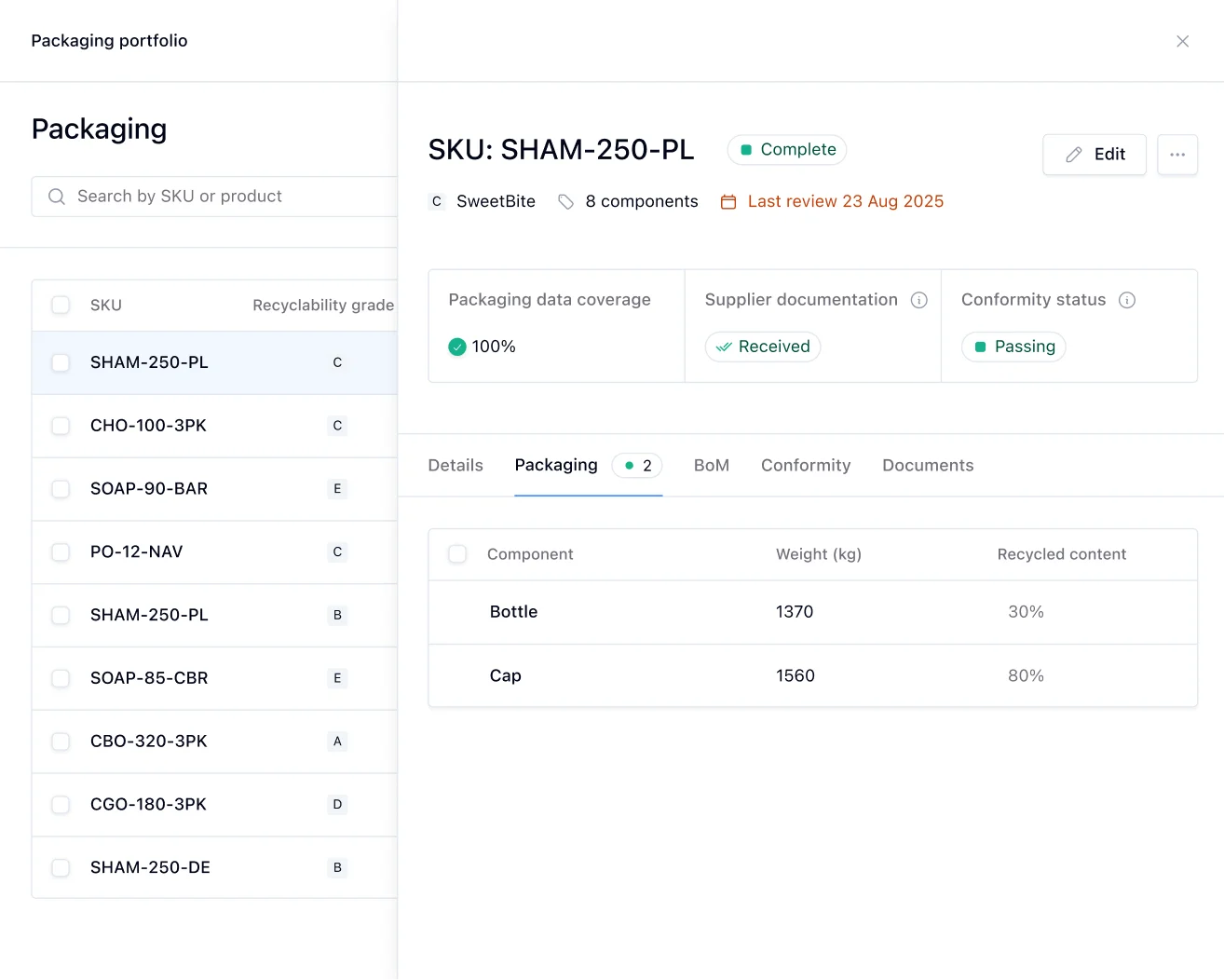
Coolset's PPWR module is built for companies managing compliance across multiple packaging types and supplier relationships. Key capabilities:
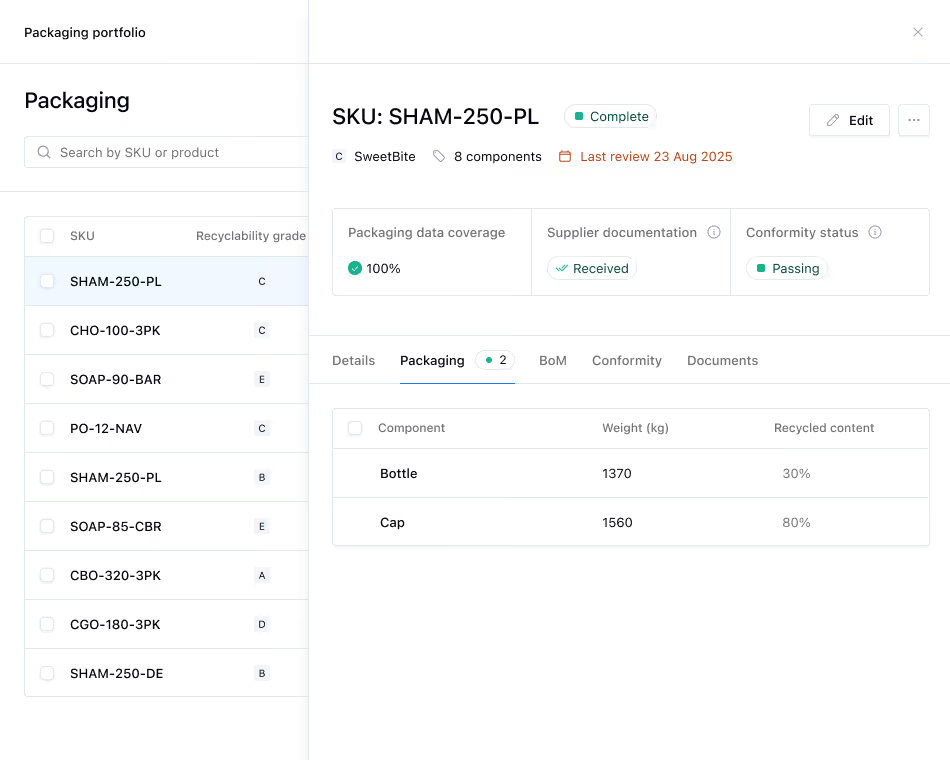
- Centralized packaging portfolio management: Track every SKU, its role classification and its conformity status, in one centralized portfolio.
- Automated supplier data collection: Request and receive technical documentation from suppliers at scale.
- DoC management: Store and organize Declarations of Conformity by packaging type, with audit-ready formatting and 10-year retention support.
- Conformity monitoring: Track which packaging types are compliant, which require action and where documentation gaps exist.
See how Coolset helps importers and manufacturers manage PPWR obligations in one place.
Frequently asked questions (FAQs)
What is Article 21 of the PPWR?
Article 21 of Regulation (EU) 2025/40 sets out the conditions under which an importer or distributor takes on the obligations of a manufacturer. This applies when they place packaging on the market under their own name or trademark, or when they modify existing packaging in a way that could affect its compliance with PPWR requirements.
Does selling packaging under my own brand make me a manufacturer under PPWR?
Yes. If your name or trademark appears on the packaging, you are the manufacturer under PPWR, regardless of where or by whom the packaging was physically produced. This means you must conduct the conformity assessment, draw up the Declaration of Conformity and maintain technical documentation.
Can a company hold more than one role under PPWR?
Yes. A single company can hold multiple roles simultaneously depending on the product. A company that imports some packaging under its own brand and distributes other packaging under a supplier's brand will be a manufacturer for the former and a distributor for the latter. Obligations apply for each role separately.
What is the micro-enterprise exception under PPWR?
If a brand owner qualifies as a micro-enterprise – fewer than 10 employees and annual turnover or balance sheet total of ≤ €2 million and their packaging supplier is based in the same EU Member State, the manufacturer role transfers to the supplier. This exception does not apply to importers sourcing from outside the EU.
What happens if I misclassify my PPWR role?
Misclassification leads to incomplete documentation, invalid Declarations of Conformity and potential failure to meet EPR registration requirements. Non-compliance with PPWR can result in products being barred from the EU market, financial penalties and reputational damage. National enforcement authorities can request documentation at any time after 12 August 2026.
Related: Packaging and packaging waste regulation: PPWR essentials
Learn about your responsibilities, the packaging data you need, the DoC and how to structure supplier data requests
PPWR compliance for manufacturer importers and distributors
Get control of PPWR compliance. Manage supplier documentation, track conformity and stay audit-proof.

.webp)