PPWR Extended Producer Responsibility (EPR): fees, modulation and producer obligations

Disclaimer: New EUDR developments - December 2025
In November 2025, the European Parliament and Council backed key changes to the EU Deforestation Regulation (EUDR), including a 12‑month enforcement delay and simplified obligations based on company size and supply chain role.
Key changes proposed:
- New enforcement timeline: 30 December 2026 for large/medium operators, 30 June 2027 for small/micro operators
- Simplified DDS: One-time declarations for small and micro primary producers
- Narrowed scope: Most downstream actors and non‑SME traders would no longer need to submit DDSs
- New DDS requirement: Estimated annual quantity of regulated products must be included
These updates are not yet legally binding. A final text will be confirmed through trilogue negotiations and formal publication in the EU’s Official Journal. Until then, the current EUDR regulation and deadlines remain in force.
We continue to monitor developments and will update all guidance as the final law is adopted.
Key takeaways
- Article 45 of Regulation (EU) 2025/40 requires producers to register in each Member State where they first place packaging and to cover full waste management costs through EPR fees.
- Article 6 ties those fees to recyclability performance grades, making packaging design a direct cost line.
- Non-EU sellers reaching EU consumers through distance sales must appoint a PRO or authorized representative in each Member State of sale.
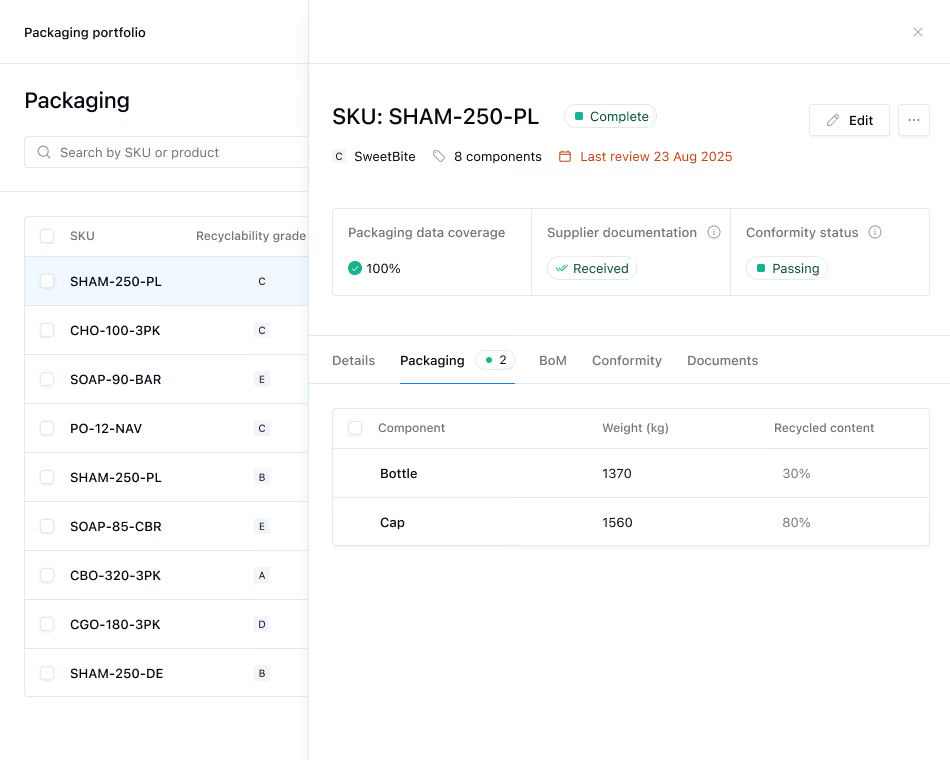
- Coolset helps packaging and compliance teams map SKU-level fee exposure and prepare for PPWR eco-modulation.
Article 45 of the Packaging and Packaging Waste Regulation (Regulation (EU) 2025/40) sets out the framework for Extended Producer Responsibility (EPR) across EU Member States, it also connects packaging producer responsibilities to the existing EPR requirements under the Waste Framework Directive.
For businesses, this makes packaging a financial consideration and a compliance issue. The regulation applies to every producer, no matter how small, that places packaging on the EU market from 12 August 2026. Packaging design decisions become a direct cost line for businesses as the EPR fees cover collection, sorting, and treatment costs.
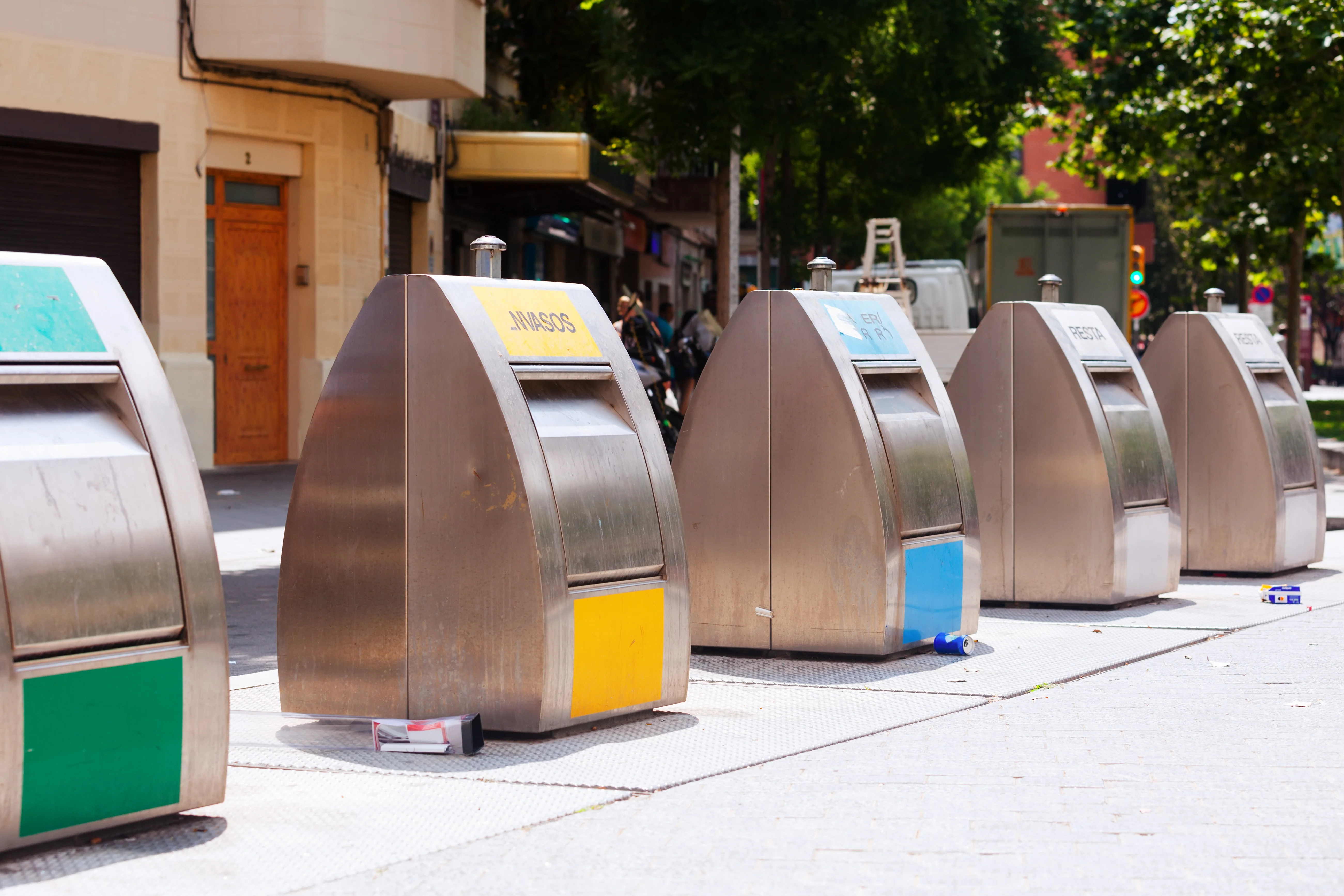
The scale is substantial. In 2023, the EU market generated 79.7 million tonnes of packaging waste, equivalent to 177.8 kg per inhabitant. Its overall recycling rate is 67.5%. Plastic packaging alone reached 35.3 kg per person, of which 14.8 kg was recycled. These figures highlight the waste management challenge that producers must account for and help finance.
Who counts as a producer under PPWR EPR?
Under PPWR, the producer is the company that first places packaging or a packaged product on a Member State's market and does not depend on the size of the enterprise. Obligations are distributed across three supply chain roles: the manufacturer, importer or a distributor.
The Commission's interpretative guidance of 30 March 2026 confirms that the producer is the company responsible for EPR obligations. The guidance also separates two functions: manufacturers and producers. The manufacturer has responsibilities relating to the packaging conformity with applicable requirements. The producer holds EPR responsibilities in the relevant market. Those two roles may fall on different legal entities within the same group.
The follow-up Commission guidance C(2026) 3702 of 5 June 2026 explains that producer status depends on the packaging category, the countries involved and whether the packaged product is supplied to an end user or distributed further. If the transport packaging is made available in a different Member State to the manufacturer's location, the manufacturer is only the producer if the recipient is the end user. If the recipient is not the end user, the recipient becomes the producer. For companies shipping bulk goods across borders, the EPR obligation applies based on the delivery address, not the invoice.
Online sales need particular attention as E-commerce flows carry their own rules. Regulation (EU) 2025/40 treats the initial offering of a product on an online platform as making it available for the purposes of the producer definition. A non-EU seller shipping directly to EU consumers therefore triggers EPR obligations and should check each destination country’s requirements. A single company can be the registered producer in one Member State, a downstream user in another and a distance seller in a third, so the obligation has to be mapped country by country.
What must EPR fees cover?
PPWR EPR fees must finance the full waste management cycle for packaging. Each Member State sets the fee schedule through its national producer register. Fees are typically charged per tonne or per packaging unit by material category. The Commission FAQ confirms that under Article 45(1) the producer pays costs for the collection and recovery of packaging waste in the Member State where that packaging is expected to become waste. The relevant cost categories include:
- Separate collection and transport and treatment of packaging waste
- Consumer information
- Data gathering and reporting
- Labelling
- Litter clean-up
The regulation also reinforces the principle of having one producer responsible for one packaging unit, so costs are not split or duplicated across economic operators.
PPWR does not establish a single EU-wide packaging tariff. Businesses must check the applicable national regulations or Producer Responsibility Organization (PRO) for its charging method, material categories and reporting requirements. Article 46 of Regulation (EU) 2025/40 allows producers to be represented by PRO or an authorized representative for the purpose of meeting their EPR obligations. Producers report packaging quantities annually to the national register, and the PRO bills against those declarations.
The cost base itself is harmonized. The Official Journal text of Regulation (EU) 2025/40 builds on the EPR requirements in Directive 2008/98/EC to ensure that EPR schemes cover the full waste management costs of packaging.
How will eco-modulation affect fees?
Eco-modulation makes PPWR EPR fees sensitive to design. Under Article 6 of Regulation (EU) 2025/40 contributions will be modulated according to recyclability performance grades assigned to each packaging unit under the Design for Recycling (DfR) criteria. Packaging that performs better against those criteria attracts a lower fee.
Recyclability is also not the only possible criterion. Recital 129 of the consolidated text confirms that Member States may use additional modulation criteria such as recycled content share, reusability and the presence of hazardous substances. Two packaging items with the same recyclability grade can therefore attract different fees in different countries, depending on whether they also meet national thresholds for recycled content or substances of concern.
Reusable packaging follows a different fee logic. Fees for reusable formats reflect the shared system costs of operating return, cleaning and refill infrastructure rather than the single-use waste management costs that drive fees for single-use packaging. The Commission's PPWR topic page frames reuse as one of the primary waste-reduction levers in the regulation, which is why the fee structure is designed to reward it. A redesign from a hard-to-recycle laminate to a mono-material format, or a shift from single-use to reusable, therefore has financial implications. How big those implications are will depend on the delegated acts fixing the modulation schedule.
{{custom-cta}}
Registration, reporting and PRO obligations
Article 44(2) of Regulation (EU) 2025/40 requires producers to register in the national producer register of each Member State where they first make packaging or packaged products available, or where they unpack packaged products without being end users. Registration must be in place before packaging is made available on that market. Submissions typically cover company data, packaging categories and expected quantities, and must be updated as the portfolio changes.
Annual reporting then runs through the national register or the PRO acting on the producer's behalf. Reports break down packaging by material and weight, and will increasingly need to include items such as reusability and recycled content to support eco-modulation. The Commission's PPWR implementation guidelines of 30 March 2026 are intended to help Member States apply the rules uniformly.
Non-registration blocks lawful market placement. Where a producer places packaging without being on the national register, the Member State can require the operator to end the non-compliance, impose retroactive fees and apply administrative fines. For more on how authorities test documentation during an inspection, see PPWR compliance audits: how to avoid costly mistakes.
How does PPWR's EPR diverge from current national packaging schemes?
PPWR builds on national packaging schemes in three ways. First, recyclability grading under Article 6 drives fee tiers that did not previously exist. Second, recycled content thresholds and reuse targets become new fee drivers. Third, non-EU producers reaching EU consumers through distributors or marketplaces face distance-selling obligations. The Commission's framing of Regulation (EU) 2025/40 describes the regulation as a step change: it aims to make the recycling of all EU-market packaging economically viable by 2030 and to put the sector on track for climate neutrality by 2050.
The national starting point is uneven. In 2023, seven countries already met the 2030 overall recycling target of 70%, led by Belgium at 79.7% and the Netherlands at 75.8%, while four reported total packaging recycling rates below 50%, including Romania at 37.3% and Hungary at 42.8%, according to Eurostat packaging waste statistics. Producers selling across the EU face very different national cost bases that PPWR cost coverage rules will push toward a common floor.
The operational gap for producers is also real. National EPR schemes currently rely on weight and basic material categories, while PPWR eco-modulation adds recyclability grade, recycled content and reusability as fee inputs. For a structured approach to segmenting a packaging portfolio ahead of this work, see PPWR packaging classification explained in three axes, and for the documentation side, PPWR technical documentation.
{{product-tour-injectable}}
What to focus on before 2030 fee modulation applies
A useful preparation for businesses should start with mapping the packaging portfolio, so gathering data by material, component weight, and quantities supplied in each Member State. Businesses should also focus on discovering any potential gaps in supplier information and address those gaps accordingly. Another form of preparation could include comparing potential fee effects with design changes before committing to one.
FAQ
When do PPWR EPR obligations start to apply?
PPWR became generally applicable on 12 August 2026. However, specific requirements have separate implementation arrangements. Registration and reporting obligations under Articles 44 and 45 take effect from the application date, so producers should be registered in each relevant Member State before placing packaging on that market.
Who pays the EPR fee when a non-EU company sells directly to EU consumers?
Under the PPWR, the non-EU seller is treated as the producer for the initial offering of the product and must meet EPR obligations in the Member State of sale. Because a non-EU producer cannot register directly in most national schemes, Article 46 allows representation through a Producer Responsibility Organization or an authorized representative appointed in each Member State.
What costs must PPWR EPR fees cover?
Article 45(1) requires producers to pay the costs of separate collection, sorting, recycling, data reporting, consumer information and litter clean-up for the packaging they place on the market. The fee covers the full necessary cost of waste management in the Member State where the packaging is expected to become waste, not a reduced or symbolic contribution.
How will eco-modulation change what my company pays?
Fees will vary with the recyclability performance grade assigned to each packaging unit under Article 6, with better-performing packaging attracting lower fees. Member States may add further modulation criteria under Recital 129, such as recycled content, reusability and substances of concern, so the exact fee impact will depend on the final design, packaging quantities and relevant tariff rules. Businesses should calculate the effect before including savings in their budgets.
Does PPWR replace national packaging EPR schemes?
No. National EPR schemes continue to operate, but Member States must align them with PPWR rules on cost coverage, registration and eco-modulation. Producers will still register and report through national producer registers and PROs, but the fee basis, modulation structure and data requirements change to match the PPWR framework.
PPWR turns packaging design into a cost line through eco-modulated EPR fees. Coolset helps packaging, finance and sustainability teams map SKU-level data to Article 6 recyclability grades and country-by-country producer obligations.
PPWR 2026: the operational compliance playbook
Your five-step guide to running PPWR compliance across SKUs and suppliers.