ESG reporting after Omnibus: Why companies shouldn't stop now


Disclaimer: New EUDR developments - December 2025
In November 2025, the European Parliament and Council backed key changes to the EU Deforestation Regulation (EUDR), including a 12‑month enforcement delay and simplified obligations based on company size and supply chain role.
Key changes proposed:
- New enforcement timeline: 30 December 2026 for large/medium operators, 30 June 2027 for small/micro operators
- Simplified DDS: One-time declarations for small and micro primary producers
- Narrowed scope: Most downstream actors and non‑SME traders would no longer need to submit DDSs
- New DDS requirement: Estimated annual quantity of regulated products must be included
These updates are not yet legally binding. A final text will be confirmed through trilogue negotiations and formal publication in the EU’s Official Journal. Until then, the current EUDR regulation and deadlines remain in force.
We continue to monitor developments and will update all guidance as the final law is adopted.
Key takeaways
- Despite the Omnibus rollbacks, companies that continue structured ESG reporting gain competitive advantages through investor confidence, supply chain readiness and operational risk management.
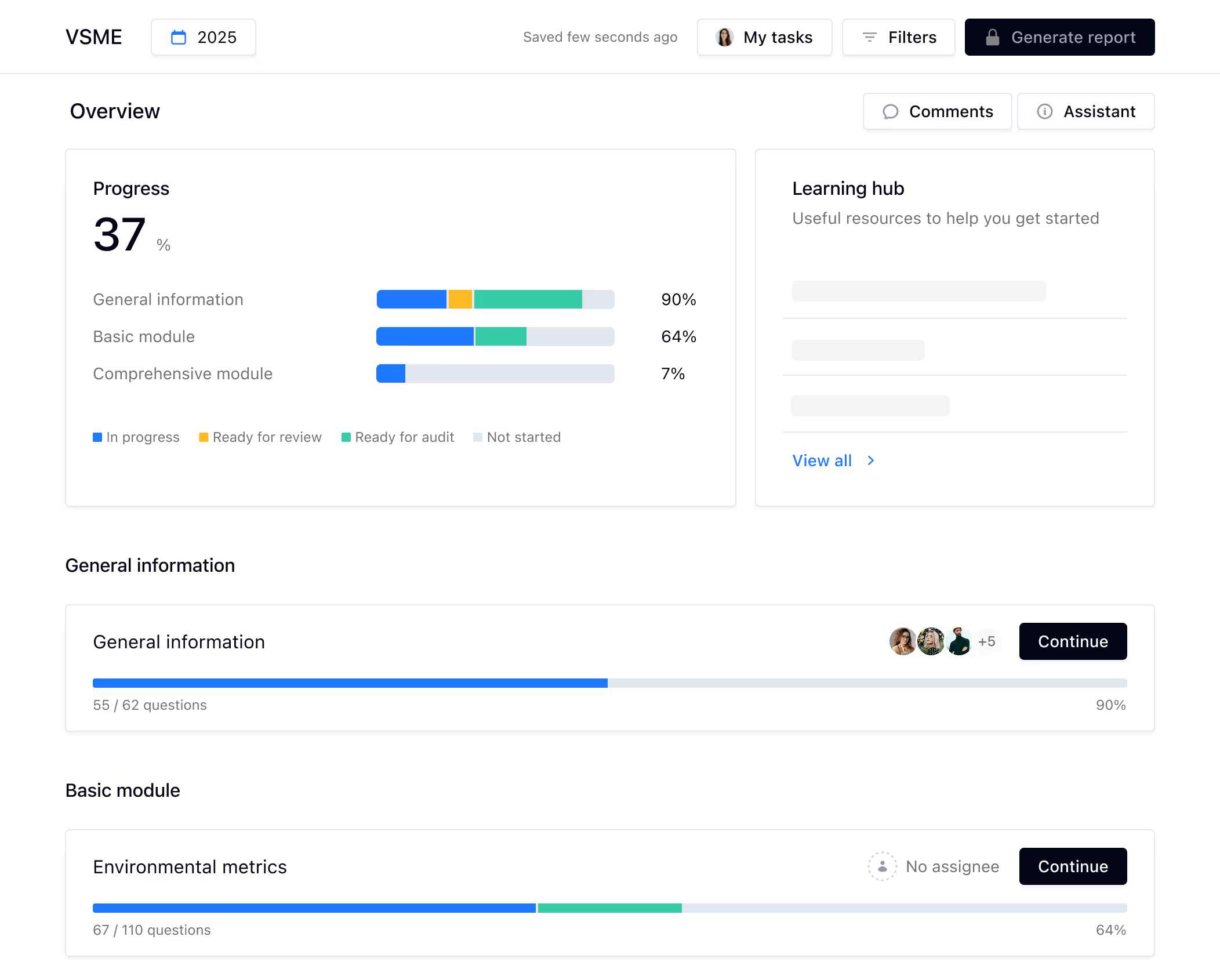
- The VSME framework provides a proportional alternative for companies no longer in mandatory CSRD scope but still needing structured ESG data for banks, investors or supply chain partners.
- Coolset supports both CSRD and VSME reporting, helping companies maintain ESG transparency regardless of regulatory scope changes.
Just as businesses were finding their feet with ESG reporting, the EU's Omnibus proposal arrived, reshaping the regulatory landscape significantly. This article explains what ESG reporting looks like after Omnibus, who is still in scope, and what companies should do now.
What Omnibus changes for ESG reporting
The Omnibus I Directive, adopted in February 2026, makes four key changes to CSRD and related directives:
- Narrower scope: The CSRD employee threshold rises from 250 to 1,000+ employees (combined with >€450M turnover), removing roughly 85% of previously in-scope Wave 2 companies from mandatory reporting
- Fewer mandatory data points: The ESRS mandatory data points fall from over 1,000 to approximately 320 — a 70% reduction
- Timeline delays: Wave 2 companies now report from FY2027; Wave 3 (listed SMEs) delayed further
- CSDDD simplification: Due diligence audit requirements reduced and value chain scope narrowed
The practical implication: many companies that were preparing for CSRD compliance as Wave 2 reporters are now out of mandatory scope. But this doesn’t mean they should stop — for reasons we’ll explain below.
Who is still in scope after Omnibus
Post-Omnibus, mandatory CSRD reporting applies to:
- Wave 1 companies: Large EU-listed companies formerly subject to NFRD. Already reporting on FY2024. No change in timing or scope.
- New Wave 2 threshold: Companies with 1,000+ employees and >€450M net turnover. Reporting from FY2027.
- Listed SMEs: Delayed to FY2028 or later; may opt out until 2030 under the proposal.
Companies that fall below the new thresholds are out of mandatory scope, but may still face reporting demands from customers, investors, and lenders.
The amended ESRS: what’s still required
The amended ESRS simplify the reporting framework significantly. Key changes include:
- Mandatory data points reduced from 1,000+ to approximately 320
- Sector-specific ESRS standards scrapped
- Many previously conditional data points clarified as optional
- Double materiality assessment process simplified
For Wave 1 companies already reporting, the amended ESRS apply from FY2026. For new Wave 2 companies, they apply from the start of their reporting obligation (FY2027).
Why companies out of scope should still report
The business case for sustainability reporting does not depend on regulatory obligation. Three forces are driving voluntary or quasi-voluntary reporting for companies out of CSRD scope:
- Supply chain pressure: Companies in scope must report Scope 3 (value chain) emissions, creating demand for supplier data. If your customers are CSRD reporters, they will ask you for sustainability data regardless of your own regulatory status.
- Investor and lender requirements: ESG questionnaires, due diligence requirements, and financing conditions are increasingly standard. Being unprepared creates friction in capital markets.
- The VSME standard: EFRAG’s Voluntary SME Standard provides a structured, proportionate framework for companies outside CSRD scope who want to respond to stakeholder requests systematically. Coolset’s VSME module supports this reporting pathway.
Practical steps for companies navigating Omnibus
Depending on your situation:
- If you’re Wave 1: Continue reporting as planned. Review the amended ESRS for changes that affect your disclosures from FY2026.
- If you’re newly out of scope (former Wave 2): Don’t stop preparation. Assess your supply chain reporting obligations, consider VSME, and continue building data infrastructure.
- If you’re an SME: Evaluate whether your customers are asking for VSME-level data. If so, Coolset’s VSME module provides the most efficient pathway.
For the most current information on CSRD scope, timelines, and what actions to take, see our full guide to CSRD under Omnibus.
Explore how you can reuse your CSRD work by mapping disclosures to the new VSME framework.

.webp)