How to interpret ESRS G1: Business conduct (Updated Mar 2026)



Disclaimer: New EUDR developments - December 2025
In November 2025, the European Parliament and Council backed key changes to the EU Deforestation Regulation (EUDR), including a 12‑month enforcement delay and simplified obligations based on company size and supply chain role.
Key changes proposed:
- New enforcement timeline: 30 December 2026 for large/medium operators, 30 June 2027 for small/micro operators
- Simplified DDS: One-time declarations for small and micro primary producers
- Narrowed scope: Most downstream actors and non‑SME traders would no longer need to submit DDSs
- New DDS requirement: Estimated annual quantity of regulated products must be included
These updates are not yet legally binding. A final text will be confirmed through trilogue negotiations and formal publication in the EU’s Official Journal. Until then, the current EUDR regulation and deadlines remain in force.
We continue to monitor developments and will update all guidance as the final law is adopted.
Key takeaways
- ESRS G1 covers six governance disclosure areas: corporate culture, whistleblower protection, supplier relationships, corruption prevention, political engagement and payment practices.
- Under the simplified ESRS, G1 has been restructured into a Policies-Actions-Targets architecture with 61% fewer mandatory data points, while the original G1-1 through G1-6 structure remains applicable until FY2026.
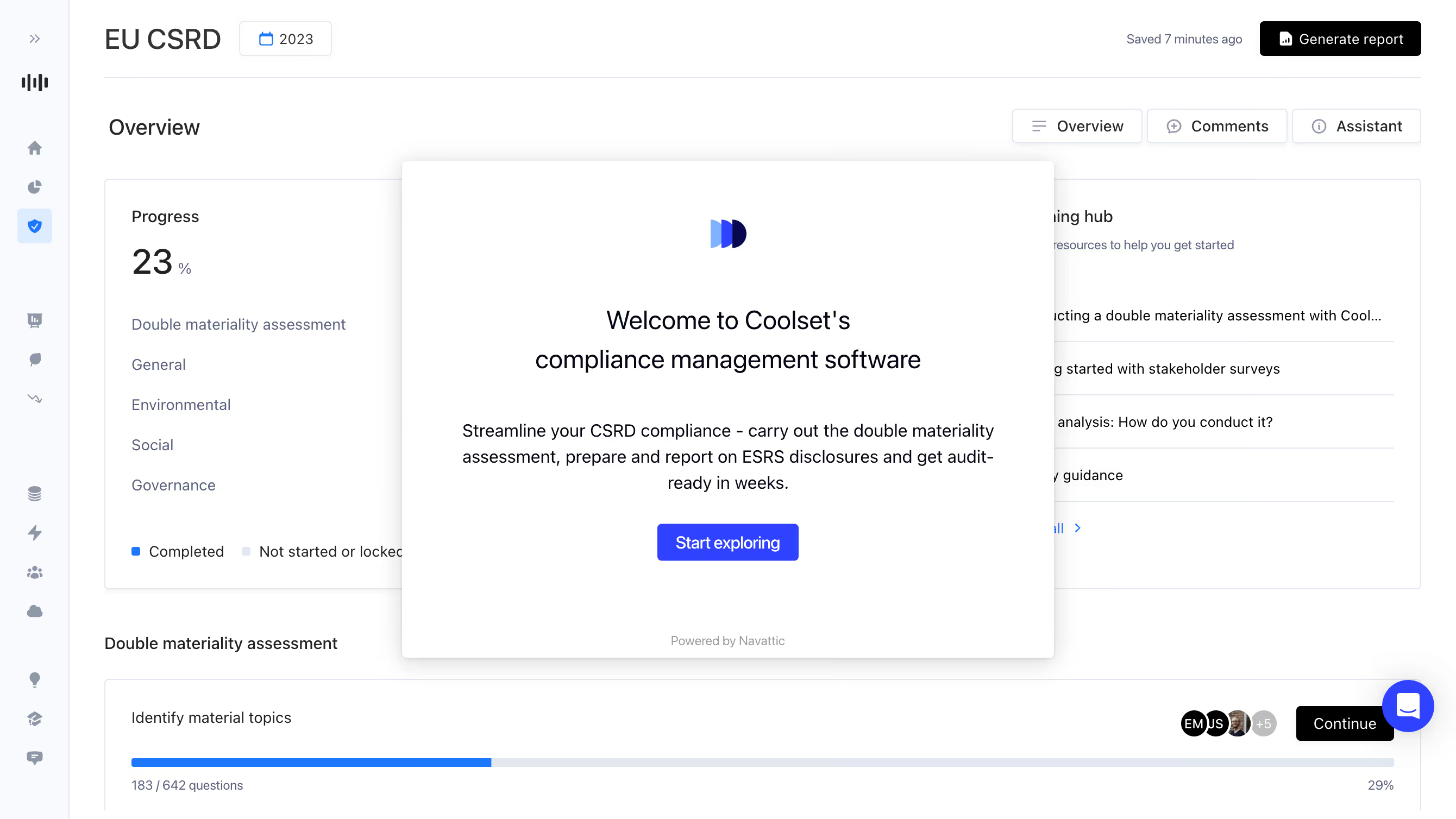
- Coolset's CSRD platform helps teams map G1 disclosures, track governance metrics and produce audit-ready ESRS sustainability statements.
ESRS G1 is the CSRD standard covering business conduct — how companies manage ethical business practices, anti-corruption, corporate culture, and political engagement. Unlike the environmental standards, G1 is typically applicable to all companies in CSRD scope, as governance and business conduct are almost universally material.
This article explains what ESRS G1 requires, what changed under the amended ESRS following the Omnibus I Directive, and how companies should approach compliance.
What is ESRS G1?
ESRS G1 — Business Conduct — covers the governance and conduct standards that underpin CSRD reporting. The standard requires companies to disclose:
- Corporate culture and how it supports ethical business conduct
- Anti-corruption and anti-bribery policies and incidents
- Protection of whistleblowers
- Animal welfare (where relevant)
- Political contributions and lobbying activities
- Payment practices toward suppliers (particularly SMEs)
What changed under the amended ESRS
Following the Omnibus I Directive, the amended ESRS introduced simplifications to G1. Key changes include:
- Several previously mandatory data points moved to conditional status
- Payment practices disclosure (G1-6) simplified
- Certain lobbying disclosure requirements scaled back
The core anti-corruption, whistleblower, and corporate culture requirements remain. G1 continues to apply to all companies where business conduct is material — which for most companies means it applies in full.
Key G1 disclosures
Anti-corruption and anti-bribery (G1-3)
Companies must disclose their policies on corruption and bribery prevention, the training provided to employees, and any confirmed incidents of corruption during the reporting period. This includes money laundering and corruption by business partners.
Payment practices (G1-6)
Disclosure of payment practices toward suppliers, focusing on average payment terms and the proportion of payments made beyond agreed terms. This standard targets large companies that create cash flow pressure on SME suppliers through late payments.
Whistleblower protection (G1-1)
Companies must describe their mechanisms for employees and other stakeholders to report concerns about ethical conduct, and how these reports are handled.
How to prepare for ESRS G1
- Review existing codes of conduct, anti-corruption policies, and whistleblower procedures
- Establish mechanisms to track and report G1 metrics (corruption incidents, payment terms)
- Ensure HR and legal teams are involved in data collection for G1 disclosures
- Document policies and training programs to demonstrate compliance
How Coolset supports ESRS G1
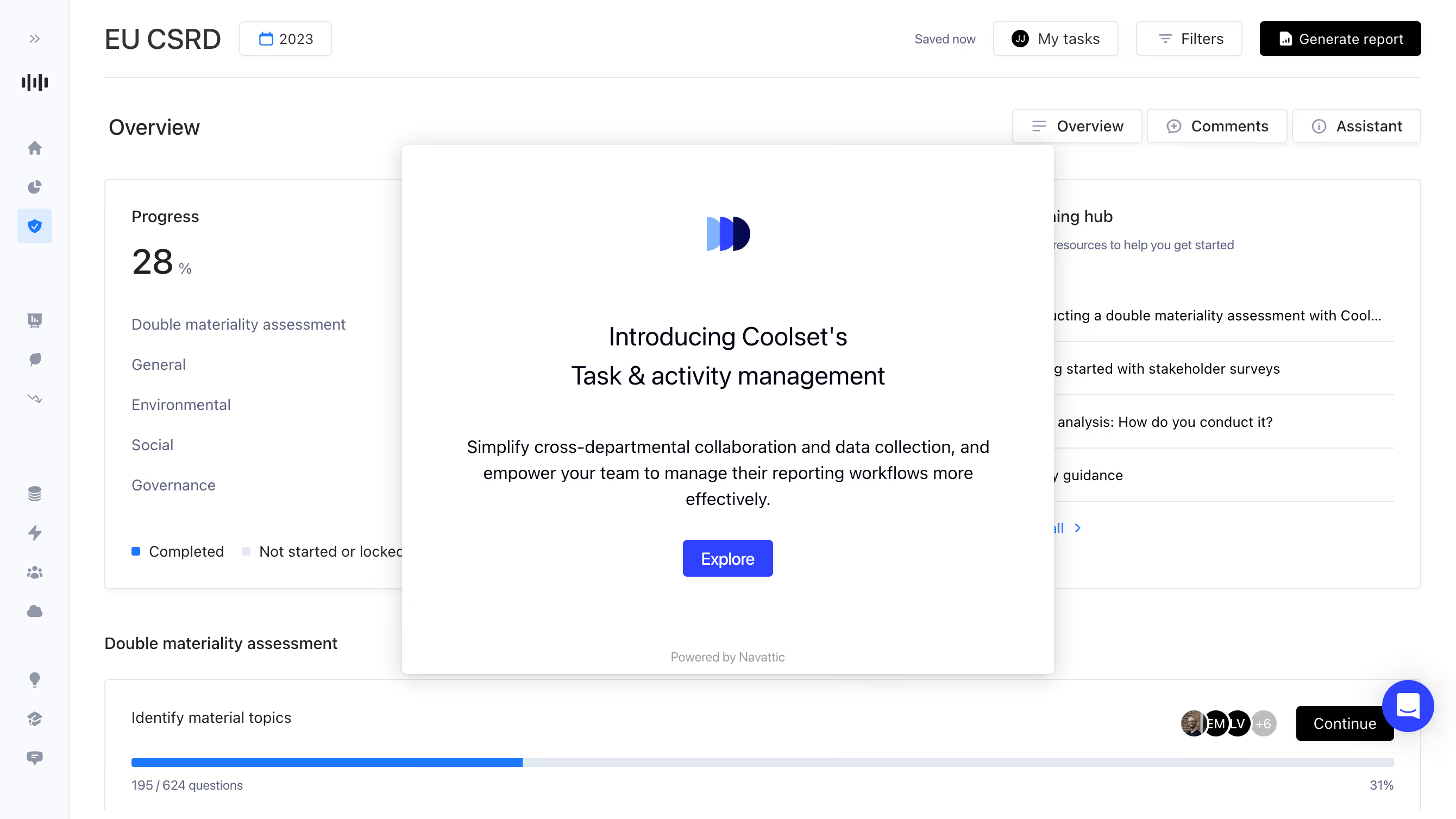
Coolset includes ESRS G1 in its full CSRD reporting workflow, with structured templates for each disclosure requirement. The platform reflects the updated requirements under the amended ESRS and maintains an audit trail for all G1 data. For a list of comparable CSRD software tools, see our top ESRS software tools guide. Book a demo to see it in action.

on mobile screens
to experience this demo.



.webp)