CSRD after Omnibus: How to take advantage of the two year reporting delay



Disclaimer: New EUDR developments - December 2025
In November 2025, the European Parliament and Council backed key changes to the EU Deforestation Regulation (EUDR), including a 12‑month enforcement delay and simplified obligations based on company size and supply chain role.
Key changes proposed:
- New enforcement timeline: 30 December 2026 for large/medium operators, 30 June 2027 for small/micro operators
- Simplified DDS: One-time declarations for small and micro primary producers
- Narrowed scope: Most downstream actors and non‑SME traders would no longer need to submit DDSs
- New DDS requirement: Estimated annual quantity of regulated products must be included
These updates are not yet legally binding. A final text will be confirmed through trilogue negotiations and formal publication in the EU’s Official Journal. Until then, the current EUDR regulation and deadlines remain in force.
We continue to monitor developments and will update all guidance as the final law is adopted.
Key takeaways
- The Omnibus I Directive gives Wave 2 companies a two-year reporting delay (now FY2027), creating a strategic window to build data infrastructure, run trial materiality assessments and engage suppliers early.
- Companies that use the delay to prepare voluntarily will be better positioned competitively, as investors and supply chain partners increasingly expect structured ESG data regardless of mandatory deadlines.
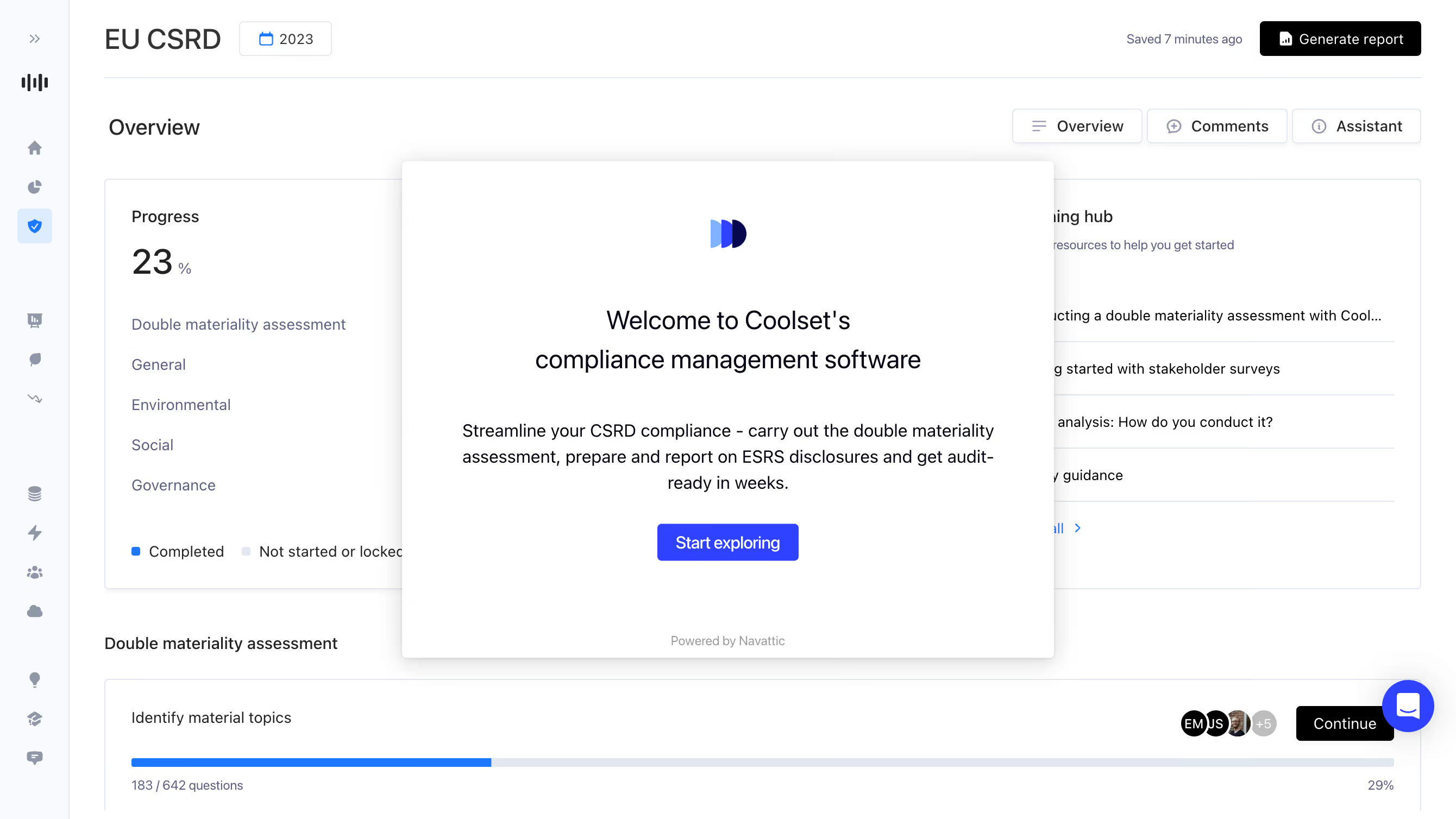
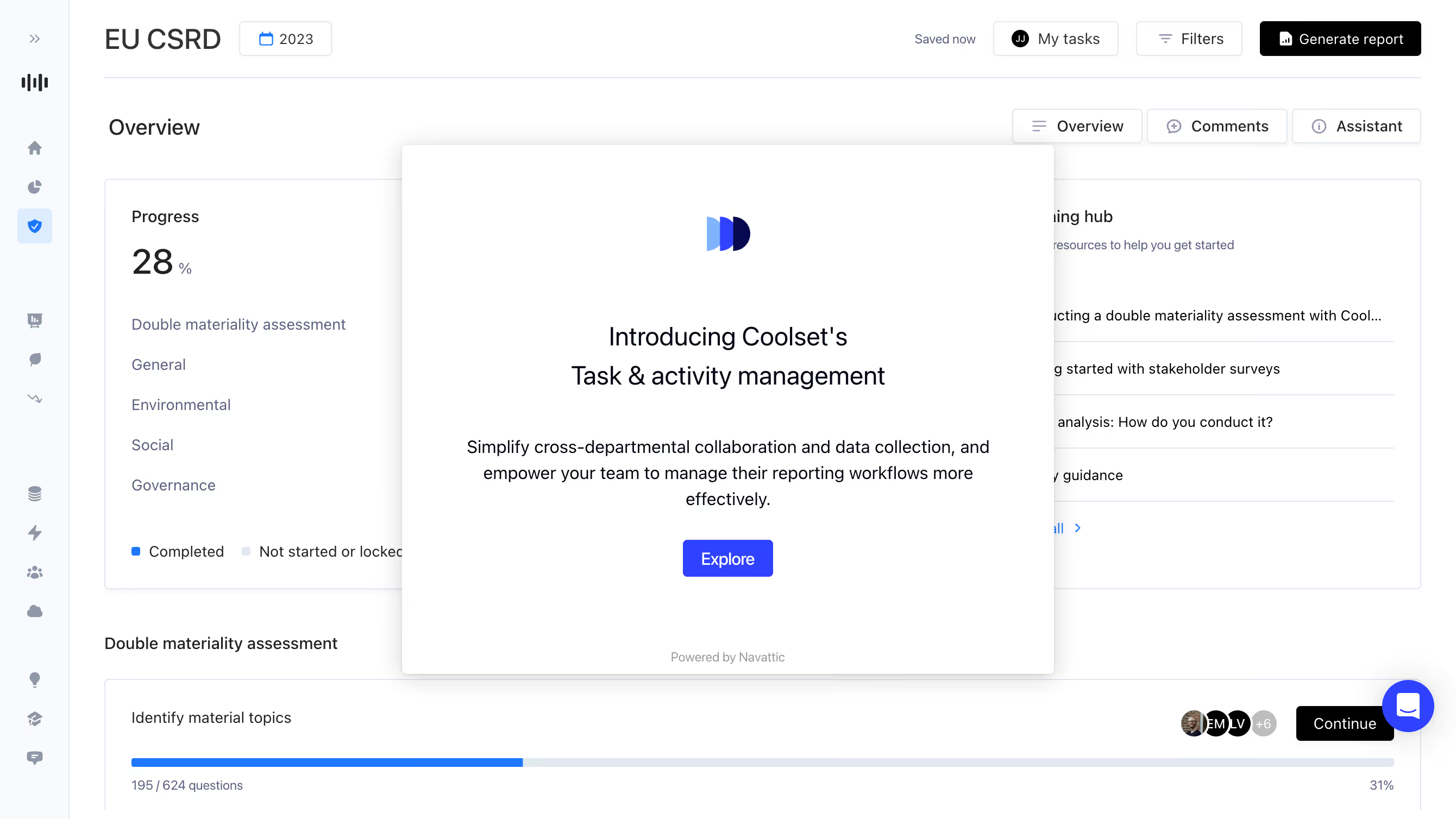
- Coolset's CSRD platform helps teams start collecting data and running materiality assessments now, so they are audit-ready when reporting becomes mandatory.
Omnibus: How to take advantage of the two year reporting delay
The European Commission's Omnibus proposal triggered a two-year delay for CSRD reporting for Wave 2 and 3 companies, and a scale-back for Wave 1 companies. If you're in Wave 2 or 3, this gives you more time—but it doesn't mean you should stop. Here's how to use the delay well.
What the delay means in practice
The CSRD was originally set to require Wave 2 companies (large non-listed companies meeting two of: 250+ employees, €50M+ revenue, €25M+ assets) to start reporting on FY2025 data, with Wave 3 (listed SMEs) to follow. The Omnibus proposal pushes these deadlines back by two years and also raises the employee threshold from 250 to 1,000, potentially removing many Wave 2 companies from scope entirely.
For companies still in scope, the delay means more time to build your data infrastructure, refine your double materiality assessment, and develop your reporting processes. For companies potentially leaving scope, it's worth tracking developments closely—the final legislation hasn't been adopted yet.
Don't stop: use the time strategically
The worst thing you can do is pause entirely. Companies that treated CSRD preparation as just a compliance exercise are now at risk of having wasted that work. The better move is to reframe it as building genuine management capability.
The Omnibus proposal has not changed the underlying business case for sustainability management: customers, investors, and banks are still asking for this data. If anything, VSME-level reporting is now more standardized, meaning your supply chain customers will ask for structured data whether or not you're directly regulated.
Five ways to use the delay well
1. Complete your double materiality assessment
This is the foundation of everything. Even if reporting is delayed, your DMA determines what you need to track. Companies that have completed a rigorous DMA are far better positioned when reporting does begin. The EFRAG simplification of ESRS may reduce some data point requirements, but the DMA itself remains central.
2. Build clean data infrastructure
The most common reason companies struggle with CSRD reporting is poor underlying data. Use the delay to connect your carbon accounting, HR, and operational data to a single reporting environment. This is the hardest part and takes the longest—starting now is an advantage.
3. Train your internal teams
CSRD requires collaboration across finance, legal, operations, and sustainability. The delay is an opportunity to build cross-functional understanding before reporting pressure hits. Run internal workshops, assign ownership, and start practicing the disclosure process.
4. Engage your supply chain
Scope 3 data from suppliers is notoriously hard to collect. Use the extra time to build supplier engagement programs, send data requests, and improve the quality of your upstream emissions data. This pays dividends whether you're reporting under CSRD or responding to customer questionnaires.
5. Pilot a dry run
Produce an internal CSRD-aligned report for FY2024 or FY2025, even if you're not required to publish it. This reveals gaps, clarifies ownership, and gives your auditors and assurance providers something concrete to work with ahead of the real deadline.
What Coolset recommends
For Wave 2 and 3 companies, we recommend continuing your CSRD preparation at a measured pace rather than stopping. Focus on the DMA, data infrastructure, and stakeholder engagement. These activities have value regardless of the final regulatory outcome. Get in touch to see how Coolset can support you.
See how 250+ companies are navigating the changing ESG reporting landscape.

on mobile screens
to experience this demo.



.webp)